You know exactly what I'm talking about.
Every large company is sitting on a backlog of unbuilt startup ideas, and the structural reasons those ideas never moved (IT, legal, budget cycles, reorgs) used to be tolerable because the cost of inaction was low; AI-speed venture building has changed that calculus, and someone outside your walls is going to act on those ideas first.
There's a deck. Maybe it's three years old. Maybe it was born out of a strategic planning offsite where everybody agreed the opportunity was real, the timing felt right, and someone volunteered to own it. Then Q4 happened. Then a reorg. Then IT said they couldn't support another new tool. Then legal wanted six months to review the data model.
The idea is still there. You're still pretty sure it's good.
This is not a failure of ambition. It's not even a failure of execution. It's a structural problem. Large organizations are designed to protect what already works. That is genuinely valuable. It is also the exact mechanism that kills new ideas before they reach the market.
Most of the time, you could live with that. The ideas stayed on the shelf, the core business kept running, and you moved on.
That calculus has changed.
A few weeks ago, someone in my feed posted about a startup idea their team had shelved for years. Someone vibe-coded it over a weekend. It's live now. They shared it as a moment of recognition, not panic, but you could feel what was underneath it.
That story is not an outlier anymore. It's just a random Tuesday in June.
The people who will run down your shelved ideas are no longer waiting for budget cycles or IT approval. They're one entrepreneur with a clear mandate and an army of AI agents running every thread in parallel. What used to take a team of twelve and eighteen months now takes one person and two months.
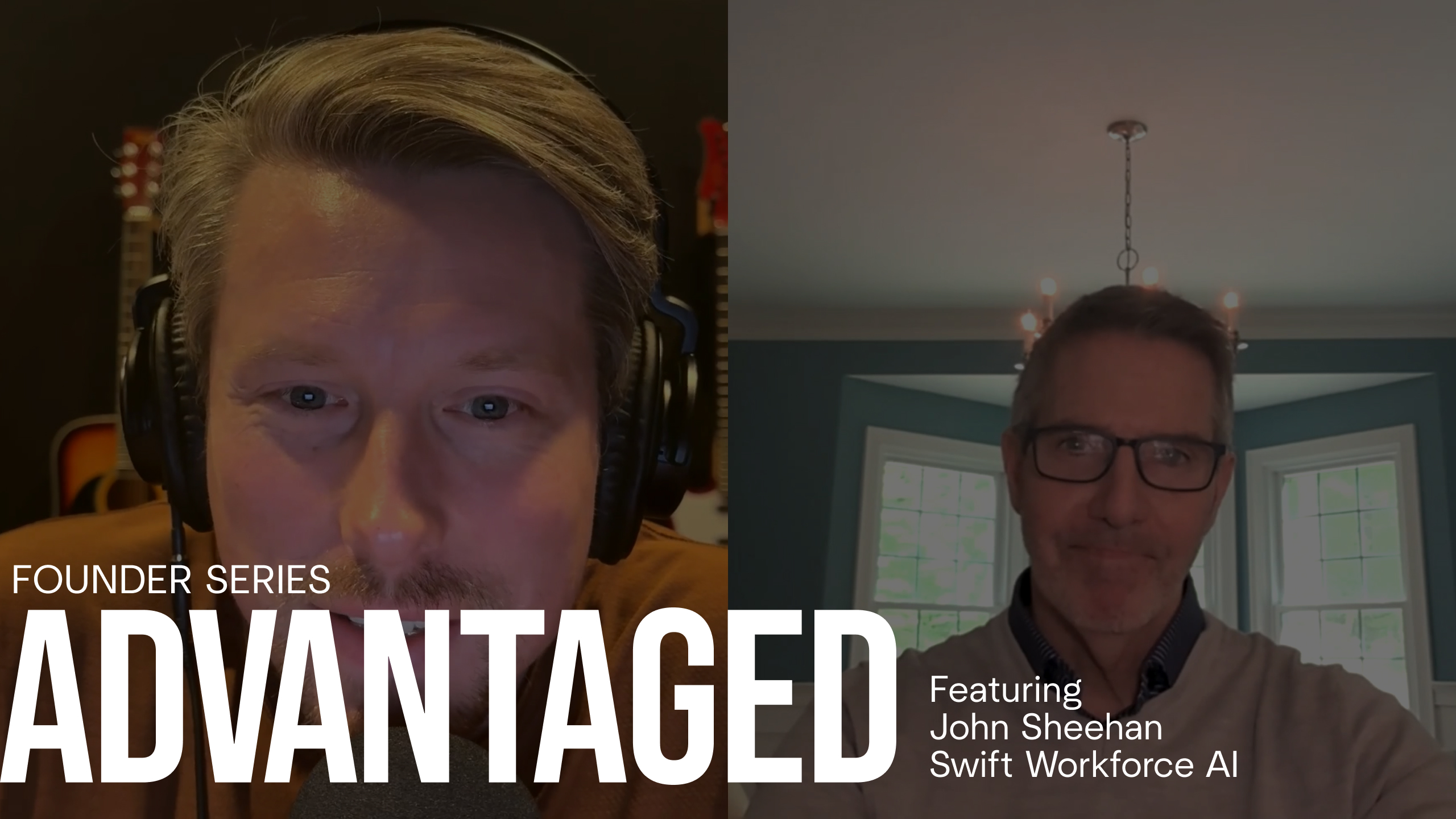
We know because we're doing it. At One Health Studio, the studio director running it launched nine companies in roughly two months using more than a thousand AI agents. Not prototypes. Companies with real validation, real products, real market signal. That piece is live on our site if you want the full mechanics.
The point isn't that the technology is impressive. The point is that the timeline for moving on your ideas just collapsed. And if you don't move, someone else will.
Here's what we actually do.
You bring the startup ideas. The ones that have been sitting in that deck. The new business your innovation team has championed for years. The market adjacency three different people have independently suggested. The thing your CEO mentioned twice in all-hands meetings and then nothing happened.
We spin up an agentic venture studio oriented around your specific opportunity set. An agentic venture studio is a venture building model where AI agents handle the research, prototyping, and validation work simultaneously across multiple ideas, compressing timelines from years to weeks. Not one project at a time. All of them. Simultaneously. One entrepreneur with the right incentives and autonomy, plus hundreds of AI agents running down every thread at startup speed.
In 90 days, you have validation data. Real signals from real potential customers. A clear picture of which ideas have legs and which ones can finally rest in peace. Not a strategy deck with a 2x2. Actual results you can take to your board.
This is not Alloy consulting on your corporate innovation strategy. We are not here to write a report about your idea backlog and hand it back to you with recommendations. We build. We test. We show you what happened. That's a different thing entirely, and it matters that you understand the difference before you get on a call with us.
The companies we talk to are sitting on three to ten startup ideas that never moved. They know which ones they are. In most cases, the ideas aren't the problem. The problem is the mechanism: the internal org structure that makes it structurally impossible to run AI-speed experiments on new business concepts without triggering six months of procurement review.
Going outside isn't a workaround. It's the correct architectural answer. The same way corporations have always spun ideas out into separate entities to give them room to breathe, this is that, but now those separate entities can be stood up, validated, and operating in the time it used to take to get a meeting on the calendar.
What we've found, consistently, is that the moment you tell people this is possible, they stop asking about the technology and start thinking about the ideas. That's the sign.
Here's the version of this conversation I find most useful: I'm not asking you to evaluate whether agentic venture building is real. You've seen enough at this point to know it is. I'm asking you to do one thing: pull up whatever deck you think of when you read this, look at the top three ideas, and ask yourself what it would actually mean to have validation data on all three of them in 90 days.
Not a plan. Not a pilot proposal. Data.
If that question makes something shift for you, that's worth a conversation. Not a proposal, not a big commitment, just a conversation about what you have and what we'd do with it.
That's the intake form at the bottom of this page. Fill it in. We'll take it from there.
Alloy Partners is a venture builder that co-creates advantaged startups with corporations. If you want to see how the agentic model works in practice, start with this piece from Ben Lewis at One Health Studio.
Ready to talk about your ideas? Start here.










































.avif)