Pharma marketing has an invisible bottleneck. Every brochure, every Facebook ad, every influencer post a pharmaceutical company puts in front of a doctor or a patient has to clear MLR review, medical, legal, and regulatory, before it can ship. The average cycle is a month. Some materials take five months. Ferry referenced an industry estimate suggesting that expediting the content lifecycle could unlock around $200 million per brand. Meanwhile, patients wait on treatments, market share leaks to competitors, and highly trained reviewers spend their days on manual checks instead of strategic calls.
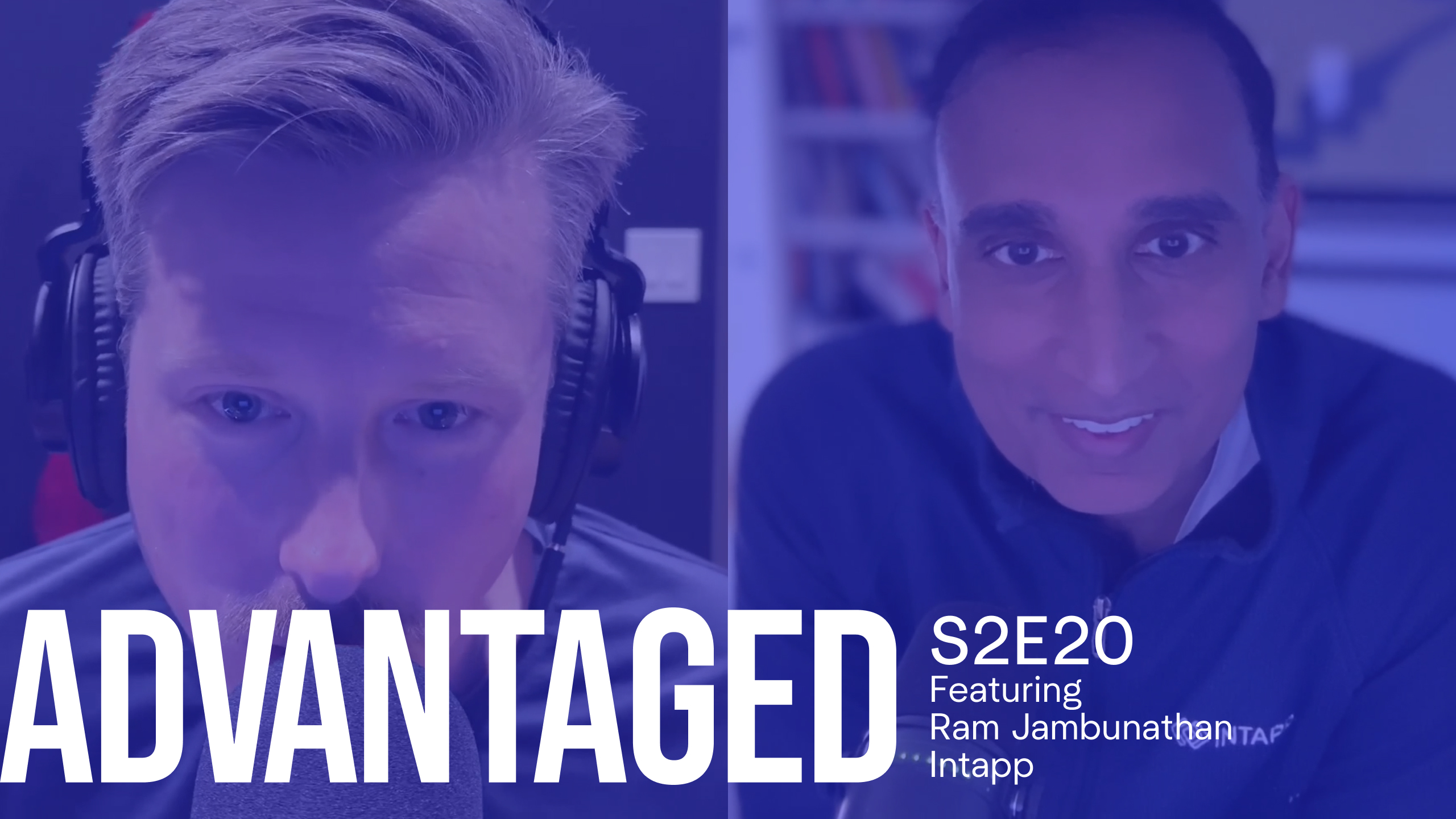
On the latest episode of Advantaged, I sat down with Ferry Tamtoro, CEO and founder of Revisto, to talk about why this bottleneck has gotten worse rather than better, and what it actually takes to build AI that pharma will trust. Ferry has spent 25 years in healthcare technology, building regulated software inside GE Healthcare, Baxter, Amgen, and Walgreens before moving to the startup side. Revisto is part of the Alloy Partners portfolio, co-created with a leading pharmaceutical partner. Its AI platform automates MLR review for pharmaceutical companies and the agencies that serve them, built with direct access to real-world MLR workflows, expert judgment, and institutional knowledge that generic AI tools simply don't have.
We got into the buy-versus-build math for regulated AI (a proof of value in four to six weeks versus three years and roughly ten million dollars to build it in-house), why the FDA's own adoption of AI for enforcement marks a structural shift rather than a cycle, and how Revisto's expansion onto the agency side has created a two-sided feedback loop that makes the product stickier on both ends.
What stuck with me most was Ferry's framing on trust. In regulated industries, hallucinations should disqualify a product. You cannot make up a clinical study. You cannot cite a claim that is not there. That bar is what most AI tools selling into pharma fail to clear, and it is why Revisto built a purpose-built small language model trained on institutional knowledge rather than wrapping a generic LLM in a pharma-colored UI.
Featured Guest
Ferry Tamtoro is the CEO and founder of Revisto, an AI platform that automates the medical, legal, and regulatory review process for pharmaceutical companies and the agencies that serve them. Before Revisto, Ferry spent 25 years building regulated healthcare software inside GE Healthcare, Baxter, Amgen, and Walgreens, then co-founded a prior pharma and med-tech technology company. That mix of enterprise insider and startup operator is what shaped Revisto's approach.
Connect with Ferry on LinkedIn.
Key Takeaways
- MLR review is the invisible $200M-per-brand bottleneck pharma has lived with for too long. A piece of marketing content can take five months to clear once you count the iteration cycles between internal reviewers, content creators, and outside agencies. Ferry referenced an industry estimate suggesting that expediting the content lifecycle could unlock around $200 million per brand. The real cost compounds further when you factor in patients waiting on treatments and competitors capturing share in the gap.
- The FDA is using AI to enforce now, and that is a structural shift, not a cycle. Over 100 warning letters have gone out in just the past few months. Ferry's read is that the regulations have not changed, the probability of getting caught has, because the FDA itself is modernizing its review infrastructure with AI. Pharma companies that do not match that capability will keep generating overcorrections, slower cycles, and more warning letters.
- The buy-versus-build math does not survive contact with reality. A production-grade MLR system with integrated substantiation, fair-balance detection, audit trails, and direct workflow integration takes roughly three years and eight to ten million dollars to build internally. Revisto's proof of value runs in four to six weeks. Add the ongoing maintenance cost (FDA guidance changes, label revisions, OPDP updates) and the in-house path looks even worse.
- Pilot paralysis is the change-management killer. A lot of organizations are excited about AI and end up running pilots all over the place without continuity. The pattern that works: pick a senior owner with authority to expand the deployment after a successful pilot, contain the test to a measurable workflow with clear KPIs (cycle counts, days to approval, rework rate), and prove ROI in weeks rather than quarters.
- In regulated AI, domain expertise beats LLM access. Generic LLMs hallucinate, and worse, they sound smart while being completely wrong. Revisto built a small language model trained on institutional knowledge from a co-creation partnership with a leading pharma company. The model gives brand-specific recommendations grounded in approved materials, brand SOPs, and company-specific requirements. That is not something you build by wrapping ChatGPT in a pharma UI.
Listen to or watch the episode below and be sure to subscribe to Advantaged, the leading corporate innovation and venture building podcast, on Apple Podcasts, Spotify, or YouTube.
Transcript
Below is an un-edited transcript from the episode.
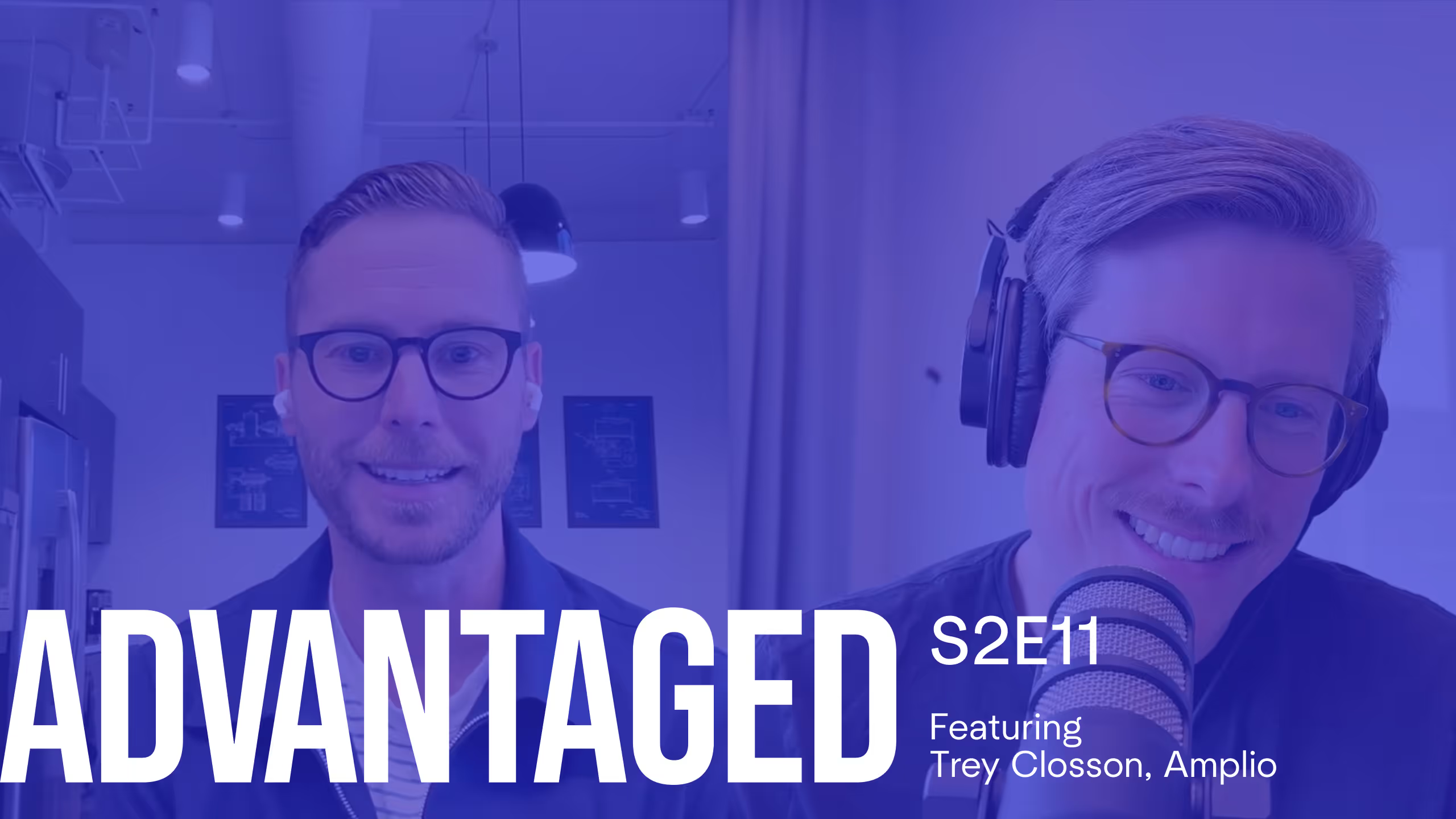
Advantaged Podcast: Ferry Tamtoro, CEO & Co-Founder, Revisto
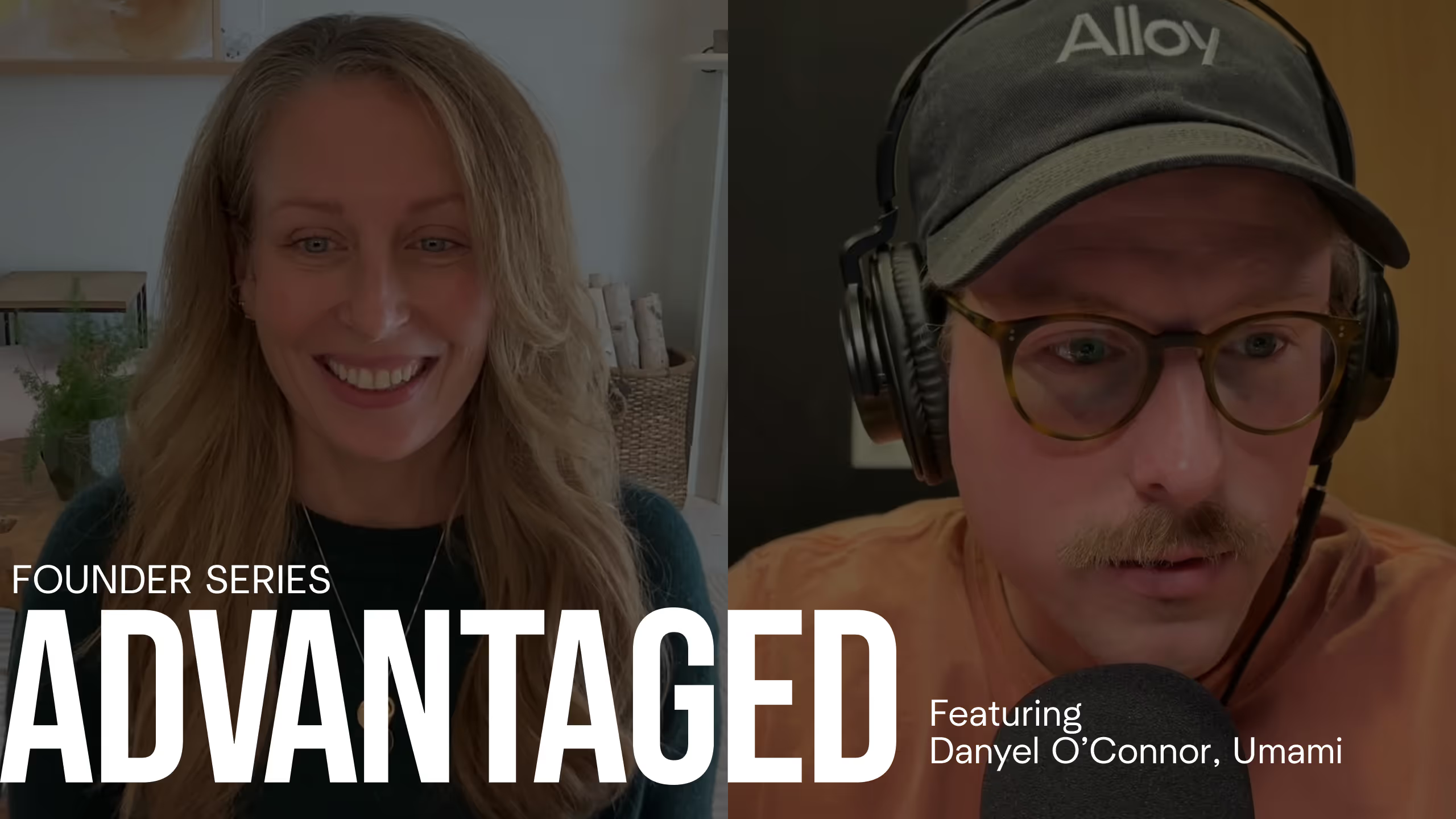
Drew Beechler: Welcome everyone to Advantaged, an Alloy Partners podcast. I'm Drew Beechler, VP of Marketing here at Alloy and your host of Advantaged. Alloy is a venture builder. We partner with leading organizations and entrepreneurs to co-create advantaged startups and venture studios. On the podcast, we interview corporate innovators, founders, and investors all around venture building and startup-corporate partnerships, telling the story of how corporations and startups win together.
Drew Beechler: This conversation is part of our Advantaged Founder series, where we sit down with startup founders and unpack the edge they have from day zero, whether that's a strategic corporate partner, platform, or new venture model. Today, we have Ferry Tamtoro, CEO and Co-Founder of Revisto.
Drew Beechler: Revisto is an AI-powered platform that automates the marketing, legal, and regulatory review process for pharmaceutical companies and the agencies that serve them. Revisto is part of the Alloy Partners portfolio, an amazing company that we helped create in partnership with a leading pharmaceutical company, bringing deep pharma operations experience together with the co-creation model that's compressing what typically would take years to build into Revisto.
Drew Beechler: Thank you so much for joining me today. I'm really excited to get into this and talk more about Revisto and pharma and AI and all things around that.
Ferry Tamtoro: Awesome. Thank you, Drew. Thanks for having me. Really excited for this podcast.
Drew Beechler: Let's start with where you spent a lot of your early career, inside large healthcare, pharma, and technology organizations like Amgen, Baxter, GE Healthcare, and Walgreens. Then you spent the last decade founding and building startups. Tell us a little more about yourself and that journey that ultimately led you to start Revisto.
Ferry Tamtoro: I've been in healthcare technology for about 25 years. Started off in medical devices, building regulated software in larger companies like GE and Baxter, and then went to the pharma side. Initially, I was responsible for launching devices there with the intent of improving medication adherence, and then also digital health products.
Ferry Tamtoro: And then I went over to the startup side. I co-founded a technology company prior to Revisto that solves the needs of pharma and medtech in a regulated space. From being inside and interacting with all of these organizations on the life sciences side, I've really had a chance to experience the delays with brand launches because promotional material reviews get stuck in the nth cycle of review.
Ferry Tamtoro: The impact of these delays is massive. We're talking about patients and healthcare providers getting delayed in getting those lifesaving treatments that these companies are making. We're talking about the pharma companies themselves. They're losing revenue. They're not able to capture market share from their competitors. And of course, the people that are actually doing the reviews, the medical affairs professionals, the MLR coordinators, regulatory reviewers, these are highly trained people. Yet they're doing a lot of manual work instead of making strategic decisions for the company.
Ferry Tamtoro: All of this made me realize that this is a big and invisible problem. As we got deeper and deeper, the problem is even bigger now with all the new marketing channels that are out there, the expectations from consumers for things to be real-time, and a number of competitive pressures in the market.
Drew Beechler: MLR review may not seem like a flashy or sexy problem on the surface, but it has major stakes, both for the teams and the pharmaceutical companies, and also for the downstream consumers relying on these medications and healthcare.
Drew Beechler: For listeners who've never sat inside pharma marketing, tell us more about what that process typically entails, why it's been so painful for so long, what the stakes really are, and what that looks like with Revisto. How has Revisto completely changed the game?
Ferry Tamtoro: When we talk about MLR review, the medical, legal, and regulatory review, it's basically a process that starts when a piece of content, meaning an advertisement like a brochure or a Facebook ad, gets created and submitted into Veeva. Veeva is the system. Think of it as a repository for these types of content.
Ferry Tamtoro: There's a formal MLR review process where expert reviewers come in and review all of these materials and provide comments. They either send it back to an internal content creator or back to the agency. An agency is basically an organization outside of the pharma company that helps create this content.
Ferry Tamtoro: The agency would implement the content, resubmit it, and the cycle would start again. Usually, this goes through multiple cycles of reviews. On average, it takes a little over a month to get material from submission to approval. And that's average. Some actually take over five months, which is insane.
Ferry Tamtoro: There are a lot of contributors and a lot of reasons for these delays and the bottlenecks in the review. For example, are the claims in these materials actually substantiated before the material gets sent for review? Substantiation means that when you're making a particular statement in a piece of material, is it actually backed up by evidence? Is there a clinical trial behind it? Is there a peer-reviewed study behind it? There are also regulatory requirements, legal requirements, brand guidelines, and brand identity.
Ferry Tamtoro: The color, the font, all of those are aspects that need to be inspected during these reviews. All of these factors are connected. That's why when something needs to be revised, everybody needs to review again, because there could be an impact to their area. That's why all the multiple iterations happen.
Ferry Tamtoro: The current state of the review is completely manual. When we're talking about doing this process for a single piece of material, it's probably still doable. But when you're looking at volume, let's say there's a label update where an indication for a pivotal drug gets updated, we're talking about over 700 of these materials all going at once.
Ferry Tamtoro: When you're doing all of this manually, then everybody is in this chaos state where they're trying to get everything out and reviewed quickly, all done manually. Another pressure point is influencer marketing. That's been one of those things pharma companies are really trying to figure out: how do I get a KOL or influencer to engage with my brand?
Ferry Tamtoro: If the process to get something like this out takes three or four months, that's frustrating for the KOL, for the influencers. So that becomes a hurdle in getting an influencer engaged in the first place.
Ferry Tamtoro: Similarly, the regulatory environment is tightening. It's generating a lot of untitled letters and warning letters from the FDA, which is causing an overcorrection within pharma companies. That in itself creates a self-defeating cycle where you're being very cautious, and then it generates more iterations, and it just keeps going back in that cycle.
Ferry Tamtoro: This is why MLR review is such a painful process currently.
Drew Beechler: Just the delays in the system mean millions of dollars in downstream impact for these companies. If you can streamline that process, it helps the organization, saves them enormous amounts of time and money that can then go upstream to end consumers.
Ferry Tamtoro: That's right. There was a BCG study that said if pharma companies could expedite the content lifecycle, they could unlock about $200 million per brand. That's massive.
Drew Beechler: Yeah, it's huge. Tell us a little more about Revisto's go-to-market and where you started. There was a unique relationship in how we started with Alloy. We started from day one with a large pharmaceutical partner as our first partner, being able to leverage and start the business in that way.
Drew Beechler: How has that been valuable and strategic in the business in terms of being able to work with enterprise customers on day one and being able to learn from them and build models and a platform that can scale and grow from stage one?
Ferry Tamtoro: The thing that a lot of pharma tech vendors get wrong is that they're trying to build a product for pharma but never really had any experience inside it. They don't understand the nuances of MLR. You might know what MLR means, you could probably Google it and understand "medical legal regulatory review," but you don't really know how these experts are actually discussing things during MLR review. You don't know the nuances, the judgment calls they have to make, the risk determinations they have to do.
Ferry Tamtoro: Having this partnership with the large pharma company really gave us that access to both the people and the workflow. We're able to understand, learn, and ask questions of these experts. There's an interaction that happens. That covers all the different types of promotional materials, whether for a healthcare provider, a consumer, a payer, or any different kinds of materials like a Facebook ad versus a brochure.
Ferry Tamtoro: This is turning out to be extremely important in this age of AI, because it's not so much about just using AI by itself. It's really about having that deep understanding of the problem you're solving, that institutional knowledge that gets baked into the solution you're building.
Ferry Tamtoro: This is also why we're seeing some companies using just LLMs to try to solve this kind of problem, and it just creates a generic output. It will hallucinate. What's worse, it will sound smart, but it will be completely inaccurate.
Ferry Tamtoro: That's why through this, we're able to build a small language model. We're not a generic LLM wrapper. We have a small language model built specifically using that institutional knowledge, so each brand, each type of product is given a very specific recommendation based on their brand SOPs, their approved materials, and their company-specific requirements.
Drew Beechler: Revisto was started in 2023, which in the two years of AI timeline is an entire lifetime. You've been doing this for quite some time, particularly selling AI and building AI into one of the most regulated industries on earth and some of the largest enterprises in that space.
Drew Beechler: What have you learned over the last couple of years? How is that evolving? We've started to get out of this AI-as-just-a-chatbot perception, especially over the last quarter, as the coding use case has exploded and others. We've seen that grow quite a bit more in the enterprise. What are the biggest challenges in reality as you're selling AI into large organizations like this, and how do you communicate what the real value is, versus just a wrapper around an existing LLM?
Ferry Tamtoro: You're right. It's an industry that's highly regulated, and the end users we're working with, medical, legal, regulatory, are also very detail-oriented. When you mix that with the experience they get when they're using ChatGPT or an LLM out there, the skepticism is legitimate. They also have the experience where AI for pharma is really just an LLM with a pharma-colored UI.
Ferry Tamtoro: The hallucination risk from this kind of LLM should honestly disqualify these tools from MLR, because you can't be making up study results that don't exist, or citing a claim that's not actually there.
Ferry Tamtoro: That's why when we have our small language model, purpose-built for MLR, it's fundamentally different. Different risk profile, built differently. What we tell our customers is, "Look at how this works within your workflow."
Ferry Tamtoro: We don't just pitch the fact that we're using AI. We don't ask them to trust us based on principle that we're using AI. We say, "Let's use it within your workflow and do a proof of value." They have Veeva, we've got our solution that's completely embedded and integrated within their Veeva environment, so they can actually see how our product works with their materials and their advertisements within their workflow.
Ferry Tamtoro: All of this is key in helping them understand the change-management fear. One of the things we often run into is people wonder, "Is this going to take my job away?" In reality, when they start using it, they see that it's actually almost a relief. When they use Revisto within their workflow, it's helping them reduce a lot of manual work we talked about earlier. They didn't really go to pharmacy school or law school and get their law degree to do all of this mechanical work. There are a lot of judgment calls and strategic correction that they really should be spending their time on.
Drew Beechler: It's leveling up the strategic value and nature of the work, which is really important. How much do you feel like your job is about education within these organizations? Are you finding that more and more organizations are educated on AI to the level they need to be, or do you think there's still a long way to go?
Ferry Tamtoro: There's definitely more and more understanding of AI, more and more acceptance. The experience we're seeing is that a lot of people still think of AI as just one variation, meaning when they hear AI, it's equivalent to a ChatGPT or a Claude. But at the end of the day, the question is: is it going to help me with my day-to-day work and my workflow? That's how they should think about it, and about the results AI is giving them, not so much that it's "AI" in quotes.
Drew Beechler: I want to go back to change management being one of the challenges. Could you speak a little more about that? Broadly, a lot of leaders in this space, whether they're vendors or consumers of AI software, are wrestling with this conversation. What are the jobs of the future? What do the firms of the future look like?
Drew Beechler: How are you all seeing that play out within Revisto, and how do you combat those challenges? In larger organizations, sometimes not rocking the boat and sitting with the status quo is the choice people are making because they don't want to make the hard decisions around change management.
Ferry Tamtoro: Very true. Change management in a lot of the customers we work with, what we've seen successful is that we have someone senior in the company given ownership and authority to drive the change. Until someone is actually given that authority and ownership and says, "Let's just try it out," nothing happens.
Ferry Tamtoro: We're not saying we're going to make a change in the entire organization's workflow. We're talking about starting with a contained, measurable workflow area, and being able to quickly measure KPIs and get the ROI.
Ferry Tamtoro: In MLR, the KPIs are very clear. We can measure the cycle counts. We can measure how many days it takes to get to approval. The rework rate. It makes it easier for us to prove ROI in weeks, not even quarters. We're talking about weeks.
Ferry Tamtoro: That's one thing we find really useful and really helpful for organizations to combat change management. The other thing we've been hearing about, and that we work with our customers on, is don't just focus on doing pilots. There's this thing called pilot paralysis. A lot of organizations are so excited about AI that they're just doing pilots all over the place. You have to make sure there's continuity. Before you even start the pilot, make sure that owner has the decision-making power to actually take it forward and expand it in the organization. That's how you build change management throughout the rest, after you see initial success and results.
Drew Beechler: Are you seeing a specific job title or function work better than others at being that owner? Whether it's a Chief AI Officer, or the business unit leaders that feel the most impact day-to-day and feel the change within their business? Where are you seeing this work well within organizations that are able to move faster, more flexible, more nimble? What is the ownership structure that you have found works best?
Ferry Tamtoro: I'm sure it's going to be different for different companies. For Revisto, given the space we're in, it's such a cross-functional process. MLR is such a cross-functional process. Usually what we found successful is the owner of that process. That falls in different places in different organizations, but usually it's either in marketing operations, the marketing organization that's driving the efficiency of the process, or in regulatory, the owner of the process.
Ferry Tamtoro: In either case, it's really the owner of the process, because they have intimate knowledge of not just the process itself but the impact and the benefits it can bring. They can be the champion that says, "We're going to pick this particular brand, we're going to try it on this brand, these are our KPIs, this is how we're going to measure success. I know who the executives are that I need to talk to, and then present the business case."
Drew Beechler: Are you seeing an increase in Chief AI Officers and AI offices within large healthcare and pharmaceutical companies as well?
Ferry Tamtoro: Yeah, definitely. The AI officers, AI leads, or innovation leads are always involved, because they bring a perspective that the traditional method of doing things manually could be improved by using technology and AI.
Ferry Tamtoro: The owner, let's call it marketing operations or the regulatory owner, then partners with the AI lead and understands the technology side of things, the data side of things. There's data privacy, of course, that we have to consider within these companies, and there's AI governance and the processes we usually work with within these large pharma companies.
Drew Beechler: Another tension we see often within large enterprises is the buy versus build decision. Big companies have resources, they have large IT teams. Why not just build it ourselves? How do you combat that argument, especially when you're selling into the same orgs that could theoretically replicate a lot of what you all do, especially as AI makes software development increasingly more accessible to the average person?
Ferry Tamtoro: We definitely run into those questions. "Hey, we have the resources. Why not just build it ourselves?" When we start getting into those discussions, the build argument sounds reasonable until you actually do the math.
Ferry Tamtoro: When you think about the average time to build a production-grade MLR system, one that has direct integration into their workflow, one that can accurately do substantiation of claims and understand what is fair balance and that impression and all of that, plus the audit trail, we're talking about at least three years and probably costing them $8 to $10 million, because of all the regulations and the nuances.
Ferry Tamtoro: Compare and contrast that with the proof of value I was just talking about with Revisto. We can get that done in four to six weeks. Four to six weeks versus three years. How much money are they losing in the market when they want to wait for three years? Or even two years, being generous.
Ferry Tamtoro: And it's not only the build cost. It's also the maintenance that a lot of people forget about.
Drew Beechler: It's going to be someone's full-time job to maintain that, at least.
Ferry Tamtoro: That's right. FDA guidance changes all the time. OPDP makes updates. There are label revisions to their drugs. It can't be just, "Oh, this is a fun build project. I'm going to do it once, declare victory, and forget about it."
Ferry Tamtoro: And then there's the competitive intelligence angle. When we look at the agencies and the pharma companies that are automating this MLR process and able to run so many different campaigns much faster, testing them in the market, having industry-level knowledge and benchmarks gives them the ability to actually have a competitive differentiator. So it's not just cost, it's truly a market differentiation capability.
Drew Beechler: Could you tell me more about the value of working with a software provider? We see this often, too, when we work with large companies, they say, "We just want to build this software and keep it in-house, just for us to use." But in situations like Revisto, it becomes 10x more valuable when it's not just your company using the software. There's the competitive side, the feedback and learning loop. If it's across your industry, it's 10 times more valuable. Is that an argument you're often making? How do you think about that specifically when you're talking to companies and prospects?
Ferry Tamtoro: Definitely. When you think about the MLR space, one of the things that matters a lot is understanding within the same therapeutic area, multiple products within the same therapeutic area. How do your competitors project themselves to the market? What's the risk level they're willing to accept? How does that compare with the messages you're sending or communicating?
Ferry Tamtoro: Having the ability to know what your competitors are saying and then iterate your message quickly becomes the ability to win the market and capture higher market share. For some of these drugs, we're talking about hundreds of millions of dollars, especially some drugs that are maybe close to getting off patent. Or a drug that has a very well-established brand in the market and a new player is trying to get in. There are a lot of situations out there that become very critical for brand leaders to have this.
Drew Beechler: That's an important point, and something people often overlook when they think about the buy versus build decision and what to keep in-house versus share externally. Shifting gears a little, you mentioned this earlier, around broader pharmaceutical and marketing trends. The FDA is now using AI a lot more to review content.
Drew Beechler: We've seen a lot more warning letters over the past six months as a result. Influencer marketing in pharma is exploding, creating different kinds of challenges and pressures on the MLR timeline. How does this evolving landscape impact Revisto as a whole, and what are you seeing at the macro level around pharmaceutical marketing trends happening particularly here in the U.S.? How is that impacting Revisto and where you see the future for the company and pharmaceutical marketing as a whole?
Ferry Tamtoro: This is a very hot topic in the industry and the space we're in. Like you said, there are literally hundreds of warning letters now, over 100 warning letters, that came out in just the past few months. What's really interesting is it's not just the number of warning letters, it's the why. Why are they increasing all of a sudden? It's because the FDA's enforcement capabilities are getting more sophisticated and more systematic. The FDA is modernizing their review infrastructure with AI. They're using AI to assist with finding all of this, which brings in a lot more consistency.
Ferry Tamtoro: It's not really that the standards or regulations are changing or shifting. It's that the probability of getting caught is now higher, because the FDA is using advanced technology to actually detect and find violations.
Ferry Tamtoro: What that also tells us is that this is almost a structural shift. It's not just a cycle that's going to change again in the next three years. Once the technology is adopted, that's how it's going to be moving forward.
Ferry Tamtoro: The good thing is, within Revisto, we're already building for this environment. We built with the mindset that we understand this industry is going to move in the direction of more and more scrutiny, not less. When the FDA is using AI, you, as a pharma company, really should be using AI as well to make sure you can keep up and expedite your process.
Ferry Tamtoro: The example we talked about earlier with influencer and KOL marketing is another problem nobody has fully solved yet with the LLMs we have. The problem there isn't the creative side of things, it's the compliance timeline. If you can speed up that video production of an influencer or KOL from three to four months to just a couple of days, then it becomes much more valuable. And also lower risk, going back to the regulatory environment.
Drew Beechler: You talked about this a little earlier, but staying in the same vein around Revisto's growth and future and where you're headed, share a little more about your go-to-market evolution over the last couple of years. You're now working on the agency side of things, too. When did you make that strategic decision? When did it feel right for the business?
Drew Beechler: Startups and founders oftentimes struggle with this: focus versus new opportunity, and how to evaluate those. As a multi-time founder, I'm curious. This is a great case study around when was the right timing and how did you think about starting to expand the business and move into adjacent markets?
Ferry Tamtoro: It's been very interesting. We started off much more focused on pharma and life sciences companies. As we got deeper into it, we were learning that this problem or pain we're talking about exists on both sides simultaneously. One is inside the pharma company, the MLR team. The other side is on the agency side, where the account teams within the agency are also drowning in status management and implementation of the comments they're getting back.
Ferry Tamtoro: When we looked into it, when we're solving the problems on both sides, the agency side and the pharma side, our solution actually becomes stickier. The agencies don't just want to keep having multiple iterations. What they want to do is produce high-quality content. They want to differentiate based on the outcome they're delivering, not, "I'm going to just keep iterating and churning on this for hours and hours." Having a slow MLR process actually delays the ability for that campaign to get pushed out the door and measure the outcome.
Ferry Tamtoro: The other thing we're seeing now is we almost have a closed-loop system. When we have both the pharma and the agency, feedback from the pharma side gets fed back into the agency side. The agency is now producing even better content, and that cycle becomes a closed-loop system that just keeps turning out higher and higher quality content.
Drew Beechler: It makes total sense. The opportunity to live on both sides of that ecosystem is huge. To wrap up, this has been an incredible conversation. I love getting to sit down and talk with you, Ferry. Share maybe some words of wisdom or advice for other founders, particularly those in pharma, healthcare, or a heavily regulated industry building with AI. What kind of advice would you have for other founders building in similar spaces?
Ferry Tamtoro: Especially in the regulated space, don't let this urgency around AI push you into building something that's generic. In a regulated space, you really have to understand the nuances, the domain expertise, the regulations, and how the real operators within those companies actually work.
Ferry Tamtoro: In our case, the pharma space, the life sciences space, that co-creation model is not a nice-to-have. It's crucial in order to build something the industry will actually trust. Trust is the foundation of selling into a regulated space.
Drew Beechler: That's so important. That's a great word of wisdom to end on. Thank you so much for joining me today. This was an incredible conversation, and hopefully we'll get to do another one in a handful of years and see where things have gone with Revisto at that point.
Ferry Tamtoro: Thank you so much for having me, Drew.




















































.avif)