The consulting industry has run on the same fundamental model for the better part of a century. A pyramid of talent: junior analysts at the base doing research, synthesis, and first drafts; managers in the middle reviewing and directing; partners at the top advising and selling. That model survived the internet, enterprise software, and offshoring. AI may be the first force that actually removes its foundation.
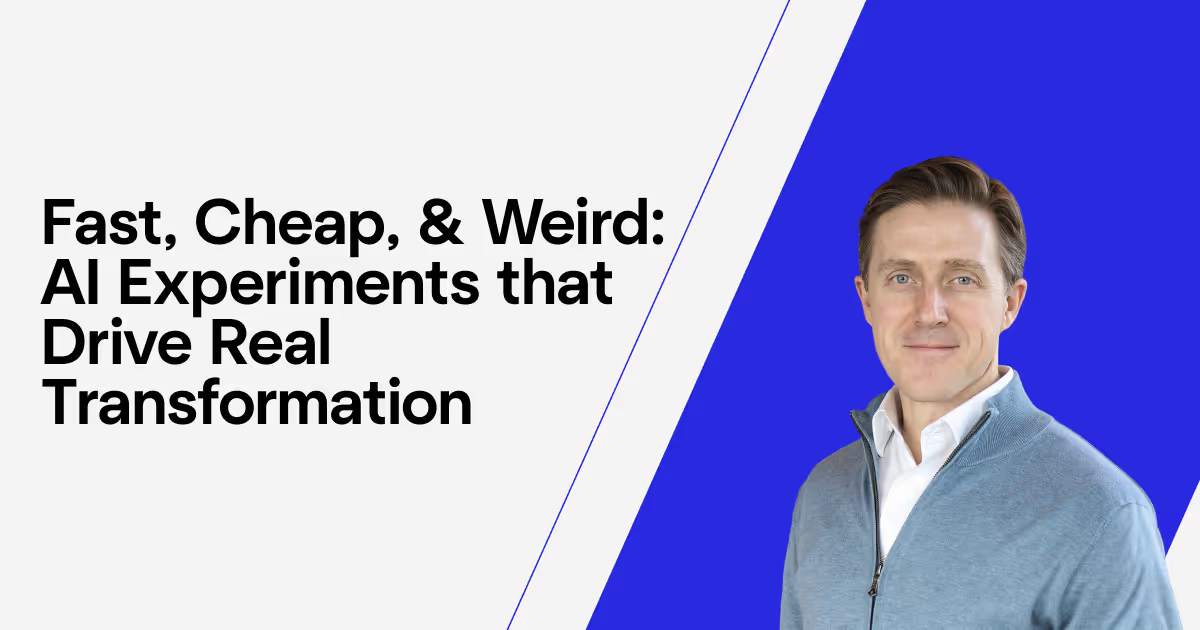
That's the thesis Utsav Bhatt has been building. He's the CEO of StratOff, an alternative consulting firm designed for the AI era, and he recently published Alt Consulting as a playbook for what comes next. Utsav spent over a decade in IT consulting, including time at Innosight where he worked alongside Elliott and several others now at Alloy. He started StratOff in 2023, right as the questions he'd been asking about AI and consulting became urgent enough to put in writing.
We covered a lot of ground in this conversation: the economic logic of why the pyramid breaks under AI pressure, the five archetypes of alternative consulting already emerging to replace it, and the real reason most enterprise AI transformations fail. That last one surprised me most. Spoiler: it's not that employees are resisting AI. It's something more fundamental than that.
The sharpest frame from our conversation was also the subtitle of Utsav's book: the end of consulting as labor, the beginning of consulting as a tool for multiplying senior judgment. That's not a consolation prize for an industry under threat. It's a structural argument about what clients are actually buying now and what they'll stop paying for. It's a conversation that matters well beyond consulting, for any corporate innovation leader thinking about how professional services, knowledge work, and external partnerships change from here.
Featured Guest
Utsav Bhatt is the CEO of StratOff, an alternative consulting firm built for the AI era. StratOff helps leadership teams across the globe turn transformation ambition into execution, with a model that puts senior judgment at the center and uses AI where traditional firms would have deployed junior analysts. Utsav spent over a decade in enterprise IT consulting before founding StratOff in 2023, and recently published Alt Consulting, a book mapping what the consulting industry looks like on the other side of this shift.
Connect with Utsav on LinkedIn.
Key Takeaways
- AI is removing the base of the consulting pyramid. Traditional consulting economics depend on a large layer of junior analysts doing research, synthesis, and first-draft work. AI automates exactly those tasks. Once that base goes, the whole model strains: you don't need large junior teams, which means you can't justify the same cost structures, the same 8-12 week engagements, or the same billing rates. What emerges isn't a smaller pyramid. Utsav describes it as an obelisk: fewer layers, more senior judgment at the core, priced on outcomes rather than hours.
- Five alt consulting archetypes are already taking shape. Utsav maps five models gaining ground: solo experts (senior consultants working independently with AI as their primary tool), senior-heavy boutiques (lean teams using AI as their operating system at the base), strategy-as-a-product firms (productized consulting delivered through software), expert insight platforms (AI-mined knowledge from curated expert networks), and on-demand networks of ex-MBB talent deployed by project. Each model is viable on its own. The more interesting dynamic is that incumbents now have to compete with all five simultaneously.
- Most enterprises are stuck in pilot theater. Utsav cited a survey of 6,000 CEOs where 90% said AI hasn't meaningfully moved productivity. McKinsey found 94% of companies stuck in some form of pilot mode. An MIT study found that 84% of companies that invested heavily in AI training haven't changed a single role. The pattern is consistent: organizations are spending on tools and training but not redesigning how work actually gets done. That is the gap between AI adoption and AI transformation.
- The behavior change problem isn't resistance. It's identity protection. Utsav pushes back on the framing that employees are resisting AI. They're not. They're protecting how they know how to succeed. If your career was built on owning information, being the expert in the room, and executing proven processes, AI threatens all three at once. The answer isn't more training sessions. Utsav's argument is that you have to address professional identity directly: redefine roles, redesign career pathways, and give people genuine psychological safety to experiment before you expect them to change.
- Real transformation requires redesigning work, not just deploying tools. Utsav's Rewire framework (Reimagine, Redesign, Realize) is a useful reminder that most companies stop at step one. Reimagining is the easy part. The redesign phase means actually rethinking processes, roles, incentive structures, and org design around what AI makes possible. The Solow Paradox is instructive here: when computers arrived in the 1980s, productivity gains didn't show up for 10 to 15 years, because companies computerized their existing processes instead of rethinking them. The same pattern is playing out now.
- McKinsey won't disappear. But consulting will unbundle. The big firms are not flying blind. They have deep AI partnerships, have trained internally at scale, and are already moving toward outcome-based pricing. What changes is who can access consulting and what they'll pay for. Mid-market companies that could never afford MBB will increasingly work with AI-powered boutiques. MBB retreats to the highest-complexity, highest-judgment work. And as ex-consulting partners move in-house to corporate strategy offices, enterprise buyers will get much sharper about what they actually need to buy externally and what they can build inside.
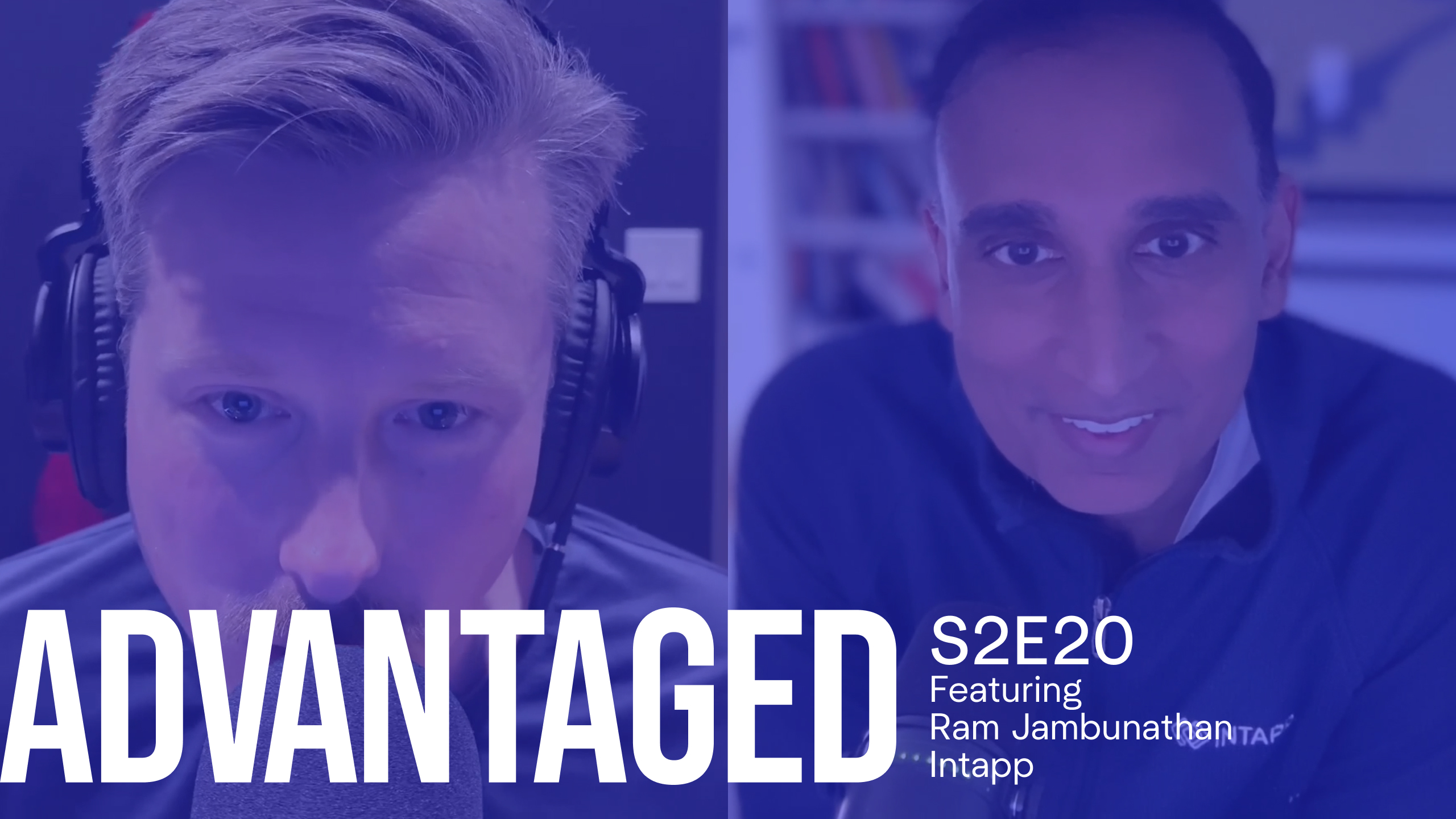
Listen to or watch the episode below and be sure to subscribe to Advantaged, the leading corporate innovation and venture building podcast, on Apple Podcasts, Spotify, or YouTube.
Referenced in the Show
- Alt Consulting by Utsav Bhatt
- "Services: The New Software" by Sequoia's Julien Bek
- The Solow Paradox — Robert Solow's 1987 observation on computers and productivity
- Jack Dorsey on Block's new three-layer org structure
Transcript
Below is an un-edited transcript from the episode.
Drew Beechler: Welcome everyone to Advantaged and Alloy Partners Podcast. I am Drew Beechler, our VP of Marketing here at Alloy Partners, and your host of this podcast Advantaged. Alloy Partners is a venture builder, we partner with leading organizations and entrepreneurs to co-create advantage startups and venture studios that unlock growth and transformation. And on the podcast, we interview corporate innovators, founders and investors all around venture building, startup, corporate partnerships, and how corporates and startups are winning together by working together rather than as adversaries. And here today we have myself and Utsav Bhatt, the CEO of StratOff. StratOff is an alternative consulting firm designed for the AI era that helps organizations turn transformation ambition into execution. Utsav works with leadership teams across the globe on strategy, innovation, and enterprise transformation. And we've worked with Utsav for a number of years in our business and in the past as well. So thanks, Utsav, for joining us.
Utsav Bhatt: Thank you for having me.
Drew Beechler: So Utsav, you've spent over a decade in IT consulting. You worked at Innosight with Elliott, our CEO and a handful of others on our team in the past as well. For a number of years you've helped corporations again, globally pursue disruptive innovation and recently taken all that experience and knowledge and you wrote a book on where consulting is heading. So maybe let's just start with, what made you want to write this book? Who did you write it for? And tell us a little more about the book.
Utsav Bhatt: So I actually didn't set out to write a book. It started in December, 2022 when ChatGPT just came out and I started using it quite seriously and something almost clicked immediately after using it for a few days. I could figure out that there is a mega shift which is gonna happen. This doesn't seem like a simple productivity tool. It's not like an Excel macro. It's something fundamentally different. To be fair, those days you had a lot of hallucinations, but it was quite clear where this technology was headed. And I've seen, interestingly, the same story play in a different industry, legal services. I had an opportunity to work with a client for close to two years, and I'd seen this transformation quite close in the legal services area. So with that experience, I started asking questions to myself and started taking down notes in terms of what this means for me as a consultant, my career trajectory, what this means in terms of how we deliver work, how should I assemble teams differently on projects. Then in 2023 when I started StratOff — it's short for Strategy Office — those questions became more real. I was having conversations with clients, with peers who are working with McKinsey, Bain, BCG, and everyone could sense that there is some shift which is happening, but nobody had a clear language around it. So that's when the idea for the book came together. So the book has been written for three groups. First are the clients who are now starting to ask questions around what it means to work with a consulting firm going forward. Second, it is for consulting firms and the leadership asking whether this model is going to be viable in the long term. And most importantly, for consultants like me and others, all the way from those aspiring to join big consulting firms right now, to partners who are asking what this profession looks like going forward. So it's not meant to be a critique on the industry. I'm not saying consulting is dead. McKinsey is no longer going to exist. It's a playbook of what's coming next.
Drew Beechler: What's the core problem with the way traditional consulting firms operate today?
Utsav Bhatt: I think the simplest way to explain it is this: traditional consulting is built on a pyramid. AI is removing the base of that pyramid. Once research synthesis and even first draft of work gets automated or semi-automated, the whole economic logic starts to break. So you simply don't need a large team of junior consultants doing that work anymore. The shape is changing. It becomes much more in this new form of an obelisk. There are fewer layers, there is more senior judgment at the core. AI is doing a lot of work now and more importantly you will start getting priced for outcomes. You'll not price for time that you're putting in. And alongside this shift you are already seeing new models of consulting firms emerge — that's what alt consulting is, short for alternative consulting service providers. I listed five archetypes. First are solo experts: people leaving consulting firms and using AI on their own to serve their clients. Second are small boutique firms which are senior heavy and at the base, using AI as their operating system. Third, you have strategy as a product form. Fourth is what I call expert insight platforms — what if clients start accessing expert networks directly, and these companies start using AI to mine insights from interviews? And the fifth are curated expert networks: ex-MBB consultants available on demand. The interesting part is it's not a capability problem we are solving. The talent is incredible. The problem is incentives.
Drew Beechler: I'd love your take on the Sequoia article from Julian Beck about services as software and the unbundling of services — and where you think demand for intelligence versus demand for judgment is going.
Utsav Bhatt: It's an interesting article which drove a lot of discussion. Product companies said three years back that you don't need consultants anymore. But what they have realized is you still need that human layer. A senior client once said to me, I need you to do some quick strategy work for me. And I said, you know what, ChatGPT is there, it's just $20, you can do it yourself. And he said, I can do that. But the problem is I'm not trained as a consultant. I might miss certain lenses that you bring in, certain judgment that you bring in. That's why I'm willing to pay more. The other example was with my analyst team. I asked them to automate a particular analysis for any new prospect. They came back after two days and said we can't do this — it hallucinates and it's not giving it in the right shape or form. Then I worked on it and found a way to get part of the framework automated. The difference was: if you have spent decades in consulting, you know what good judgment is, what purely AI-generated output looks like versus what a client actually asks for. And the workload is actually increasing at the judgment layer. When juniors give you an entire ten-page slide deck, what I see is: oh gosh, you just missed one critical piece. Judgment is still very crucial.
Drew Beechler: Walk us through some examples of what real AI transformation looks like in practice.
Utsav Bhatt: Most companies today are still in what we could call pilot theater. In innovation, there's a common term: innovation theater. A lot of companies do a lot of show and song and dance around it, but nothing actually happens. Similarly here, there are AI pilots. I spoke to two clients, one in Singapore, one in Australia. Both said, hey, we just had a co-pilot training. I said, great. And what did you do after that? They said nobody actually spoke to us about what it means for our work. When it actually does happen, it looks very different. A client once called me and said, Utsav, I have five weeks, there's a board meeting coming up, I have a slot for half an hour to present my thinking on what should be our AI strategy. I don't have time to run through procurement and get an 8 to 12 week project which would cost $750,000 to $1 million. So we did an entire 80-100 page AI strategy, full board ready, in four weeks. And what was interesting to the chief strategy officer was not the speed. It was the experience. She said, I conceptually understood your model when you pitched, but I never could really imagine what it means to go through that experience. Once she did, she said: now I know how to use these services, now I know in which situations I can start using consulting. That opened up areas of non-consumption, where a client would never think about hiring a consulting firm because it seemed too small, but they still need good thinking.
Drew Beechler: What does it actually take to get AI into the core of how a business operates, rather than just at the edges?
Utsav Bhatt: What's happening right now is a lot of optimization at the edges. You're automating back office functions: HR, procurement, receivables, payables. It's a great start — you're saving cost, improving efficiency, building confidence. But it's at the edges. Think about it with a two-by-two: X axis is business model (current vs. new), Y axis is technology (existing vs. new). When you have your existing business model and a new technology like AI, the best you're doing is technology innovation. But what becomes interesting is when you say: we're going to consciously rethink what's the new business model for us. That's where disruption actually happens. An example: in 1987, the economist Robert Solow said he could see computers everywhere except in productivity. It took 10 to 15 years for industry to start showing benefits of computerization. The same story is playing out now with AI. What needs to be done, apart from working on the edges, is to start seriously re-looking at your processes and reimagining them for the future.
Drew Beechler: What is the underlying behavior change problem we really aren't talking enough about?
Utsav Bhatt: I've thought a lot about this. I don't think people are resisting AI in that way. They are just trying to fiercely protect how they know how to succeed. If there's a playbook which has been working for decades in a company, why would you challenge it? If a career has been built on owning information, being the expert in the room, following a standard set of structures and processes — AI threatens all three. Information is not a power anymore. You're not the expert in the room. So what do people do? They use AI to improve their existing process. They make it faster, better, cheaper. But they don't reimagine it. And that's why productivity gains don't show up. A study of 6,000 CEOs: 90% saying AI hasn't meaningfully moved productivity. McKinsey saying 94% of companies are stuck in some pilot mode. MIT found that 84% of companies who invested heavily in AI capability building have not changed a single role. The pattern is very clear. We are investing in tools. We are investing in some initial training. But we are not redesigning work.
Drew Beechler: Some of it is identity as well. How does your identity change if you see yourself as a software engineer, and now your job is reviewing code that agents have written?
Utsav Bhatt: Upskilling is fine, but it's not enough. The rules would change, the identity would change. A developer might in future be a product thinker. An analyst might move from being an analyst to being a decision maker. That's very uncomfortable because identity is tied to your status, your expertise, and how you see your value to the organization. If you don't address that, the transformation will fail. And that's what we do with our Rewire system: three phases — reimagine, redesign, realize. When you talk about reimagine, you're looking at the business model. Business model has three components: customer value proposition, delivery model, profit formula. But there's a fourth component which often gets overlooked: the systems and culture which connect all three dots. Systems and culture in any company evolve so precisely that they fiercely protect the business model. I call it biological DNA, because even biological DNA rejects change. So you need to redefine roles, responsibilities, job descriptions, designations. Define clear pathways. And psychological safety is a very important element. Employees need to be quite clear: are we on our way out? Are we here to get upskilled and do more value-added work? If I do some experiment in a real client matter and it fails, would I still have my job? You need psychological safety for them to experiment. Otherwise they won't even risk changing.
Drew Beechler: In five to ten years, does McKinsey still exist in this world?
Utsav Bhatt: The incumbents are not keeping their eyes shut. McKinsey, Bain, BCG all have deep partnerships with big AI tool providers. They have used billions of tokens to train their internal teams. They're openly talking about how many thousands of agents they have right now. So they are not flying blind. They are adopting it. They're changing their business model to outcome-based work. So I feel McKinsey, Cognizant, and other firms will exist. They won't look the same, maybe. What would change is not the demand for strategy — that might still increase, because more complexity would come. But what changes is how it'll get delivered, how it'll get priced, who delivers it, and how clients unbundle the work. You will see smaller, more senior teams. Mid-sized companies who could never afford consulting services will start working with seasoned consultants who are now more affordable because AI has changed the game. And at the same time, for MBB, they retreat to the top of the most complex consulting work for which clients will not mind paying top dollar. The interesting game I'm keenly observing: there's a lot of movement from top consulting firms to clients. Clients are hiring seasoned partners and managers from consulting firms. When that happens, corporations for the first time will have sophisticated internal consulting teams. And they'll say: why do I need to hire you for six months when I can take part of it internally, hire an alternative provider, or use a product to do the analyst work? Then I'll come to you and say: instead of six months, I'll hire you for four weeks, pay you top dollars, and you start working on the work I've already done. So I don't think we are seeing the end of consulting in any way. We are seeing the end of consulting as a labor model. It's the beginning of consulting as something you deploy strategically, in much smaller doses, for much higher-value problems.
Drew Beechler: Well, thank you so much Utsav for joining us today. This is an awesome episode. I look forward to working with you and talking more in the future. So thanks again for joining us.
Utsav Bhatt: Thank you.








































.avif)