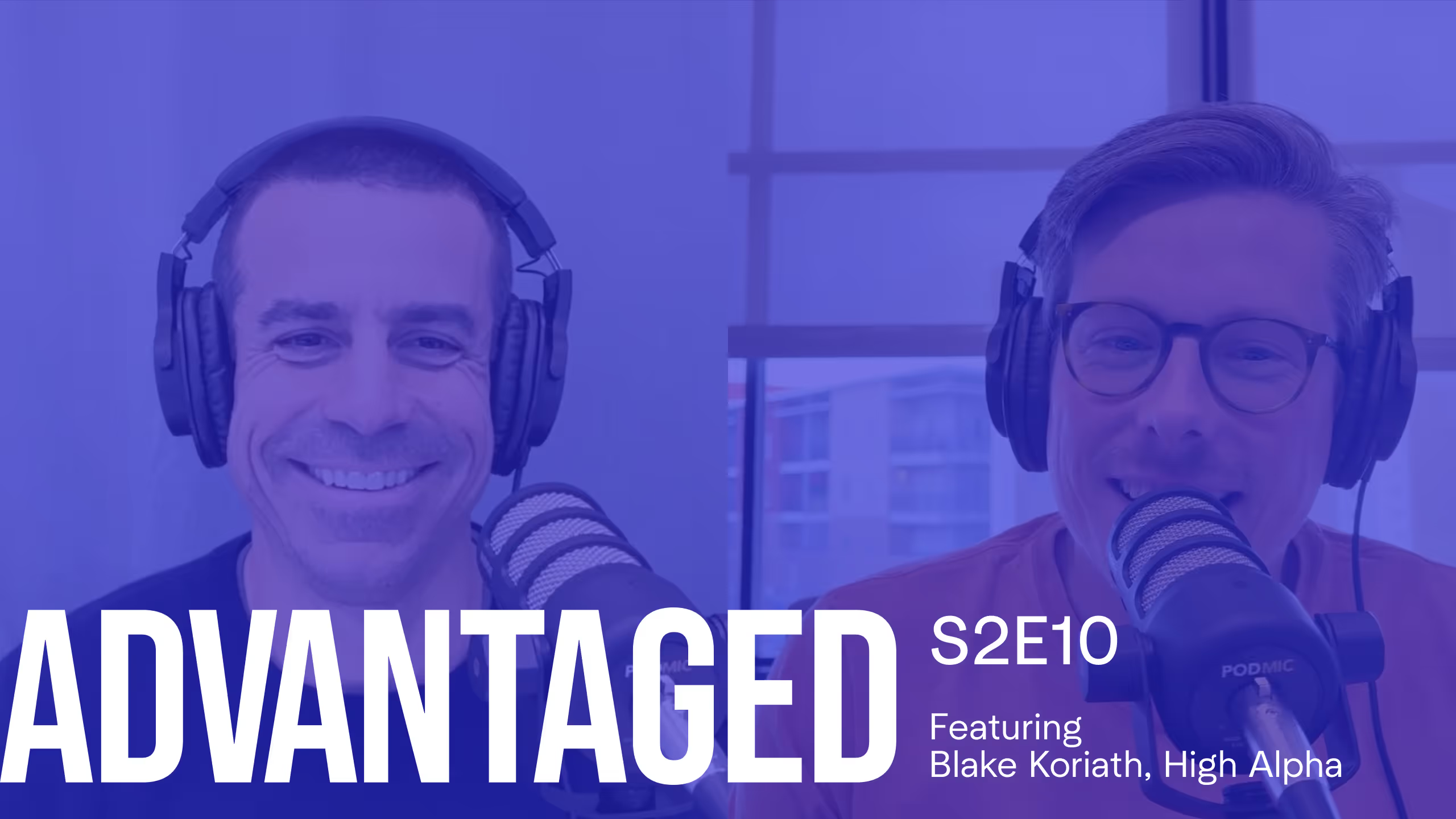
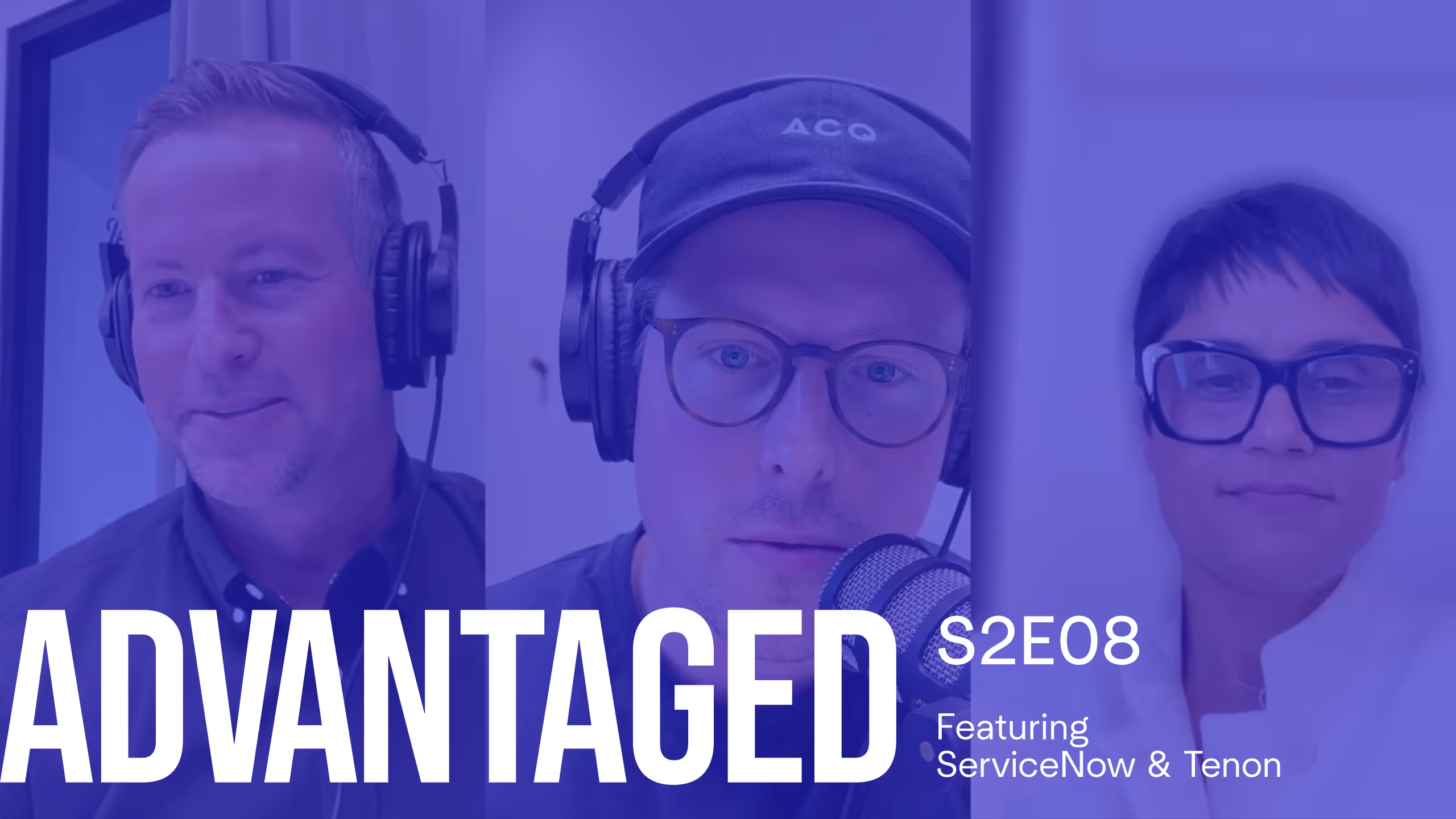
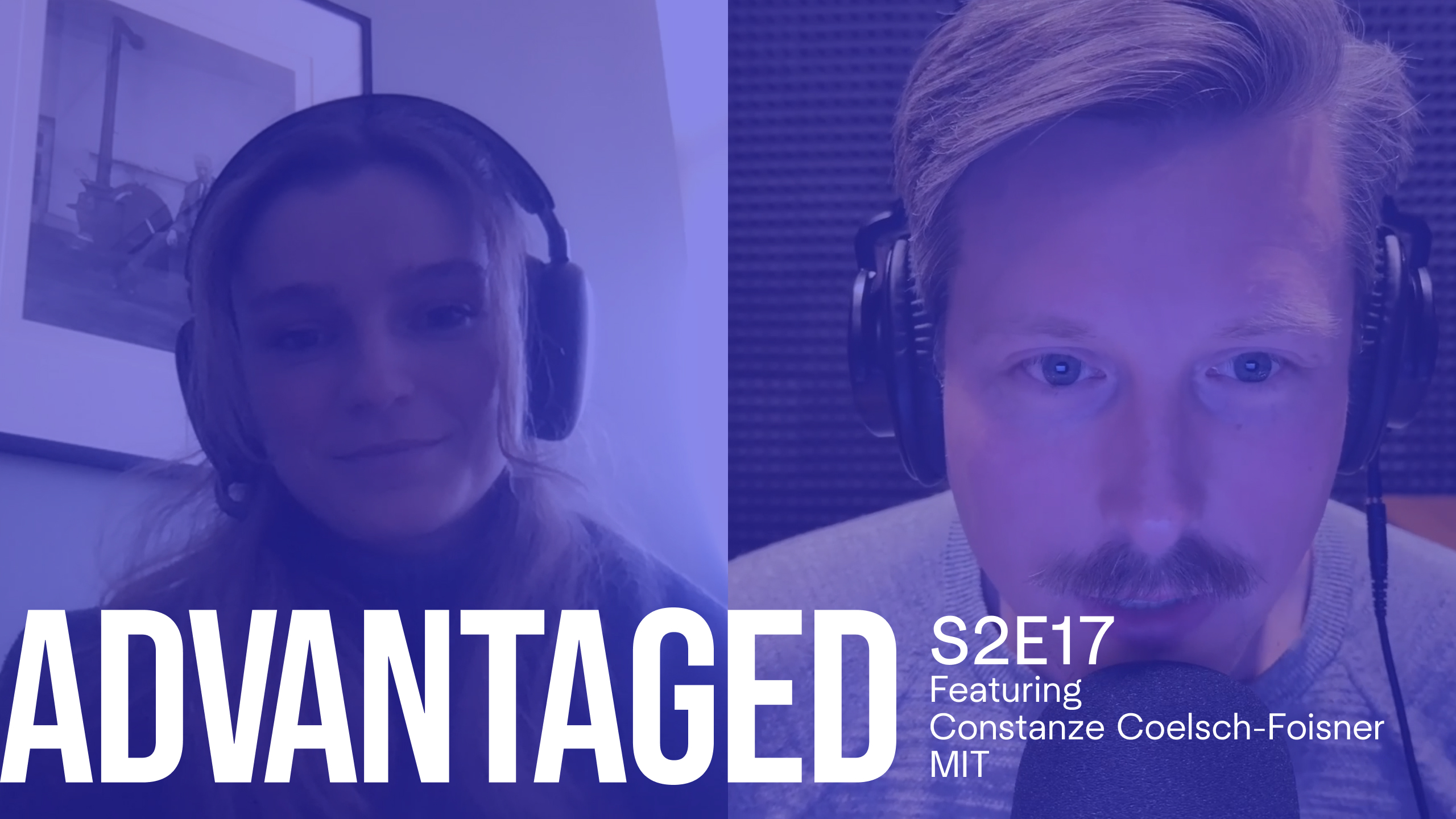
On this episode of Advantaged, I sat down with Greg Robinson, Partner and Head of Corporate Development and Edward Jones Ventures at Edward Jones, to unpack how a 100‑year‑old private partnership is building a different kind of corporate venture arm. We talked about why they started Edward Jones Ventures, how they've structured it to be truly founder‑friendly, and the role incubation plays in their strategy.
Edward Jones Ventures is the venture investing arm of Edward Jones, focused on technology, products, and services that create new value for the firm's clients and financial advisors. Rather than raising a traditional fund or investing solely off the balance sheet, Edward Jones Ventures uses a unique model where general partners invest their own capital into startups
Greg leads Corporate Development and Edward Jones Ventures after previous roles in investment banking and nearly a decade in strategy and corporate development at Charles Schwab. He was hired to a capability that could combine M&A, strategic partnerships, venture investing under one roof.
What We Covered & Key Takeaways
- A different capital model for CVC. Edward Jones Ventures uses a GP‑capital model where partners invest their own money alongside the firm, which reduces fund‑deployment pressure and increases personal ownership in portfolio outcomes.
- A clear, three‑part mandate. The team is focused on growth, differentiated problem‑solving for advisors and clients, and third‑horizon themes (AI, tokenization, blockchain) that could reshape wealth management over the next decade.
- Commercialization as a first‑class function. A dedicated platform team is responsible for helping portfolio companies and incubations move beyond pilots into real distribution across Edward Jones' advisor network, rather than leaving that lift entirely to founders.
- Incubation as a strategic tool. Edward Jones is not only investing but also building companies from scratch when there's a clear gap and strong strategic fit, with a playbook that keeps these ventures on “startup rules” while still leveraging corporate assets.
- Founder‑friendly by design. Greg and his team are intentionally avoiding heavy governance, slow cycles, and “venture tourism,” aiming instead for speed, pragmatic terms, and genuine partnership that makes Edward Jones a cap‑table name founders actually want.
Listen to or watch the episode below and be sure to subscribe to Advantaged, the leading corporate innovation podcast, on Apple Podcasts, Spotify, or YouTube.
Transcript
Below is an un-edited transcript from the episode.
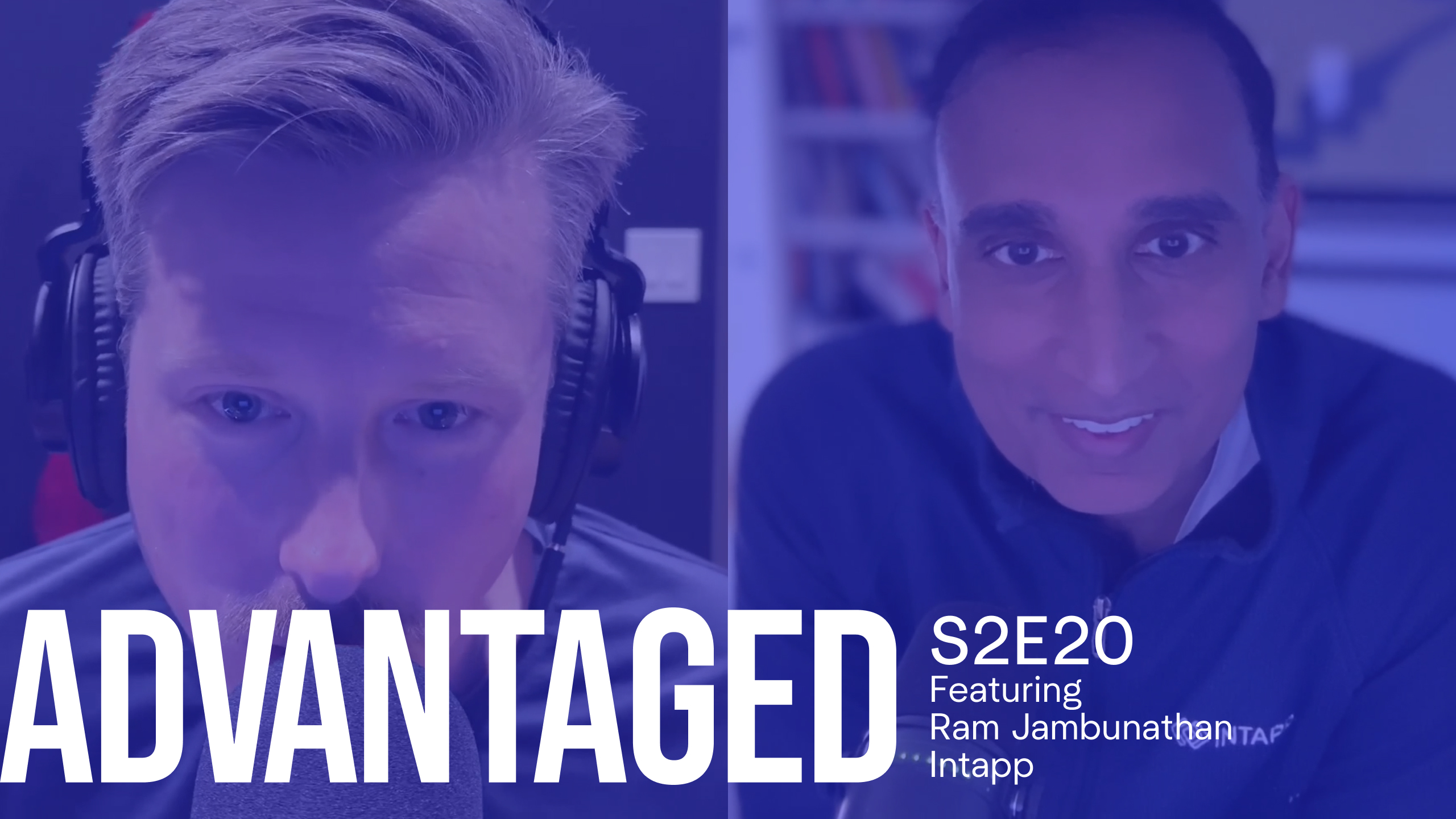
Drew Beechler: Welcome everyone to Advantaged an Alloy Partners podcast. I am Drew Bechler, our VP of marketing here at Alloy Partners, and your host of Advantaged Alloy Partners is a venture builder. We partner with leading organizations and entrepreneurs to co-create advantage startups and venture studios.
Here on Advantage, we interview corporate innovators, founders and investors all around venture building and startup corporate engagement and partnerships. We're telling stories of how corporates and startups win together, and here today we have myself and Greg Robinson, the principal and head of Edward Jones Ventures at Edward Jones.
Greg leads the Edward Jones Ventures team and drives the firm's innovation. Inor organic growth strategy oversees strategic investments, partnerships m and a, and new solutions to advanced enterprise goals. In the industry at large. Thank you so much, Greg, for joining us. I'm so excited for this conversation.
Greg Robinson: Yeah, thanks for having me, drew. Also equally excited. One of my favorite topics.
Drew Beechler: good. a little bit of of extra background too. Edward Jones Ventures launched just about a year ago out of Edward Jones as an in-house venture capital arm to invest in and accelerate the development of new products, services, and technology that benefit both clients and practice teams. And, let's start off, even before Edward Jones.
Tell us more about yourself and your career journey that ultimately led into corporate VC today at Edward Jones.
Greg Robinson: Totally. So I started my career in investment banking. Did a few different things there. Ultimately and in investment banking, I focused on financial institutions all kinds of different ones.
Capital raising m and a equity research. So got a really comprehensive view of the financial services industry and it was an incredible learning opportunity. From there really transitioned into a corporate role at Schwab. Was there for nearly a decade. I spent the vast majority of that time in their corporate development and strategy team doing a lot of similar things but never really got to touch as much of the innovation angle as I would've liked.
And I think being out in San Francisco, we at that time saw a lot of the. That's when Robinhood, Wealthfront, a lot of the fintechs really getting started. And so that's really started to peak my fascination around FinTech. I actually, funny enough, got transferred into helping run the service department at Schwab.
So all the non-client facing functions, which was an incredible experience, which as part of that had product responsibility for the telephony platform. And then really wanted to get an opportunity to build something from scratch. I think I had accumulated enough knowledge and know-how, and so when Edward Jones reached out that was really the opportunity essentially, Hey, we've never done m and a innovation, any of these things really before or had a capability dedicated to it.
Would you like to come and build it? And through a little wrangling with my wife, we moved out to St. Louis and basically started here at Edward Jones and that eventually led to getting the opportunity to create Edward Jones Ventures.
Drew Beechler: I know Edward Jones Ventures is celebrating. Its one year anniversary. Tell us a little more about the founding story of Edward Jones Ventures, the structure and the unique strategy and how you fit into the overall mission of the larger parent corporation.
Greg Robinson: Yeah. So while I think a lot of us were new to the corporate venture capital world one of the things that we did really early on before truly launching Edward Jones Ventures, is we went on a listening tour of sorts.
And just chatted with a whole bunch of people both those in venture capital and outside of venture capital and just said, Hey, why do corporations, or why are they very bad at this? Why do they, they, they call it, venture tourism. I think I wanna do it but I don't really wanna do it.
And drew that really laid this foundation to what eventually became Edward Jones Ventures because we heard a lot of the things. That we shouldn't do. When we launched it and we were able to take those lessons and still today, we iterate constantly on how, on our structure and our message and what we're focused on.
So that was how we like structurally thought about it. And then the other way was, The industry, especially in wealth management, is changing. I think every industry is changing rapidly. And not just from two years ago. So it it really the initial hypothesis was, Hey, how do we bring the outside in?
We're in, based in St. Louis, we've been around for 103 years. An amazing organic growth story. Edward Jones has been to grow to a, close to a Fortune two 50 company. But how do we bring that outside? Innovator's perspective into our own firm and leverage what they do best and pair that with what we do best and truly try to create that win-win situation.
Drew Beechler: tell me about the makeup and the strategy and the structure of the ventures team today. What does that look like now in practice?
Greg Robinson: Yeah, so we could, we'd talk about it in a number of different ways. Our mandate is a couple fold. So one is we really like to focus on growth.
So how can we help the organization grow? And again, leverage, you're gonna hear me talk about this constantly, leverage that outside ecosystem to help us grow. The second one is, how do we solve problems uniquely or differently, right? So instead of, is really easy to jump to the solution or to the vendor or to the thing, but really what is it fundamentally that we are trying to solve? And then the third thing is third horizon type stuff. Like the world is changing, right? Like, where's Gen AI gonna work in wealth? Where's tokenization? Where's the blockchain? Like, how are these things gonna fundamentally impact our organization? So structurally, we're very clear on our mandate.
Now those things, the things that we're trying to solve inside of that may evolve but fundamentally, that doesn't change. We're actually a really small team. There's seven of us, including me. It's generally Divided into two buckets. We have a team that focuses on the investment, so the prospecting, the memo, writing that your more typical VC activities. And then we have a second group that we refer to as our platform team. And this is, we'll get into this a bit later, but this is where we really start to get unique in the sense of how we then commercialize these organizations and how do we actually start from. A very quick pilot all the way to rolling it out to our our 20,000 plus financial advisors and our branch teams all across the country.
Drew Beechler: on the like financial side as well. Like this isn't investing, off the balance sheet like many corporate CVC teams and tell me what is the unique financing situation with Edward Jones Ventures and how does that layer into your own? autonomy and And uniqueness even as a team and as an entity really.
Greg Robinson: Yeah. Thanks, drew. That's a great question. So we, as a private partnership we are and have been proudly for 103 years, a hundred percent employee owned. We plan to be a hundred percent employee owned for the next a hundred plus years which gives us a very unique, long-term focus on what we're trying to do and when we. Talked again, going back to the listening part the two things we heard is, oh, we invest off the balance sheet or we create a fund. And we just didn't think either of those were right for a corporation. So we came up with a unique structure in partnership with our CFO to leverage our own personal capital.
So there are, the general partners, which are the senior most folks at Edward Jones, we leverage our own personal money to make the investment. So essentially, when the money would become distributed to us we carve out whatever we've invested and put that into the startup. And this creates so many unique advantages for us. One is the capital's like super flexible. I don't have a mandate to spend any amount of money, so I don't ever feel pressure to deploy it or to find anything. If we did one deal at a year, that would be okay. We, I think we did 10 or 11 last year. If we, again, did one to five this year. That's okay. So we don't have any. We don't have to, we don't have to spend the money. Number two is it allows us to focus more like a family office, meaning our general partners have ownership in a way into the startup, right? So there might be a more likely to go the extra mile to help, right? Capital isn't different, right? My money is no different than anybody else's money, but the things you get from that money or addition, and now all of a sudden you have hundreds of experts in their field willing to help provide insight and value to. The startup organization and three, like we and this is somewhat very unique to us, we can move really fast. So we have purposely built and continue to refine our investment process. So I think last year our fastest from meeting to funding was in 10 days. So we met the startup and funded within 10 days. That creates meaningfully meaningful flexibility, meaning I don't have to be in front of every founder all the time. I have lots of other VCs that'll be, oh, I think this would be a fit with Edward Jones. Let me call them and we can move really fast. Unlike a lot of other CVCs that tend to, might need a lot of approvals or could take 2, 3, 4 months before they even get back to you.
Drew Beechler: That's huge, I think, and I have never heard of a 10 day corporate strategic investor deal happening, let alone, even in traditional venture oftentimes, that would be close to a record. could you share a little more around how you think about strategic. Value and strategic growth, like back into Edward Jones, the in, I don't know if is parent company like the right term or how do you refer to Edward Jones versus Edward Jones Ventures?
Greg Robinson: I like to think of it as just like we're an extension of the organization. Because that's what we're that's our mandate. My our mandate is to help the organization first and foremost. Right. And then as we do that, and we'll talk about some other things as this call goes on around our uniqueness, but we, when we do venture invest, is really critical. We're there to venture invest. We if we're gonna, if we're looking to acquire something, and I lead that team as well, that's not a venture. So we don't look to acquire the things that we're investing in. We actually want to help it scale and grow. And we'll often do referrals to our peers and others and even intros to help them break into other components. But yeah we're part of the organization. And again, first and foremost, we like to think about growth. For the organization. So Edward Jones is an amazing organization. We do wealth management. That's it. And so that creates an incredible opportunity for us in the sense that we wanna spin the flywheel of Edward Jones, which is driving more clients and helping them with their, long-term financial picture into our. Platform. And as that wheel spins and we can drive growth, that's really the true measure. We do also get involved in can we, fic for lack of a better term, efficiency type opportunities across our home office and help solve problems. There our CMO recently came to us and said, Hey, I want to be able to do compliant marketing at scale at the local level, right? We have 16,000 branch offices across the US and Canada. So we'll get a mandate like that and we will then take that and go and try to solve the problem so we don't tend to come up with any of our own ideas. We will listen to our financial advisors, our branch teams, our home office, the industry, and then figure out where to go from there.
Drew Beechler: you talked about a couple of different pieces, m and a, innovation, like maybe at a high level, could you share like what is your philosophy and approach to innovation and how all these kind of pieces fit together. It's not just insure investing, it's not just m and a and corp dev. There's a broader kind of philosophy that it feels like you're taking. With Edward Jones that is unique but is also feels like been very successful.
Greg Robinson: one of the things, again, coming back to why I wanted to join Edward Jones was the function or the capability that, that I oversee. Was mine to create. And I have seen other organizations separate these functions and. sometimes m and a sits in one place, innovation sits in another. Partnerships or business development could sit somewhere else. And I gotta give foresight to the organization to come up with the concept to allow this. To happen. It would not have happened without, penny, our CEO and managing partner and the rest of the organization really being so behind what we're doing. But this allows us to be very focused, drew on the outcome that we're trying to solve, and then figure out what is the right tool, innovation partner, referral acquisition to solve that problem. And what is. Very critical to ensuring that works is you can't, you, you can't go back and forth, right? I'm generally not, I'm gonna go solve this with an acquisition, but I'm gonna go do it also in innovation. So it's it could be generally on the acquisitions side, we're looking for something that's established. Generally core to what we do. There's a strong talent component to it. They're bringing unique, collective insight, right? But whatever that management team might have hundreds of years of experience to something we don't have That's something we'd likely go acquire. And you've seen that in some of the deals we've announced on the innovation side, we're really focused on. There just isn't anything in existence generally, or someone truly you truly knew, know that there's a better way for that to happen. And so we go the venture route and then, we will, we'll leverage partnerships and referrals in between to try to solve problems. And having that in one group and the same team focusing on that, that we're able to we're able to really help solve problems versus. Be, Oh, I need to do deals or, Some of the things that I think other folks in these roles get straddled with.
Drew Beechler: Exactly Can we talk a little bit more about your strategy and thoughts around incubating startups as well and alternatives to just corporate venturing and investing in a company? I know you've had conversations with our team and vice versa on, on some of this before That have some unique insights and experience there.
Greg Robinson: I, I love incubations and I don't think I. When I wrote the initial, funny enough, drew, I had to write a memo to get Edward Jones Ventures off the ground. And I don't think if I went back and looked at it, there would've said incubation in there. The concepts might have been there, but the actual term of doing it, we were lucky enough to get connected with Bain capital Ventures, and they were, and a they were doing an incubation and or had the idea of one, and I jumped at it and I think. This is another lesson. Just as an aside, you're gonna hear no a lot when you're trying to do this stuff. Don't give up. I think I, I got a handful of those when I first brought it up, but was very persistent about, no, we need to do this. And what we found was when we were building. The startup, a couple of things started to come true versus investing in it. One, the infrastructure was going to be built at enterprise grade. So oftentimes in our space in particular, you could build for smaller wealth management firms, but it's very different if you're gonna try to build for us or any one of our larger competitors. And so we were able to solve a lot of those problems by giving guidance way upfront. It saves an enormous amount of time. Number two, when you hire a great CEO and a great technology lead and a team man, they can move mountains, right? And all outside of, and again, another critical component, we don't let we give advice, we tell them what they should think about, but we don't get involved in telling them how to build the product, right? So what we have done. I would underscore this as critical component to being successful in doing this stuff is our home office teams are not really allowed to be involved in the day-to-day. So my team will run the day-to-day and we allow the startups to work with the financial advisors and their clients. So they're focused at the end point of delivery, but we don't impose. Any of our structure or thought process or views onto the startup, which allows it to move. So in that first incubation, we went from a PowerPoint to a product usage in less than 240 days. So that was like hiring the person, getting the team in place, structure. Like after we had said, Hey, this is the thing and. That sort of built the foundation and changed a lot of folks' minds because that now incubation is fully scaled across Edward Jones and growing like a weed. And so now oftentimes this is our preferred method and I think and shout out to you all. It, ends up being way better for the corporation if you could set it up the right way, because you're not trying to change the direction or of the existing startup.
Drew Beechler: totally. I have a decade of starting startups in a venture studio like model. Both, both at High Alpha and now here at Alloy. And There's a couple things that just resound here, but one is there's a different rule book for a startup. There's a whole different playbook and when you're playing by startup rules, in this scenario, getting to an MVP in X amount of time, being able to focus on the most acute pain problem that someone's willing to pay for and how do you scale the business? Using an entrepreneur. You know, The atomic unit of innovation is truly an entrepreneur working inside of a startup. Every single big corporation, Edward Jones started as an entrepreneur working inside of a startup. And we love to say that, but in reality, like that's where the magic really happens. And I think that is, it's so important around, how do we not get into the day-to-day? How do we not bog it down with process and governance? Enterprise structure, but at the same time, this unique style of day, zero collaboration, incubation, venture building, however you wanna describe that process, is so unique because it's so aligned to the need, the pain point you have. And I say a lot. It's creating your own luck rather than we're going out there and seeing what exists to help us try to solve this problem. Sometimes it's a 10-year-old software company and they started selling into SMBs. So to your point, they have just now they're still only testing their, enterprise grade worthiness rather than something that's built from day one. To operate inside an enterprise at security and scale and et cetera. Or it's, it was actually built for this other very specific use case in a different vertical. And they're just now moving into your vertical. There's just always it's just so different when it's, Hey, we are going to create the outcome that we want. We're gonna create our own luck and go out there and build the thing that, that we need. And it's, hugely valuable. And so we love that approach. We preach it often and have have done this a handful of times, but the end value to the company oftentimes too, because it solves the core problem it helps them grow in an area or the strategic mandate that you have is often even much more valuable than. Startup equity, of what the company is worth because of the problem and that it's solving for the organization, which is huge.
Greg Robinson: Yeah, it I love the create your own luck as a corporation. And yeah. It's not easy, right? It's every fiber of an organization of our size or larger is to we're, we've been successful, right? So let us help you with how to do this. And so you have to fight that. A little bit. And then the other thing that's been incredibly valuable is we've Gotten champions just built up, right? So I always hear this, that you'll hear this term in a large organization, let's go recruit some change champions and then let them tell everybody what to do. And it just doesn't work like that, right? You have to organically grow people and build followership Inside the organization. So like we had to do that as well. And so now we've built followership. across many of the critical functions that now enables us drew to go so fast with these things, Fast for a corporation because people are bought into what's happening and they can change their mindset for when I'm looking at an Edward Jones Ventures company. and When I'm looking at a typical vendor integration build process. because they're just different things. And so that followership has blown my mind, and that's what allows us to keep doing this over and over because people get addicted to that. Creating your own luck.
Drew Beechler: it is addicting
Greg Robinson: a lot of fun.
Drew Beechler: It is a ton of fun. You talked a little bit about some of the areas that, as a venture team you're looking into blockchain, et cetera. What is your philosophy and focus right now with ai? I feel like we can't have A conversation without talking about it. And so I'm just curious and what are you seeing in your world? What is keeping you up at night or what is exciting you as we move into 2026 here, even.
Greg Robinson: Yeah, I mean it's obviously the topic. It is difficult to be in any meeting of any sorts. And have it not come up. I think the, as any large organization that is not focused on how to immediately adopt AI across the board, obviously I don't know of those organizations. I haven't met them, but obviously we have the same urgency and excitement. Around it. Our managing partner talks a lot about how do you automate the ordinary to humanize the extraordinary, right? So we are a very human centric, relationship driven firm. And in many ways that has what has allowed us to grow to the 2.5 trillion of client assets that we care for the 9 million clients. It is an incredible thing to try to, what we're trying to do is how do we enhance that human relationship with ai, but still know that many of our clients choose to be with us? And then we also have to start to think about, okay, what, we want to be around for another a hundred years. How do you evolve the experience to meet the needs of today, but then meet the needs of each generation of families that we serve today? And then obviously we wouldn't be a, an innovation hub if we couldn't come up with something unique and different that we get really excited about that we, for 10 years or 15 years from now is really something unique in the, in the industry. I will say a lot of what I see in terms of ai, everything seems to be focused on the financial advisor. A and Startups popping up every day and they're like, oh, like they've just learned about the wealth management industry or, and I'm gonna go make the financial advisor's life so much easier. And if only it was that simple. It and it's really fascinating to me that there is very little focus that I've seen on the actual client. So what's fascinating about chat GPT and we'll just use that as our analogy for all gen AI, as I think most people do, is the adoption curve was out of control. My wife doesn't use technology for anything and but uses chat GPT so much. And so what we've started to see and observe, this is another critical component as you incubate these companies, it's not always about what you're solving. But also like how are they doing it or how are they working differently with your, in our case, our financial advisors, and one thing we've noticed is a lot of the startups are having a lot of success with actually giving the client work to do. Because they've made it so easy. 10 years ago, I would've never thought about, you're trying to create frictionless, personalized experiences because you want the client to have the fewest clicks ever. Now, the client's ability to sit and engage with gen ai. Allows for an incredible opportunity to deliver value add to the client. And so we were actually talking about this morning because I, yes, there's opportunity for efficiency. Drew obviously, like there's all kinds of mundane things that all of us do on a daily basis, but I think the real true unlock. Which I don't see from the, from a lot of the pitches is what can you get the client to do or solve their pain point by introducing them something which he invested in a company that helps with estate settlement. We used to do that on behalf of the, on behalf of the client, and now. Somebody else is gonna do that while the financial advisor looks like a hero, right? Because they've saved time. But I, we didn't have to do any of that work. And that experience is focused on the client not. Financial advisor. And so as we look forward obviously we're gonna don't hear me as like we do all the other things that I think you're seeing, it can, across our core platforms, our investment management all of our back office function. All of that, compliance, regulatory, all of that, of course. But what gets me really excited is that client focus, and that's where we really try to spend our time on how do I make it easier for my client? To manage their wealth. And really ultimately at the end of the day, 'cause it's not about money, it's about, achieving whatever goal or dream you have as a client. And if I can make it easier and help you do that, and you get to engage with it alongside a human, that's always there for you, that's an incredible value proposition. And that's where we are hoping to head
Drew Beechler: I think the firms in the future. Win are the ones that can leverage ai, but keep the human in the middle, the human component the humanized kind of aspect of that is, is gonna be huge. And I love that. I think. Yeah. How do you focus more on the, not just of, because of course everything is efficiency focused right now, but it's these, how do you change the new ways of offering to the customer and kind of the business model new product lines, et cetera. New opportunities to engage with the customer in a way. Is huge I know recently in November you all held this your first innovation summit in St. Louis Energizer Park. Could you tell me a little more about that event? And I think it's just a, it's a good example. I was talking with you, some of your team prior. I think it's a good example of how you think about. Platform, how you think about the big tent strategy, bringing everyone in, the value of the network the connections, the partnerships. Maybe share more about that and the success it was and where you all are going from there, from that perspective.
Greg Robinson: Yeah I'll just, my, my initial reaction in even to the event and even still today is it just blew me away. I think it blew many people away. This sort of started as a concept and some folks on my team just took it to a level that just blew everybody away. The concept is, and one of the things that we have been very intentionally focused on is cultivating an ecosystem and we believe very strongly. That ecosystem needs to include certain parts, and we do not try to replace any component of it. So that includes venture capital firms, right? Like we love VC firms, right? Like we're not, I'm not a VC firm. I'm not trying to do what they do. And I think having them at the table is incredibly valuable. Entrepreneurs. Obviously that goes without saying so that we don't need to spend much time on that. We talk about we have a lot of partners ourself, right? That we have worked with for a very long time. Asset managers, insurance folks, all kinds of folks that we have amazing relationships with. So we actually invite them. Into the entire process. And then obviously our financial advisors and our internal folks. And so what you start to get in this ecosystem. It's a very powerful ability to then do the things that we want to do because you need each and every one of them to participate in their to their fullest extent. And so when we thought about the event, we St. Louis, which is where Edward Jones headquarters is very near and dear to us. So the event will become an annual tradition and it will stay in St. Louis. We wanted a unique venue. So the soccer stadium was built recently, and I think it turned out to be a nice way for people to spread out and move around a little bit versus your sort of traditional hotel or office style. experience. And so I think that added to the fun and then really bringing together all of the people, right? I it's really important when you're running a innovation function that really at any time an organization can decide to get rid of, right? So you're constantly needing to deliver and show value and what is often a very patient. Requirement for these things to take hold. And we really focused on bringing our financial advisors, a lot of our executive team a lot of our key leaders across the organization. Key enablers of the function together with the startups, with the founders with the venture firms. And I think. People would get tired maybe of me always saying what we do. But I think to see it in action was a big turning point in the continued enthusiasm that the organization has for what we're doing. It continues to unlock. Other executives coming to us with, Hey, I have this problem. Can you help us solve it? So It blew my mind. It still blows my mind. And we it was a scrappy event that we put together and it worked really well. And so we're excited for next year. And we'll probably switch the themes up a little bit and switch the people up, but then we'll always have that component of that ecosystem. That we try, we spend so much time cultivating and focused on because we couldn't do anything we without it, it just wouldn't work.
Drew Beechler: Yeah, there's so much value in bringing people together and being in person as well, and and letting someone else tell your story. I think that is also such a big component.
Greg Robinson: Organizations are used to having no patients, right? You're like, okay I gave you this money. What is, what are you gonna deliver and what is the ROI to work incredibly hard to buy yourself the time to allow these things to happen, and even when you have that success to start, when you know we're a $17 billion revenue company, it takes a while. To move the needle. And so I just encourage anybody who starts to think about this stuff, it's more than the investments. It has to be more than the investments. What experiences are you curating? We take teams of people all over the country and visit startups and you know how bring them in. They're here in St. Louis a lot. How do you constantly help people see beyond. What that startup specifically is doing.
Drew Beechler: That's huge. I'd love to end this maybe any other that, that's a great piece of advice but any other advice that you would have for specifically other corporate leaders that are trying to build startups and investing companies and move the needle particularly in the growth side, within their core business.
Greg Robinson: Yeah. And obviously I think we have a very unique angle on our capital, so I think if there is other folks that have that I would encourage them to use that. But I think there's a number of other things that you could do, whether you're a public company or a private company, or just getting started. The first is I refer to it as flexibility. Others call it founder friendly. We just don't, we just don't. I don't wanna say not care, right? 'cause my, my, I have two amazing legal folks that both know the venture venture world, which that we'll get to that, right? The team is incredibly valuable. But we tend to not impose any restrictions or large restrictions on the startup. This is this could not be more key. Like you don't want your name on the cap table to be a hindrance. To the founder, and if that is going to happen, you are already making it much harder for that thing to scale than you would want to. So we tend to be very very flexible because each founder's different. Each one's had different experience. Each VC is different. So we don't impose any standard, Pretty much anything, right? Like obviously there's a few things we need, but nothing that, no, all investors wouldn't be getting anyway. And number two is we don't intend to acquire, right? So I think a lot of folks get nervous if. If we're on the cap table, they think, oh, we're gonna buy. So we work really hard, and especially on a reputation externally, that's not our intention. the other thing that I see a lot is every corporation wants a board seat or a board observer seat. And it's I just we have a few. We just don't I, if my relationship with the firm is meaning I have to sit in a board meeting, I don't think I have a very good relationship with them. I see the VC's why, but for us our focus drew is on the growth, the organization, the product, the everything. So I it, to me, it oftentimes feels like an ego thing. And honestly, I don't know that I wanna be on any more boards. I get added to them. But you need to trust your relationship. If you're not building those relationships, that's not helpful. The other thing is really encourage your organization to be helpful, right? To a degree we and my team are extremely helpful. But I can think of many examples where, a peer of mine that leads an incredibly important function. Maybe financial planning, maybe fixed income, maybe investment guidance that will, that knows their peers at the other organizations because maybe they worked there, maybe they go to industry conferences and getting their ability to call and reference and help with a startup. Goes an incredibly long way. I think a lot of times people are like, oh, is this, this is just for us, or unique for Edward Jones or we're gonna hold it for a year or something. Again, we don't do any of that. Like we feel very strongly in our ability to win with clients. So those types of things help build your reputation that people actually want you on the cap table. Because sometimes the best deals or something growing, they may not want you on the cap table. But having them fight for you is a different story. And we've had that happen a few times where we might be the only strategic on the cap table because of that flexibility and speed and that willingness to do that. And then I spoiled it a little bit, but We are very fortunate enough that this organization invested in this of having two world-class attorneys that have both done venture capital inside, in the organization that partner with us on all of our stuff, and it is. one of the most incredible things it, it really, if you're gonna do this, you need to do it and you don't. We started as a team of three. But that was one of the, one of the people we had we allocated the three resources to was legal and then there happened to be somebody else in the organization and then she was added so. If you don't do these components, it gets really hard for you then to move fast. And then my last piece of advice, drew, I'm full of advice is it's not the, it's not the quantity, it's the quality of what you're doing and the integrity that you have. So we work extremely hard to give every one of our startups the full chance to commercialize across our entire platform and scale. And our goal is I don't think a hundred percent will ever be realistic given it's a star. They're startups and there's things, but that, that, that's our north star, that everything we've invested in ends up scaled at Edward Jones. And so now. You'll see CVCs that's that, that can't get to that or, it takes really long to get to that. And so we really try to fight against those things to, to try to make us the best partner we could be, regardless of the person who's writing the check.
Drew Beechler: I think that's huge. a couple of. Things just to summarize that jump out to me. but it just doesn't feel like you're playing from a defensive position, to, to your point of we need to have governance, we need to have control, we need to sit on the board. If it feels like you're just, and founder friendly is like the easy term, but you really are like, Hey, we're. playing finite games versus infinite games and it's it feels like you're playing the bigger game. You're playing the infinite game, you're looking at, this isn't a zero sum. And we have that mindset that, that we're gonna win already. And so it's not taking this defensive position. So because of that. You can lean in and you can be more valuable to the startups. You can lean on the team to be in a spot where you are building a team that helps you move much faster and gets outta the way. We take a similar approach actually even in, in our own startups oftentimes, where would 10 times rather have an independent director on the board that's going to, provide some unique. Insight or an amazing customer relationship than, us just sitting on the board to try to manage our investment or, the startup like that, that should come through the relationship and we can value that. But if we can recruit in, like independent board director, They're gonna leave 10 times more of an impact on that company than we ever could. And yeah, shout out to all of the. All the general counsels out there of the world in their tireless efforts. It's
Greg Robinson: Couldn't do it without him.
Drew Beechler: I just really appreciate the time, Greg this conversation's incredible. It's always fun just to talk about startups and innovation within big companies and finding ones that are doing unique things. So thank you again for the time. This was awesome.
Greg Robinson: Yeah, thanks for having me Drew, and allowing to share a little bit of our story. Appreciate it.





































.avif)