Corporations, universities, and public-sector organizations have many innovation and corporate venturing options at their disposal. They can:
- Leverage research and development (R&D) teams to improve existing products
- Commercialize intellectual property (IP) by creating new offerings and solutions
- Form public-private partnerships to invest in community-centric business ideas
Venture building, though, is an increasingly attractive innovation avenue for these organizations. It enables them to tackle big issues and build a bespoke portfolio of early-stage startups they can both support and invest in.
When the organization is a corporation specifically, this approach is called corporate venture building, anchored by the corporate partner's assets.
As a venture-building partner to dozens of leading organizations worldwide, we regularly educate and inspire innovation teams, Chief Innovation Officers, Chief Strategy Officers, and CEOs around venture building.
We’re often asked what exactly we mean by ‘venture building’ and what flavor of venture building we practice with partners. So, we thought we’d set the record straight by sharing our definitive guide to venture building.
What is venture building?
Venture building is a systematic and repeatable process for scaled organizations to create a portfolio of companies that solve big problems and create outsized impact for themselves, their partners, and/or their customers.
The approach, often executed with an outside venture builder, aims to identify unmet audience needs (i.e., Jobs to Be Done) and market opportunities where a startup could fill a gap, often in the form of a new technology.
Scaled organizations partner with external venture teams to help them explore business models they otherwise couldn't evaluate effectively or launch efficiently on their own (at least in a quick manner).
This collaboration accelerates the creation of companies that address issues and themes of interest to organizations.
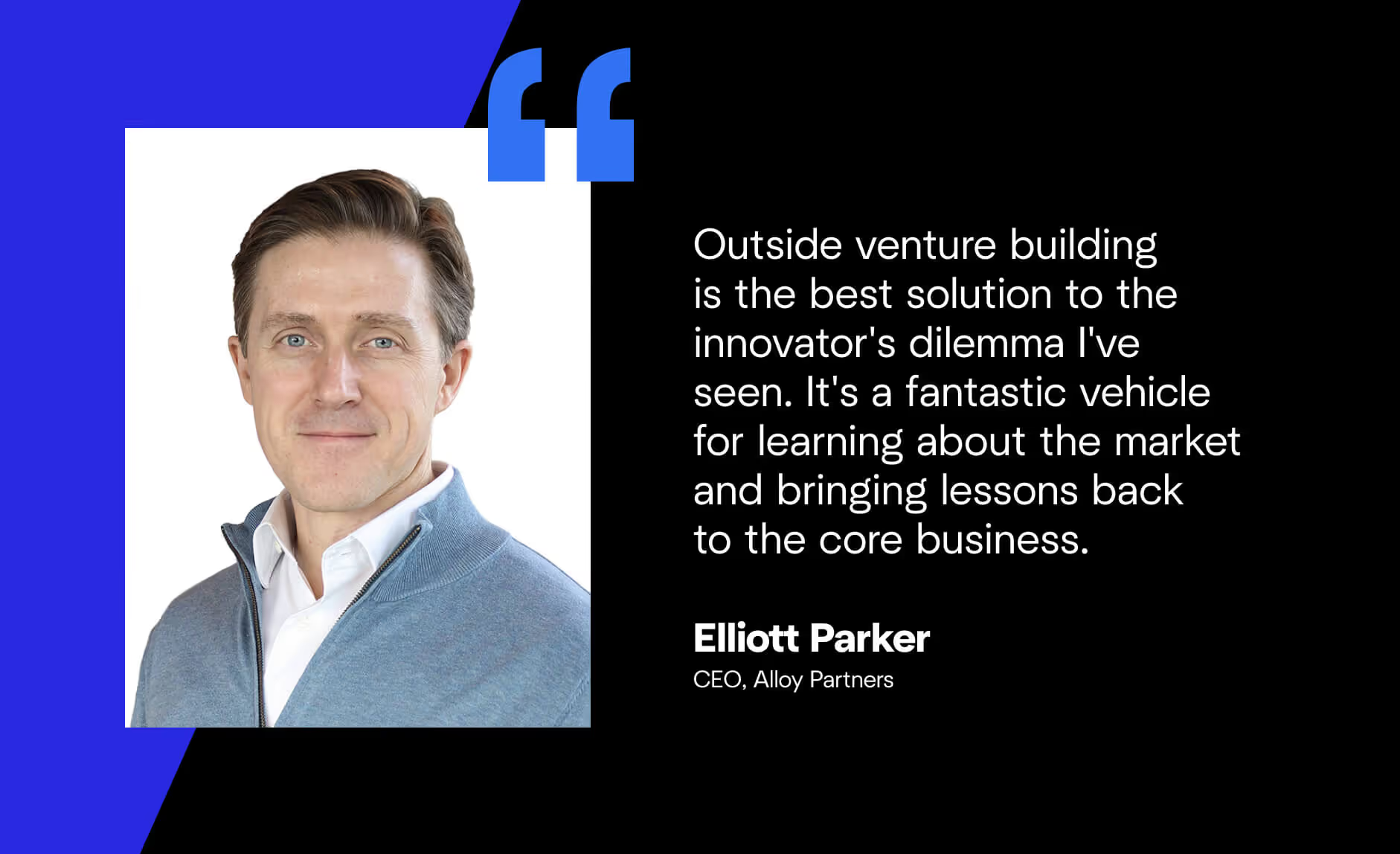
“Outside venture building is the best solution to the innovator’s dilemma that I’ve seen so far, and I’ve been looking for 25 years," Alloy Partners CEO Elliott Parker shared with Global Corporate Venturing.
Example of venture building
Wellstar Health System, a large healthcare system in the southeast U.S., built an innovation arm and venture capital firm, Catalyst by Wellstar, to explore transformative innovation opportunities separate from the core business.
Catalyst identified several areas where it could better serve healthcare professionals and recognized it could fill market gaps through corporate venture building in addition to investment in existing, early-stage startups.
This realization led Catalyst to partner with Alloy Partners to explore relevant venture-building themes.
After our initial conversations and market research, we landed on multiple business concepts, including one we ultimately moved forward with: vflok, a platform that streamlines shift scheduling for nurses.
"Catalyst is proud to have worked alongside Alloy Partners to bring this long-overdue, game-changing technology to market," said Dr. Hank Capps, FAAFP, EVP, CIO, and CDO of Wellstar and President of Catalyst.
Other venture-building examples:
- Arkansas created Fieldbook Studio with us to build retail value chain startups across the state.
- CMS Energy and NorthStar Clean Energy co-created Chuck to turn wood waste into energy.
- Purdue University created DIAL Ventures to launch and invest in food and agriculture startups.
- The frontier of AI venture building is also already here. Our One Health Studio (among other programs) is using agentic AI to run multiple companies in parallel with lean teams.
Venture builder vs. startup accelerator
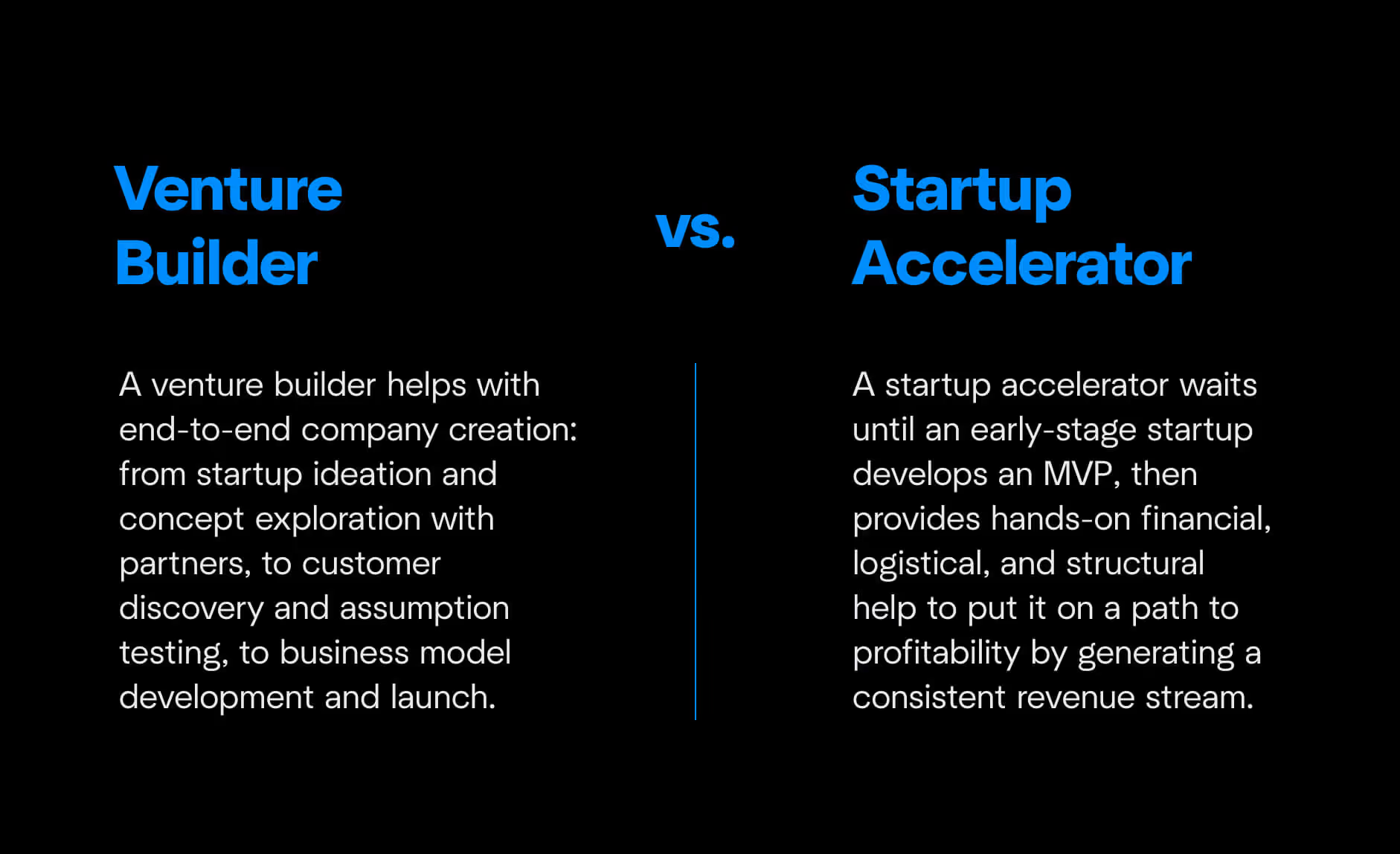
What distinguishes a venture builder from an accelerator? Though seemingly similar, the two differ a fair amount.
Startup accelerator
An accelerator waits until a startup develops a minimum viable product (MVP). Then, it provides hands-on financial, logistical, and structural help to put it on a path to profitability by generating a consistent revenue stream. Y Combinator and Techstars are prime examples of accelerators that nurture, mentor, and guide early-stage startups.
The companies work directly with startup founders to grow their businesses. In exchange for a small initial investment and the mentoring and support through the program, the accelerator takes equity in the startup.
Some major corporations like Unilever, Coca-Cola, and AB InBev even have internal accelerators. These allow them to form partnerships with startups and gain strategic and/or financial advantage while providing benefits to them (e.g., setting up introductions with potential customers, sharing internal resources to aid product development).
Venture builder
A venture builder helps with end-to-end company creation: from ideation and concept exploration, to business model development and launch. This is the process used by Alloy Partners to co-create advantaged startups today. This includes the creation of a dedicated venture studio for our partners to launch startups at scale.
Our team works closely with partners to learn the distinct customer, business, strategy, or market problem(s) they aim to solve through venture building. Then, we work alongside our partners to create a new startup that addresses that Job to Be Done. This process aims to generate near-term learnings and long-term financial gain for partners.
"You think about accelerators being a time-bound cohort of people who have existing businesses that are trying to get access to customers and investors," Alloy Partners Managing Director Ryan Larcom noted.
"The venture studio was the next logical kind of movement," Ryan added. "A venture builder takes all of the core processes and knowledge and turns them loose in the context of someone else's business model."
Our venture-building process
No two venture builders have the same startup-creation approach. That proves true for Alloy Partners.
Our venture-building process entails:
- Agreeing on a venture-building theme with partners. Sometimes, our partners have a specific theme ready to explore. Other times, we work with them to choose a theme that's highly relevant to their business or industry.
- Generating numerous business ideas and concepts. In-depth chats with partners, potential customers, and industry experts and market research enable our Build team to come up with several options for startups.
- Validating startup options to narrow down our choices. Once we assess the product-market fit of proposed solutions and determine which are likely the most venture-backable, we down-select to a handful of options.
- Creating business models around 'finalists' to pitch. During Sprint Week, our team produces business models and plans around concepts, then makes an investor pitch and product demo, shaped and validated by customers and experts, to our partners.
- Selecting the startup idea we wish to bring to life. Post-Pitch Day discussions lead us and our partners to decide on the one or two startups to move forward with. This is when our Go-to-Market works to find strong-fit founders who can lead the business to market and help it grow and scale over time.


























































.avif)