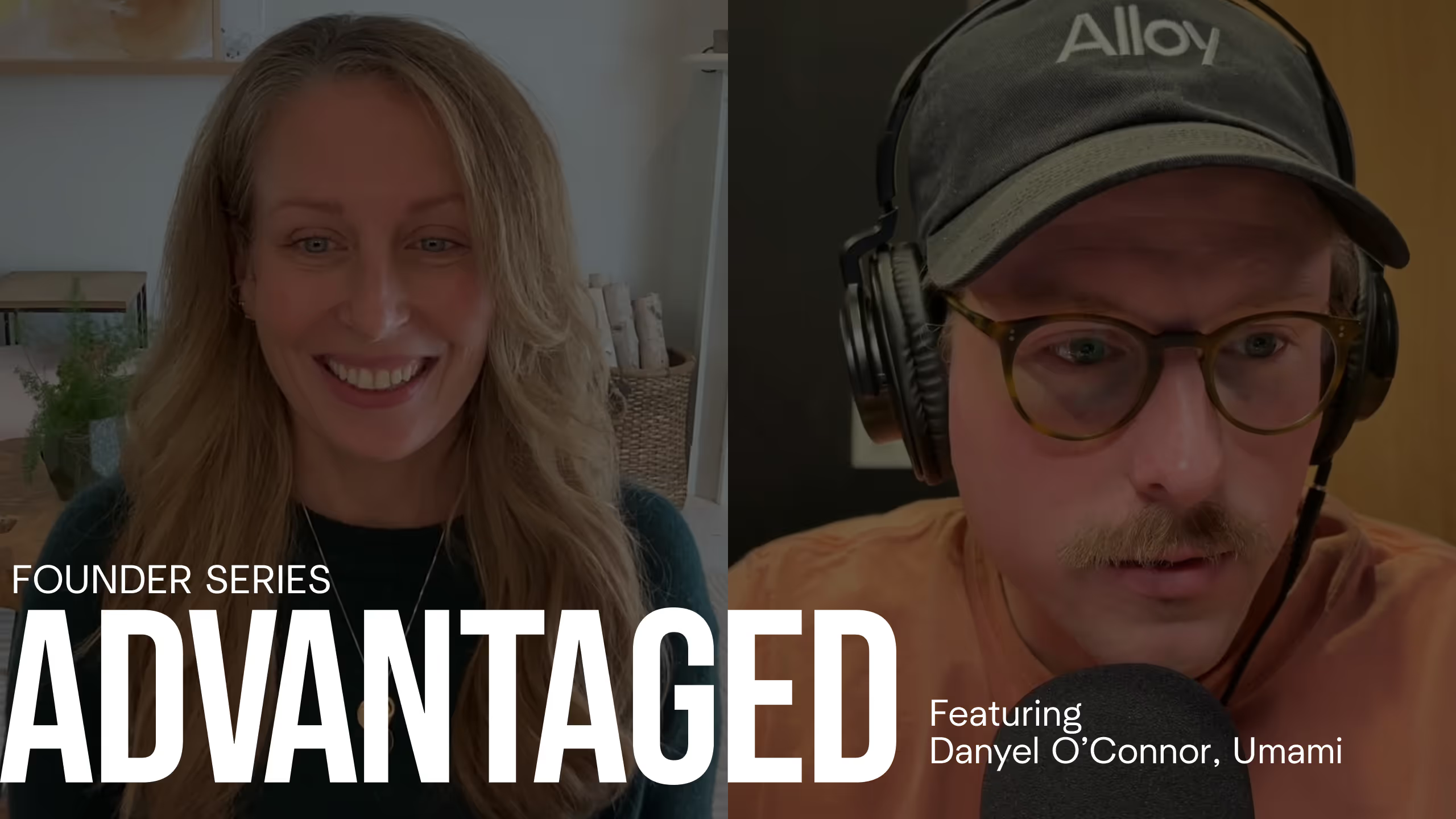
I spend a lot of time with corporate leaders wrestling with the same tension: how do we keep exploiting the businesses that work while still exploring the ones that might matter next. In this episode of Advantaged, I sit down with Nicolas Sauvage, founder and president of TDK Ventures, to talk about how he turned TDK's corporate venturing effort into an exploration machine rather than a passive or peripheral investor.
Nicolas joined TDK through an acquisition and, by his own admission, was the least obvious person to propose a corporate venture fund. What changed the trajectory was a simple frame he encountered at Stanford: exploitation is climbing the current mountain, while exploration is sending a small helicopter into the fog to scout other peaks. Corporate VC, in his view, is that helicopter: placing small, early investments with founders who are already building the future and sending learning back into where TDK should, and should not, go next.
We dig into how he sold this exploration mission internally, starting with a small but meaningful first fund that proved they could back high-caliber founders, add real value, and deliver strategic insight that eventually shows up in financial performance. We also discuss their Groq investment as an example of conviction, founder-first evaluation, and the importance of business model pivots in deep tech. Nicolas makes a strong case that strategic and financial outcomes are not in conflict but correlated, which is why he likes to say TDK Ventures is "purely financial" even as it exists to shape TDK's long-term strategy. We also cover the operating details behind that idea: from treating entrepreneurs as the primary customer and tracking "TDK Goodness" and NPS, to using an engagement checkerboard to manage Equal-Win collaborations between portfolio companies and 65 internal TDK teams.
Featured Guest
Nicolas Sauvage is the founder and president of TDK Ventures, the corporate venture arm of TDK, the global electronic components and materials company. He built TDK Ventures with a clear mandate around exploration rather than incremental exploitation, investing globally in early-stage startups that leverage fundamental materials science to unlock attractive, sustainable futures.
Follow Nicolas on LinkedIn.
Key Takeaways
- Corporate VC as exploration. TDK Ventures was designed as TDK's "helicopter" for exploration, placing small, early bets to map which future markets are fertile, hostile, or too small before TDK commits major resources.
- Strategic is pre-financial. Nicolas argues that corporate VC's strategic value is "pre-financial" because it shapes where TDK builds and where it does not, and that eventually shows up in long-term financial performance.
- Strategic and financial returns correlate. When portfolio companies become market leaders, they generate both strong financial returns and the deepest strategic options as partners, customers, or acquisitions for TDK.
- Entrepreneurs First. TDK Ventures made an explicit choice that entrepreneurs, not TDK, are the customer, then built recruiting, NPS, and "TDK Goodness" practices around delivering validated value to founders.
- Operationalizing Equal-Win. An internal engagement checkerboard tracks active work between portfolio companies and 65 TDK teams, with a focus on creating equal value on both sides so collaborations can last for decades.
Referenced in the Show
- TDK Ventures Investment Scorecard (open source)
- TDK Ventures Engagement Checkerboard (open source)
- Why VCs Should Use Net Promoter Scores with Founders — Harvard Business Review
- Corporate Venturing Insider podcast — Nicolas Sauvage
- Starting a New Corporate VC
- An Insider Investor View on Groq — Nicolas Sauvage
- Hiring for Decision Quality at TDK Ventures
- GCVI Summit
- World of Corporate Venturing Research Report
Listen to the Episode
Listen to or watch the episode below and be sure to subscribe to Advantaged, the leading corporate innovation and venture building podcast, on Apple Podcasts, Spotify, or YouTube.
Transcript
Below is an un-edited transcript from the episode.
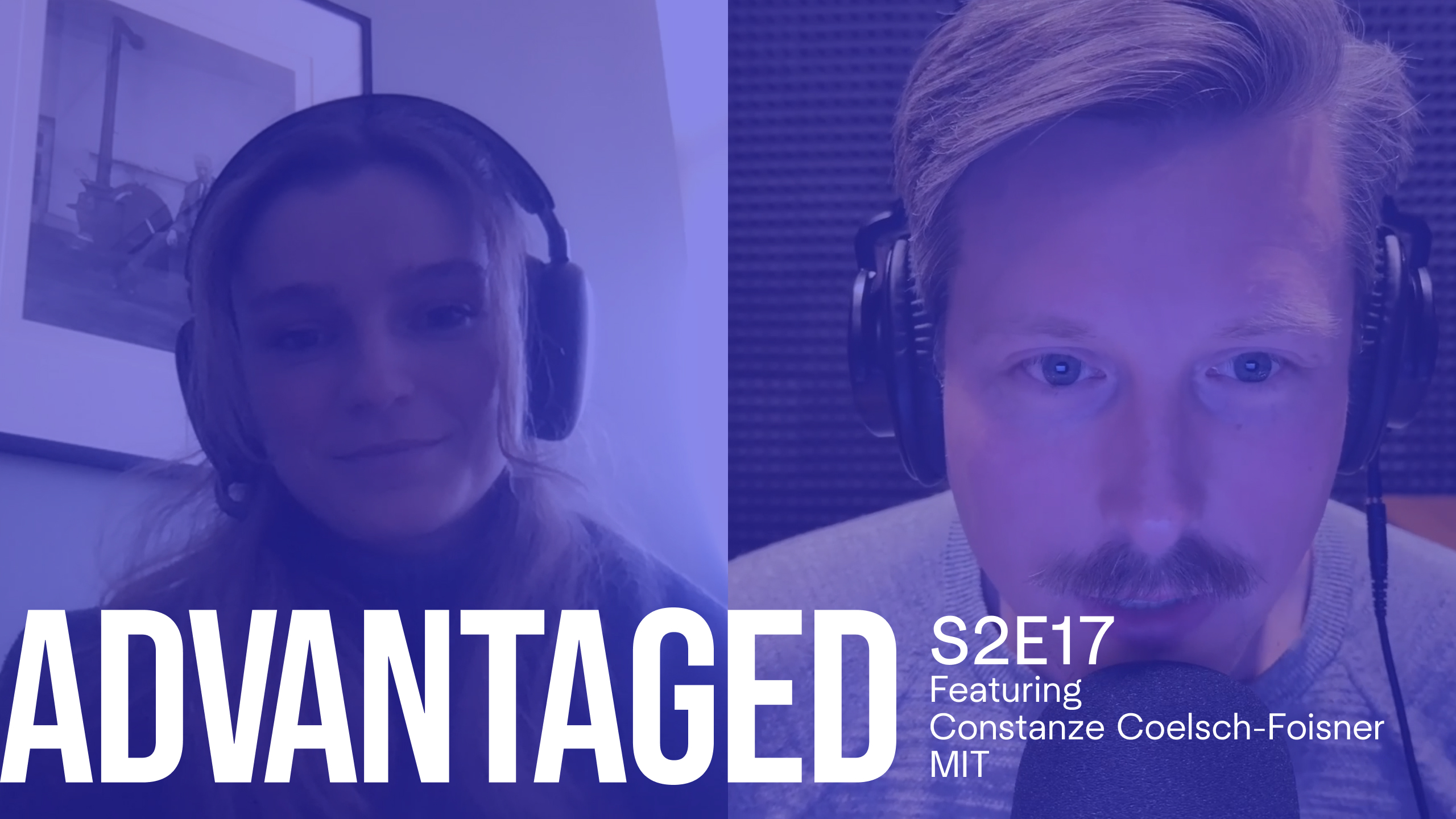
Drew Beechler: Welcome everyone to Advantaged, an Alloy Partners podcast. I am Drew Beechler, VP of Marketing here at Alloy, and your host of Advantaged. Alloy Partners is a Venture Builder. We partner with leading organizations and entrepreneurs to co-create advantaged startups and venture studios that unlock growth and transformation.
On the podcast, we interview corporate innovators, founders, and investors all around venture building and startup-corporate partnerships, corporate venture — telling the stories of how corporates and startups win together. Today we have myself and a special guest, Nicolas Sauvage, founder and president of TDK Ventures.
TDK Ventures is a technology-focused VC firm that spun out of TDK. They invest globally in early-stage startups that leverage fundamental material science to unlock attractive, sustainable futures for the world. I am thrilled to have you, Nicolas, with us here today. Thank you so much for joining us.
Nicolas Sauvage: Thank you for having me.
Drew Beechler: Maybe let's start at the beginning. Tell me a little bit of your journey to TDK, what you were working on at TDK, and then how that turned into and inspired you to start TDK Ventures. Specifically, what experiences helped shape this vision and journey toward TDK Ventures?
Nicolas Sauvage: I hope it's inspiring for whoever is listening to know that there's no one journey into corporate venturing. I came into TDK from an acquisition. I was living in Taiwan, relocated to California to join a company called InvenSense, which was a public company. I think within a year we were getting acquired by TDK. At that time I moved from a role of sales to a role of ecosystem at InvenSense. Ecosystem is basically being responsible for everything except the customers, which is the responsibility of sales. When TDK acquired InvenSense, I started to have a bigger scope for ecosystem, but I also took six weeks to go to a Stanford executive program.
During that program, I had a class with Jasper Sorenson about exploitation and exploration. The way that he explained it was with a really compelling analogy. Exploitation is your company trying to go to the peak of a mountain, and you have competitors around you trying to also go to the peak. You can define the peak as revenue, profit, customer delight, whatever it is that you want to define as your peak — but exploitation is about becoming the best at what you do and making sure that you stay at the top.
Exploration, on the other hand, when it comes to corporate venturing, is about this tiny helicopter flying to different peaks on a cloudy day where you can't really see far — flying back with information about which peak is hostile, not valuable, or too small. Or coming back with: actually, that peak is amazing. It's fertile. This is where we can really build the next pillar for the company. The small helicopter analogy works because you don't need to make a $500 million acquisition to discover it's not a great space for the company to go. The two or five million dollars that a CVC may invest in a startup — and learn with entrepreneurs who are building the future — whether it's the right place to go or not, is the exploration mission. If you think about strategy, it's really about deciding where not to go. But when you decide to go, you want to go with confidence, with really good research, and with all the facts on your side. Even though there will still be a level of uncertainty, you reduce it.
So after that, I was like, I need to pitch that idea to TDK. I explained why we should do corporate VC to TDK. I learned afterward that many people had tried to do that in the past. And as you can see, I was clearly the least obvious person to propose it. I came from an acquisition. I was not even a year in with the company that was being acquired. I was not Japanese. I don't speak Japanese. I was not in Tokyo at TDK headquarters. So clearly I wasn't the obvious choice to pitch. But I think what worked really well is that TDK's management is all about first-principle thinking and very open to innovation. They had been disrupted in the past — when they did the TDK cassette, they had seen the disruption of streaming coming. So they knew what the challenge was of not knowing what could kill you as a big corporation. I think that exploration mission resonated really well with where TDK wanted to go with long-term strategy — exploration of the next pillar, but also understanding what could kill you and therefore how to address that.
Drew Beechler: We use similar but different terminology. At least our CEO does — around wanting to run fast, cheap, and weird experiments, and this whole experimentation culture. How do you find out what's going to disrupt you? What part do you want to play in shaping the future within that industry? And it doesn't take $500 million to figure that out. It can take lots of smaller, cheaper, weird bets sometimes. And sometimes those are investments in areas that have nothing to do with the core or that could be very tangential.
Nicolas Sauvage: Yeah, I think "weird" is interesting because I think weird is basically what's not yet obvious. It feels weird — it's not what people think is going to happen. But if you invest before it's obvious, this is where you're going to make your alpha. This is where you're going to learn about the future that's being built. So I think that terminology you're using — fast, cheap, and weird — makes sense to me, because you want to make small bets into different futures. Hopefully they should not be correlated futures. They should all be not obvious — what you call "weird" — and hope that some of them will really become successful.
Drew Beechler: Yeah, it's all about generating that alpha. This was in 2019 when TDK Ventures started, correct? Just before the pandemic. I think if I read correctly, you recently wrote your 50th check into a company. Tell me a little bit about how it's going since then and how the organization has evolved over these first 50 investments.
Nicolas Sauvage: We actually closed investment number 50 on December 31st. In the next two weeks, we'll get to number 52. We started in 2019 with the first fund. And maybe it's good advice for your audience who are thinking about starting a corporate VC: start small but meaningful. The first fund we did was $50 million — five zero. It was not meant to be a big fund. It was meant to prove that we can do the exploration mission well. We can prove that we can source really good entrepreneurs. We can invest in them — because it's not just about wanting to invest, you have to have a good way of convincing entrepreneurs who have a choice of investors to choose you. You have to make sure that you bring value to them, which means that in your design of a CVC, you have to harness the superpowers that can come from your mothership and bring them to bear with the entrepreneurs. And of course, prove strategic value. Prove financial returns like a VC, with that power-law type of outcome.
So all of that was the design, and you wanted to prove in the first two years that you can build a portfolio that's diversified enough and valuable enough for learning and for bringing value. Fund Two was started in 2021. At that point, we had built confidence. We could see that we were doing well for the entrepreneurs, that we were really adding value. We had good NPS scores from them. We started to get more confident to lead rounds and to co-lead. We were learning the craft. At that point the fund was $150 million. In 2023, we launched our first multi-LP fund, which was thematic and geographic. That one was called Fund EX1. EX is for energy transformation — think electrification and decarbonization. Then last year in 2025, we launched Fund Three. Fund Three is a single LP. The intent is to continue to maintain that tethering to the mothership with our single-LP funds — Fund One, Fund Two, Fund Three — but we have the ability to augment our mission with multi-LP funds like we've done for Fund EX1. Now of course, we have to prove the model works. We have to prove that it is successful both in terms of financial returns and strategic value. We don't see one or the other — it has to be both. And I can even make the argument it's highly correlated. So now we have $500 million, we have 50 portfolio companies. We've had one IPO, I think five or six M&As, six unicorns. And we always invest at early stage — think seed or Series A, we've done some at inception. Series B and below is more than 95% of all our investments.
Drew Beechler: Could we talk a little more about the strategic decision to bring on an outside LP? I think that's really interesting — how you're layering that into the strategy with very specific, verticalized funds. How did that come about? How did you think about that strategy, pitching it back to TDK corporate? And how did you go about selecting who you want to partner with in this?
Nicolas Sauvage: It's even better than that. It's not an outsider — it's one of the TDK companies that is quite independent and very sizable. They are about 40% of TDK's revenue, maybe more now. They're a market leader in batteries for consumer products. So it was quite an obvious fit for us as we explored a multi-LP fund to have this LP, to start bringing massive strategic value while we bring strategic learnings to them — in spaces they are very interested to learn, which was North America and Europe in the electrification space. Think about it: that LP wants to know what could kill the battery they're developing today. They want to know what type of energy generation and energy storage could compromise their battery business. So they are definitively in that exploration mission, which we could deliver as the mission for Fund EX1.
Drew Beechler: It's really interesting and unique — I think in the world of corporate venture, but also in how you think about marrying that strategic value with financial return.
Nicolas Sauvage: I can make the correlation point simply by using the extremes. I have 50 portfolio companies today. If they all go to zero, my financial return is zero. It would be very hard for me to argue strategic value. Okay, we learned where not to go — but that's really little. Now let's assume for a second that my 50 portfolio companies all become market leaders, all unicorns, all on a massive trajectory of success. My strategic value would be insane — because we would have market leaders as partners, customers, and suppliers to TDK and TDK companies. And we would be the best VC in the entire world if they were all fund returners like that. So my point is: the correlation between the financial success of the startups — meaning they become the winners, the market leaders — is exactly where you have maximum strategic learnings and strategic value, including from the engagement and synergies with the mothership. And so whenever someone asks me "are you strategic or financial?" I like to be cheeky by saying, "We are pure financial" — which shocks them, because they're like, "What do you mean you don't care about strategy?" I say no, I only care about bringing real, billion-dollar annual revenue businesses to TDK, which you could argue is purely financial. And so one way that our CEO Saito-san explains it is: what we do as a corporate VC is pre-financial. It helps us decide on our strategy — where to build and where not to build — which then leads to the financial performance of TDK. That strategic value is pre-financial, and it leads to financial.
Drew Beechler: That's a great example too when you look at OpenAI and Microsoft, or other corporates that are in some of the large foundational model companies — massively huge financial wins, but also building the next stage for Microsoft of what's coming next. That strategic partnership and investment into OpenAI has been foundational.
Nicolas Sauvage: What's nice is it's valuable on both sides. If you think about it, OpenAI would not be where it is without Microsoft, and vice versa. At some point they might diverge in terms of paths. But there's no doubt in my mind that Microsoft has learned a lot and is building amazing products and solutions thanks to what they've learned with OpenAI, and vice versa.
Drew Beechler: This is in the same vein, but I'd love to dig into one of your specific investments that you've been more public about — Groq. I've read some of the posts that you've written about your investment and conviction around Groq, both more recently and the original investment memo, which is really interesting. You took a pretty big, conviction-heavy bet with Groq. Tell me more about that company, the decision, and what made that such a conviction-heavy bet for you and the rest of the TDK Ventures team.
Nicolas Sauvage: It was conviction-based, but not team conviction — because in this case, my team thought it was silly to invest in Groq. So I can speak to that. Groq was my third investment. You mentioned it earlier — we started TDK Ventures just before COVID, and when COVID hit, it had two effects as far as we were concerned. The first is that all the VCs started to pause and focus on their portfolio companies, so they stopped looking at new investments. Not all of them, but many. And the best entrepreneurs — like Jonathan Ross at Groq — started looking for funding much earlier than they needed. During that period of, let's say, three to six months when it all started, we had this amazing opportunity where we had the best entrepreneurs looking for funding and very few VCs looking to fund. So even though we were only getting started — I think we had only made four investments in nine months — during the next three months of COVID, we made four more investments. We really managed to make really good investments during that period, and Groq is one of them.
But because it was COVID, everything was online. Even though we were about 20 minutes' drive from each other, everything was on Zoom. One of the things I always want to do for our investments — and for my investments in particular — is to spend one hour on a CEO interview. I want to talk to the founder for at least one hour to really understand how they are thinking about things. And I do have an advantage — we talk about "Advantaged" — I do have an advantage in that I'm an engineer by background in computing and a software developer, so I really understand the space of computing. That was not where I was concerned, because I could tell the architecture of Groq was so simple, so streamlined, so efficient. There was no way you could run inference faster for a given node than Groq. Jonathan could convince me very quickly, and his team also convinced me. But what I really wanted to understand was: how does Jonathan think?
What was truly amazing is that for one hour we covered — I want to say 60 topics, probably less, but we covered so many: how do you define the core value of your company? How do you define the recruitment principle? How do you fire people? How do you think about fundraising? Many topics. And for all of them, he would answer from first principles. He would start by saying: these are the facts, this is what I'm thinking about, and that's how I would act. Everything from first principles. And I think I only learned it afterward, but it makes total sense — you talk about university dropouts, he was a high school dropout, which means that he didn't have the shortcut that education can give you. That gave him that advantage, that superpower of thinking from first principles for everything. He would challenge everything until it becomes first principle, and that gave me such high confidence that there was no problem that could be thrown at Jonathan that he wouldn't be able to articulate from first principles and choose the right decision.
I remember ending that CEO interview saying, "Yep, I'm in. I'm sure." And that's how I wrote my meeting notes. I think in the meeting notes I even said, "I think I just met the next Nvidia." But what's interesting is in my investment committee proposal, two things stand out when I look back. One: I said this is the opportunity for us to make our first investment in AI computing and our chance to invest in the next Nvidia — that was on slide four. And then we always do a scenario analysis for multiples — thinking about different scenarios, like the worst case going to zero and the probability of that, the better case outcome, and then the very best case. In this case, my best case was a $20 billion valuation, and the justification was "they become the next Nvidia."
This is quite spooky when I read it back knowing what happened in December 2025. It's not quite an acquisition, but they got the $20 billion deal with Nvidia. And today I was watching the video of Jensen at GTC where he basically showed Groq being so central to their inference roadmap, super highly integrated with Nvidia. And it's so obvious that $20 billion is such a cheap deal for Nvidia. They're going to get a thousand times return on that investment.
Drew Beechler: I love that story. You talked earlier about the life of a fund and how it's so critical early in your journey to have early wins. This being one of your first five investments is so critical to the success of the fund as a whole. But what else has this taught you? How do you evaluate how founders think through first principles, and are there any other lessons you've brought into other investments based on what you learned through the Groq investment?
Nicolas Sauvage: First, I think that all the way until early 2024, no one would have said it was obvious Groq would succeed. Actually, I was the only one to believe in Groq in early 2024. Everyone on my team thought it was going to go to zero — and they were not wrong, because by that time Groq had nearly died three times. So it was definitely not an obvious success. This is where I smile sometimes, because "overnight success takes a decade" — I think overnight success takes a decade and probably four or five near-death moments.
My biggest learning from this experience is that the real liftoff for Groq had nothing to do with technology. It was about business model and a shrewd pivot. It was about moving away from trying to sell chip sets. They had done different pivots in terms of which market they would sell the chip set into. And by the way, they had the best chip set for inference — bar none. But it was so hard to sell chip sets when you're a startup and you have to prove your supply chain and everything else. They moved to selling tokens. That was the moment where Groq lifted off. They started selling to developers versus OEMs who needed to buy chip sets. That was the moment where everything changed. And it's so easy for deep tech VCs like us to think that technology is what makes a company successful. I think sometimes it's just a business model — finding a new business model. And of course, ChatGPT and the LLM moment really helped. But where I want to give huge credit to Jonathan and the Groq team is that they saw the LLM moment — with Llama becoming open sourced — they jumped on it and put all their weight and speed toward that change. They were truly entrepreneurial, and that is what made them as successful as they've been.
Drew Beechler: Business model innovation and distribution, I think, are becoming more and more important than ever before — especially in today's AI world, which seems to be changing every quarter. I think that's accelerating even further the reality that business model innovations and distribution moats are the truly defensible competitive advantages. I'm a software person too, so I think that's particularly true in software. Do you see the same thing in deep tech, and how is AI impacting deep tech in that sense?
Nicolas Sauvage: I think we need to go back to the founder. You need a founder who's open-minded enough to change and to make that pivot. But it's not any founder who could do what Jonathan did. He was able to raise huge amounts of money even before that "aha moment" of the perfect go-to-market with tokens. So there is something really special about him. But the learning I'm taking away — that's maybe not obvious — is that Groq was not an obvious success until that go-to-market change and the move to selling tokens. When you look for founders, if a founder is too stuck in their way of thinking about how they want to approach a business, they might miss the big moment because they just want to stay with what they know. So when you interview them, you really have to think about: how convinced are they about their idea, and yet how open-minded are they to change it if they have compelling facts? That's a really difficult combination. You want to invest in entrepreneurs who are so committed to their idea that they want to change the world for the better because they have this inside, this superpower — and yet you still want them to be able to make dramatic changes, like from selling chip sets to selling tokens. That's a big change, and you bet the company on it.
Drew Beechler: That's one of the underrated skills of an investor as well — the people component. How do you judge or grade founders, especially with the very limited data you have in the time that you make investments?
Nicolas Sauvage: For anyone who has recruited at least 20 people, it's very humbling because you might think you're getting good at recruitment and then you make a big mistake. When it comes to people, you're going to make many investments with founders you think are amazing at the time — and then you might realize otherwise. This is where pattern recognition in VCs really matters. And that's also where biases kick in — which can be bad if it's not truly about pattern recognition. And you have to be careful even about pattern recognition, because then you won't go into the weird investments, the not-obvious investments. It's very tough. It's one of the things that's not obvious about VC: you have to challenge yourself. And that's why I think building a great team around you that will challenge you — and that will challenge each other — is a true superpower.
Drew Beechler: That was where I wanted to go next, actually. Tell me more about the team around you at TDK Ventures, how you've structured the team, and specifically how your team is ingrained back into TDK corporate and how you make that successful — both on the strategic side and providing value back to the company.
Nicolas Sauvage: Actually, this is interesting you ask — this weekend I wrote about how we recruit at TDK Ventures. It's been internal but not externalized. I think I will post it tomorrow on LinkedIn, so I'll send you the link and you can put it in your podcast notes. We have iterated on our recruitment so that we can really recruit passionate, kind, smart, and very diverse team members. We've optimized our recruitment process and decision-making to have the best possible team to make investment decisions and bet on entrepreneurs. The kindness to work with entrepreneurs with real empathy is essential.
If I think about part of your question — how do we engage with entrepreneurs and the mothership — if I was to use a technical term, startups and big companies have an impedance mismatch where they don't speak the same language, they don't have the same pace, they don't see risk the same way, and their governance will be very different. So you want to be able to be this translation service — this osmosis that seems nearly effortless but actually takes a lot of effort to make happen. This is where we have a concept at TDK Ventures we call "Equal Win," which is really about valuable engagements between the startup and TDK companies that are valuable on both sides, so that it can be sustainable for decades — not just years. Most companies talk about win-win, but when you're a small startup and a very big corporation, it's typically a small win and a big win. The challenge is that may be fine for one or two years, but if your startups start to do really well and grow, they won't feel good about that at some point — they will move. And so whoever had the big win ends up with nothing. So what we prefer to do is right-size the engagement so that it's an equal win from the start and can really last for decades.
If you think about TDK — we are a tech firm that was born in 1935 as a university spinoff. We really understand entrepreneurship. We really respect entrepreneurship. We really respect founders' products and their IP. So for us to build this right-sizing of Equal Win is really the way we do it.
Now, if I go back to my team — we have an engagement team of 10 people whose job is to connect all the startup and portfolio companies we meet, and that we believe could build this Equal Win with TDK, across about 65 different TDK teams. And this is where maybe a tip for the entrepreneurs listening to your podcast: if you want to enter a big company, reach out to their CVC, because they will know who to talk to. Even if they don't invest, they may still be a really good help to identify which business group you need to engage with. And if it works, most CVCs actually take it as a very positive signal if you can start engaging with part of their mothership — you're more likely to get the investment. Then it's up to you as an entrepreneur whether you want that investment or not. But to have a CVC unit that has mapped the internal mothership — where the teams are, what their roadmap is, where it might intersect with the startup's roadmap — that is gold.
Drew Beechler: I think you shared this on a GCV webinar — the matrix of tracking that within the portfolio, of how many of your companies across the 65 business units are working with them. It's so simple, and yet you would be surprised at how many corporate venture teams don't do that — or are completely unattached from the mothership. And usually not by design or choice. It's sometimes because of where it rolls up in the mothership, or how the corporation sees it, or just the stage that the corporate venture team is at in its lifecycle. But it's surprising how often that doesn't happen, even though it seems like a pretty simple, no-brainer opportunity.
Nicolas Sauvage: What you mentioned is what we call the Engagement Checkerboard, where you can see on one side all the portfolio companies — and it can be used for startups too — and all the internal teams inside TDK on the other, and then the intersection shows whether there's an engagement or not. The color indicates the level of engagement: is it an evaluation, is it a design-in, is it a design-win? We open-sourced it recently — the Engagement Checkerboard. So if anyone in the audience wants to download it and use it for their own purpose, it's under the Creative Commons license, so you can do whatever you want with it. Maybe I'll send you the link as well so you can share it with your audience. And while we're talking about open sourcing — we also open-sourced our investment scorecard, which means that every entrepreneur can now have a sense of our investment criteria, the way we score investment opportunities across seven pillars. But also if you're a VC or CVC, feel free to use that investment scorecard — be inspired by it, delete what you don't like, add what you want, really leverage what you like. It's also under the Creative Commons license, so you can do whatever you want with it. We think it's very strong TDK Goodness for both entrepreneurs and investors.
Drew Beechler: I'll include both of those links. Tell me more about TDK Goodness — what that means, how you've built this ethos into the company, and how you pay it forward with the startups you work with.
Nicolas Sauvage: TDK Goodness — the word "goodness" actually came from Greg, one of our HR folks from InvenSense, who used that term a lot. I just loved it and thought I needed to use it somehow when we talked about bringing value to entrepreneurs. So what we call TDK Goodness is basically when we bring value to a founder, to an entrepreneur, to a startup — but even to our TDK colleagues or to our investing partners. But it only goes into our TDK Goodness database when the recipient validates that it was valuable to them. So it's not what we believe to be valuable — we need the recipient to say, "Wow, this was valuable." That is such a mindset shift from simply thinking you bring value. It's so easy for VCs and CVCs to think they're bringing value because they think they do. But if you ask the entrepreneur, you'll hear: "That introduction didn't help me." "That project with your business units was a terrible waste of time." "But that one was very valuable." So we always count TDK Goodness from the point of view of what the recipient tells us was valuable — at that point it can go into our TDK Goodness database.
Drew Beechler: You're totally right. Everyone wants to be a value-add investor. You mentioned this early in the call — even taking an NPS score on your investments is somewhat abnormal, but it's a great start. But I think the idea of evaluating: "Hey, we think we're giving all of this value back to portfolio companies" — and oftentimes we don't stop to ask what is most valuable, was this valuable, did it pan out? And then making sure you're spending time and investing in the things that do provide value. Because sometimes we're investing lots of money, time, resources, and people into things we think are providing value that at the end of the day aren't actually moving the needle. And sometimes that's difficult to hear.
Nicolas Sauvage: I wrote an article about how we use the NPS methodology — I'll share the link. But it starts with this: as a firm — and this is true for a VC firm, it's true for any firm — you have to decide who is your customer. When we think about VCs, you have two choices, and then you have a terrible choice. One choice: the entrepreneurs are your customer. The second choice: your limited partners are your customer. And the very bad choice is to say both are customers. Why is that a very bad choice? Because there will be times where your team has to choose between the two, and they will be inconsistent in their choice. You have to pick. So the way we think about it at TDK Ventures is: entrepreneurs first — they are the customer. They are the heroes of our journey. TDK and TDK companies are limited partners. They're the shareholders. We absolutely want to bring value to them, but the customers are the entrepreneurs. And that drives all our behaviors, and it's all consistent because we've made that very clear from the beginning.
Drew Beechler: Let's end with one closing topic. I'd love to talk about the broader CVC ecosystem as a whole. You have a very unique point of view. You recently took on the role of Chair for the Global Corporate Venturing Leadership Society Advisory Board. GCV just recently released their annual World of Corporate Venturing research report, which had a ton of really interesting findings. And next week is one of GCV's largest conferences — GCVI — in Monterey, where there will be 800 corporate venture leaders attending. Alloy will be there — Elliott will be speaking with our friends at Elanco Animal Health around building inside of a venture studio.
Nicolas Sauvage: Your colleagues.
Drew Beechler: Yeah, including us. One of the biggest things the research is showing — and that we're seeing — is that CVCs and corporates are playing a larger and larger role in venture funding and in the startup ecosystem as a whole. Are you seeing and feeling that in the same way? And what impact is that having on the broader ecosystem? What do you think this means for corporate venture leaders going forward?
Nicolas Sauvage: I think if you look at the last 10 years, corporate venturing has changed dramatically. We're about 10x the number of CVCs from where we were. We actually have the highest number of CVCs ever, as tracked by GCV. The professionalization has absolutely improved. Ten years ago, you could easily argue that CVCs were, on average, a real negative. VCs didn't want to work with CVCs. There were a few exceptions — Intel Capital has been doing well for a long time, Samsung Ventures — but most were really behaving badly. That's what I would call CVC 1.0.
I think we're moving to a highly professionalized corporate venturing ecosystem where CVCs are starting to behave more like VCs while bringing a superpower — that strategic value from the mothership. And what's interesting about the fact that we now have more CVCs than ever is that we're starting to make even bigger checks than ever. You talked about Microsoft and OpenAI — you're going to see that more and more. AI is definitely a space where corporates can really shine and bring not just capital but real superpowers. To me, the analogy I'm going to talk about next week is: I feel like we're moving to a point where entrepreneurs can get maximum value when they see VCs and CVCs as a yin and a yang — where you want VCs to really understand corporate VC and take advantage of what they bring, at the same time as CVCs that behave like VCs and take advantage of their best practices. When you have a cap table with really good VCs and really good CVCs, magic happens.
My biggest takeaway is that the last 10 years has been a really nice professionalization journey — with some challenges along the way. I think during COVID, CVCs really shone. They really showed that they can stay and continue to invest despite a very challenging time — not just the pandemic, but supply chain challenges, geopolitics, and politics. They managed to continue to support their portfolio and invest in really good founders. I think the next 10 years is really interesting. This is where corporate VC could really compound its value, and partner even better with financial VCs. That partnership will be a massive, system-level value add to entrepreneurs.
Drew Beechler: I agree. I think the next 10 years in corporate venture — and in traditional venture as well, even the next five years — is going to fundamentally change a lot of what we think of as VC. A handful of things I'm keeping an eye on: the returns profile for VC and private equity as an asset class. I don't know if you follow Dan Primack at Axios, but he's been writing quite a bit about this the last couple of weeks — comparing PE and VC as an asset class to the S&P 500. Yes, it's a power law, both in the distributions within a portfolio and within VC as a portfolio — which is really interesting. I also think the influx of capital from private investors — potentially into private equity — when and how much and what that really looks like will be very different. If people started investing out of their 401(k)s into private equity, I think that will be really interesting, and the influx of capital could completely change the game.
The other thing I've been thinking a lot about is the bifurcation within the venture industry. We're at a moment in time where you're seeing a ton of it between AI startups and non-AI startups, but also within early-stage investing. You've got down to the $30 billion check into OpenAI — companies staying private much longer, but sucking up so much of the capital that looks like it's going into the venture capital asset class. All of these compounding trends will mean venture looks very different in five years than it does today. I think corporate venture is in a unique spot to take advantage of a lot of that — where some of those trends and challenges in the industry won't affect corporate venture quite as much. The ones that are well-positioned to take advantage of that as a corporate venture team are going to be standouts in this next environment, this next vintage of funds. More of that yin and yang between corporate and traditional venture is going to see amazing returns. We see that within our own portfolio — we tend to be very heavy on that side of pairing traditional investors with corporate venture partners because of the work we do. That is where the magic happens.
I'm watching a lot of the same things. I think next week will be great in Monterey to see so many venture leaders there and to see how they're evolving their teams and strategies. Intel Capital, I think, is a great example of the spin-in and spin-out and back and forth. What happens with an institution that's so famously successful as an investor is really incredible and interesting to watch. So we're looking forward to it. It's been a ton of fun to engage with that team and that community. Any parting words? I know you've given a lot of advice broadly across the last 40 minutes or so, but any other parting words for corporate venture leaders out there — either starting or thinking about starting a new fund?
Nicolas Sauvage: I think the biggest one is: think about your why. Validate your why with your mothership. Seek good alignment and executive support for your why. Make sure that your why will resonate with entrepreneurs — that you will be able to deliver and harness the superpower of your mothership toward the companies you invest in. It all starts with the why. I did a video back in 2021 on YouTube about 50 learnings — 50 tips — about how to start a CVC. I'll send you the link. One of the biggest is the why: really make sure your why is clear and doesn't change, because you've got the right support for it. If I think about the why we have at TDK Ventures, it's really that exploration mission — deliver on that exploration mission. And it hasn't changed since I made the proposal to the board of directors of TDK.
One advantage for people who are starting today is that the ecosystem has matured so much. We now have GCV. We're inviting to GCVI the CEO of Kauffman Fellows and the CEO of NVCA — back to the yin and yang, making sure we bring more value to the ecosystem. We're building more training. I have my own podcast — Corporate Venturing Insider — which is about practitioners of corporate venturing. Anyone who wants to start today has so much more material than when I started in 2019. So much more is understood as best practice. GCVI next week will have more than 800 people from CVCs — this is the mecca of corporate venturing. We're also going to have a GCV Symposium in June in London, which is amazing for the teams in Europe to meet with other peers. So I think we're moving away from "how do we survive as a CVC" to "how do we perform and bring the value we were intended to bring when we started." I'm extremely positive and optimistic about corporate venturing. I agree with everything you said. I think VCs are going to go through real transformation, which I think is good. And corporate venturing will continue to mature and bring more value. I'm really hopeful for that yin and yang to bring this amazing magic for our builders of the future.
Drew Beechler: I love that. Your why needs to resonate not just with the corporation but also with the founders — I think that's so important. You snuck that in, but it's critical. Oftentimes you don't think about it: our why as a corporate venture team — our strategic why — could have nothing to do with the founders, and they might not rally behind that mission at all. But I think they need to be able to rally behind your vision and mission as a corporate venture team, which is so important.
Nicolas Sauvage: One thing to add: the why for TDK Ventures and many corporate VCs is exploration — but yours could be exploitation. It could be improving your current business. And if that is your why, and it's well aligned, and you build your superpower to bring value on an exploitation mission to entrepreneurs, and you communicate it accordingly — it's really good too. The point is not to pick the why of someone else. It has to be the why that makes sense for you and your mothership. Then you communicate it and you deliver it well to entrepreneurs. You do that well — you define that why, you design the CVC accordingly — and magic will happen.
Drew Beechler: So important. Thank you so much, Nicolas. This was an amazing conversation and just a ton of fun. We will see you in Monterey, and thank you again for joining us.
































.avif)