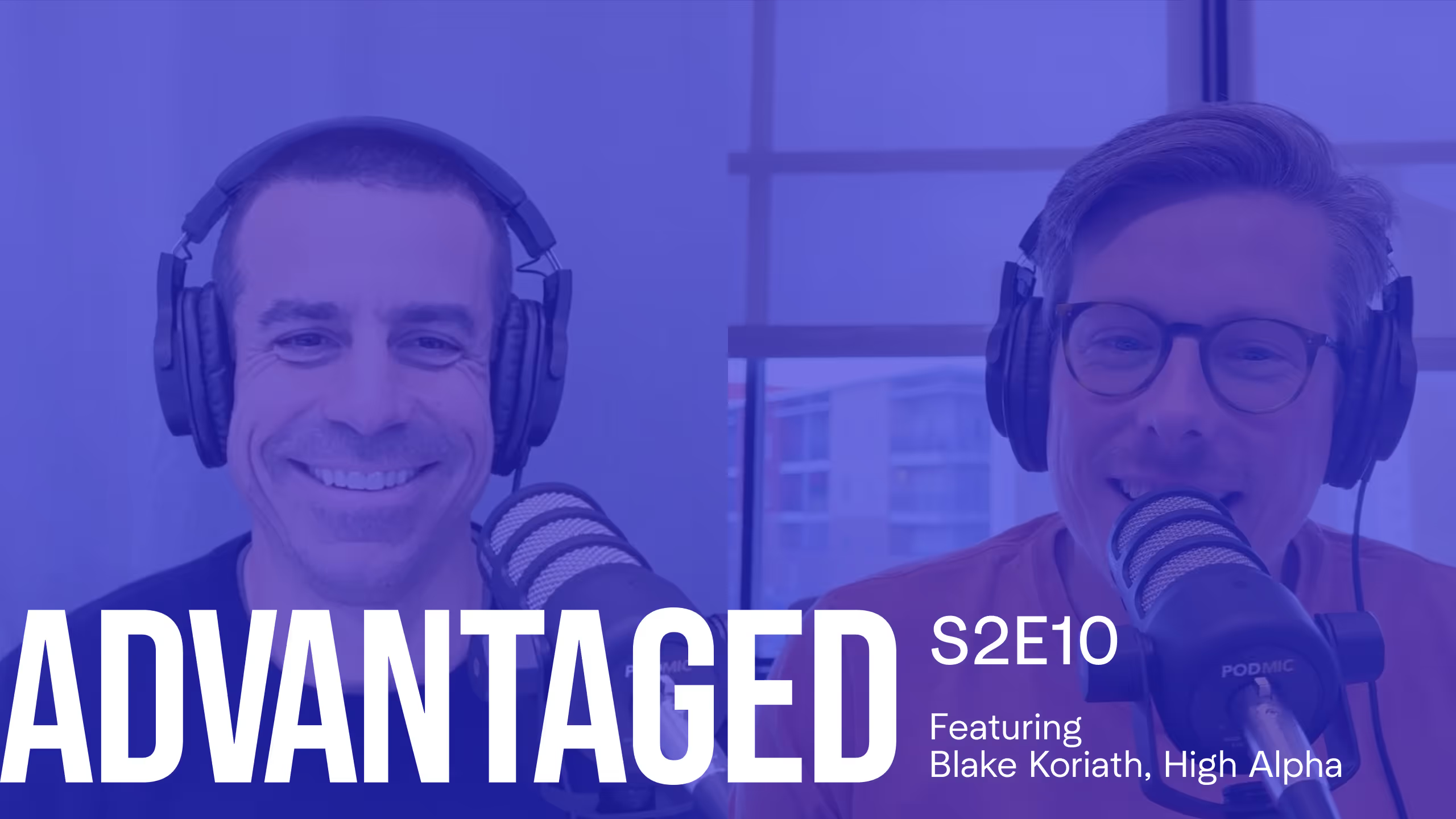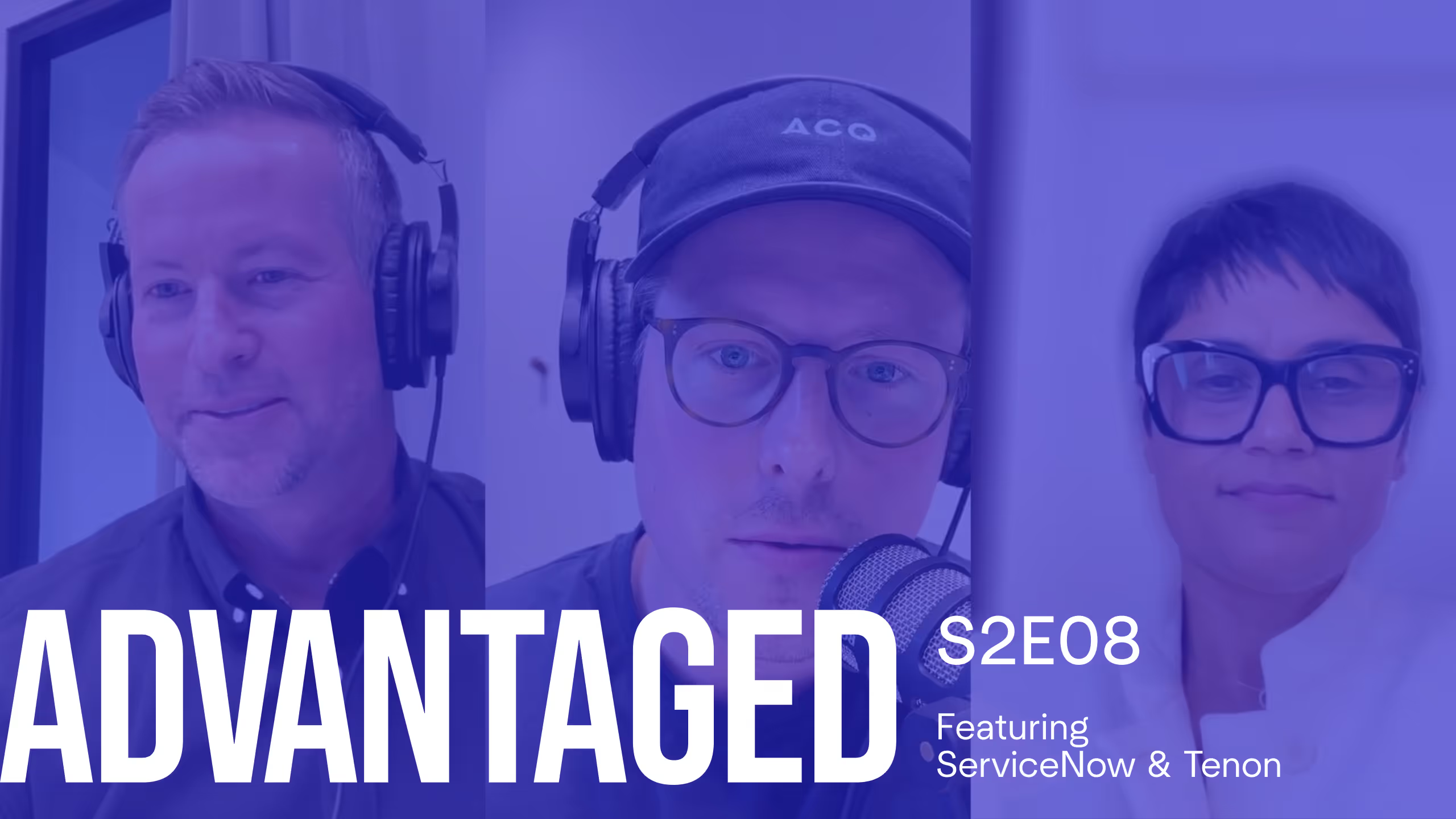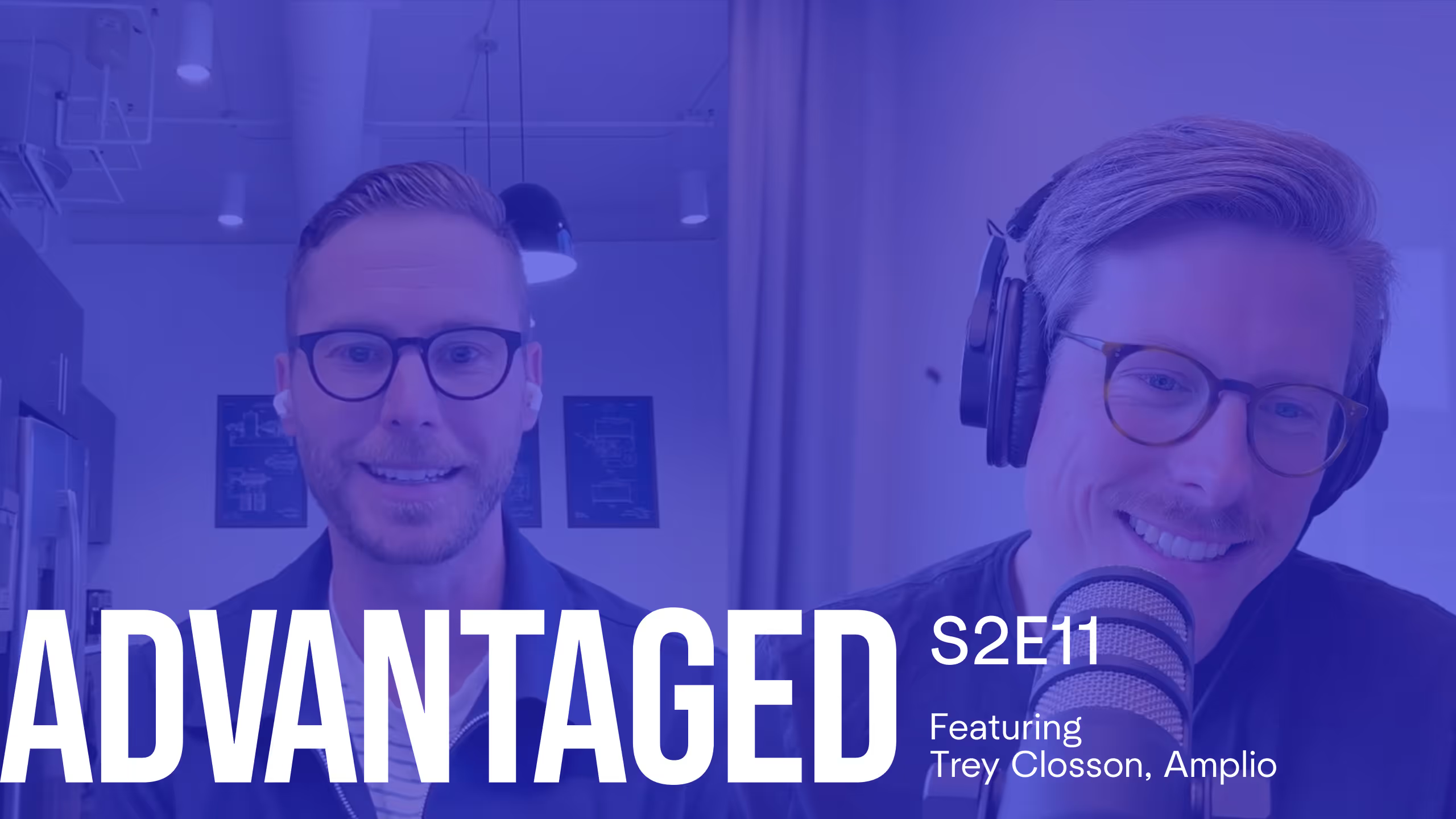
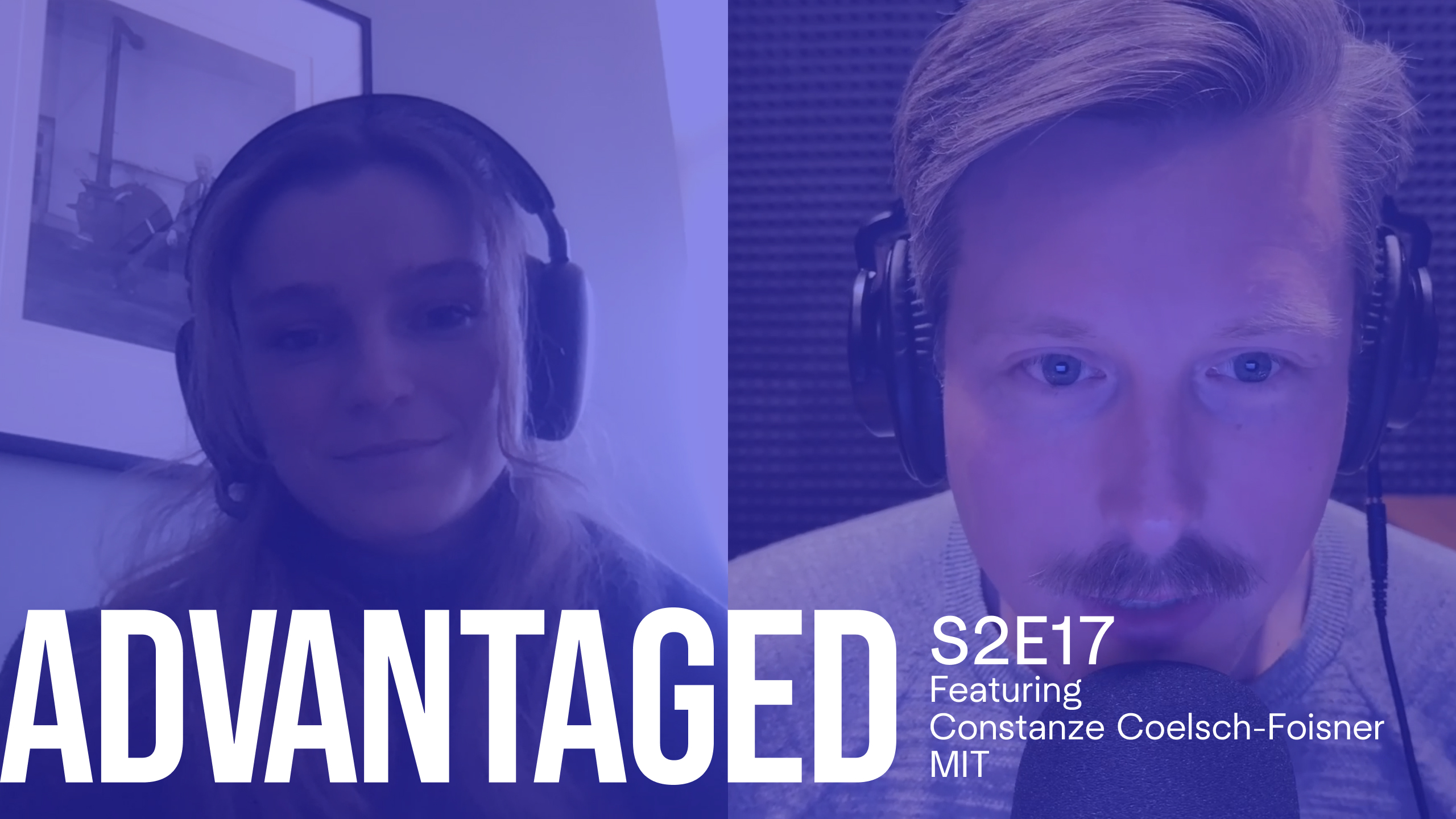
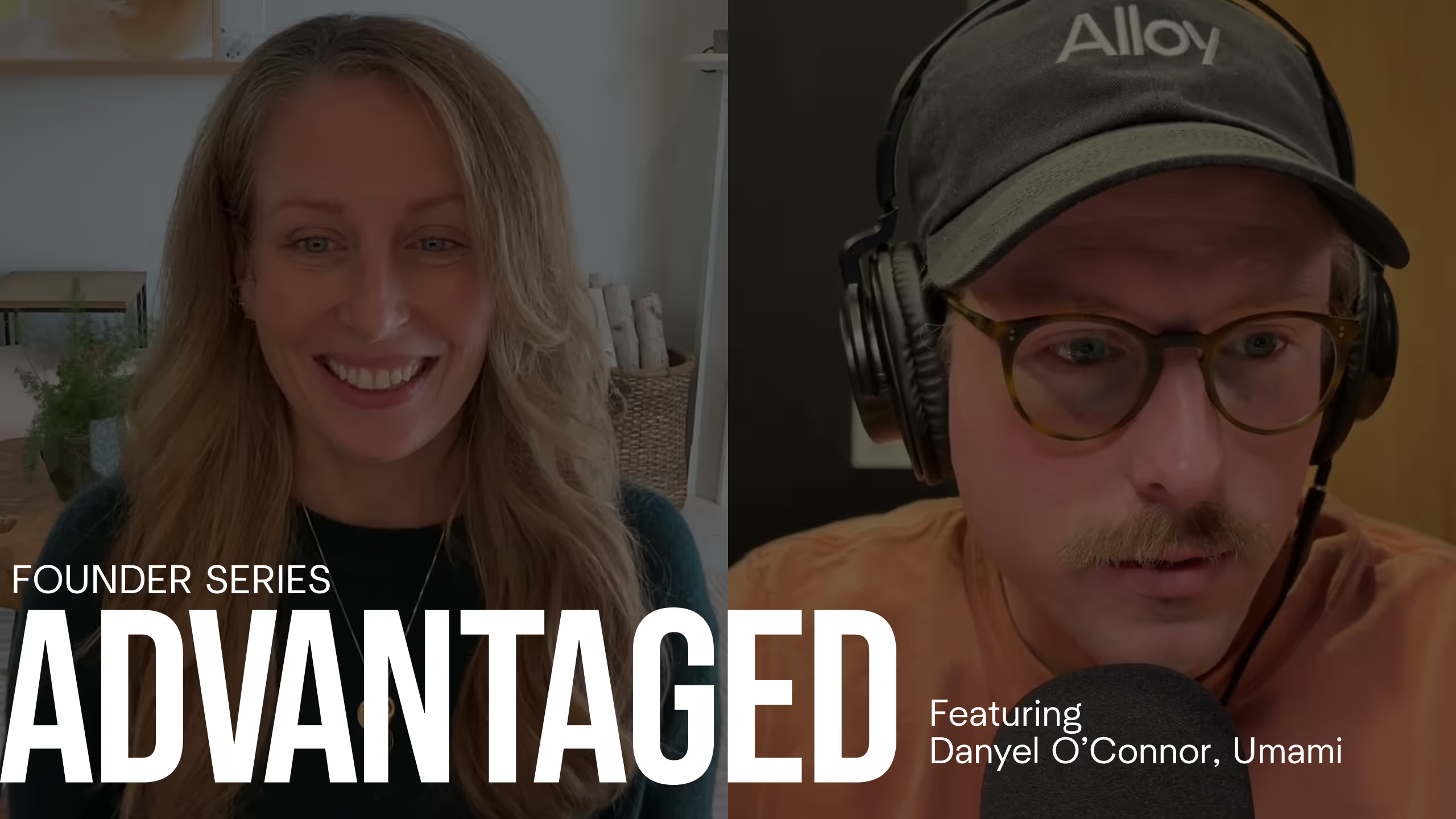
From non-linear careers to hard pivots, this episode of Advantaged looks closely at what startup "grit" actually looks like when you build a venture at the intersection of global supply chains and large enterprises. I had the opportunity to sit down with Amplio CEO and co-founder Trey Closson about leaving a senior logistics role at Georgia-Pacific, creating Amplio through a Koch Industries + Alloy Partners Sprint Week, and ultimately pivoting from predictive risk software to a surplus industrial marketplace.
Along the way, Trey shares what has worked so far for Amplio and lessons in selling into enterprises, partnering with corporate VCs, and designing experiments that generate real learning.
Featured Guests
- Trey Closson – CEO & Co-founder, Amplio
- Host: Drew Beechler – VP of Marketing, Alloy Partners
Key Takeaways
Here are some of my main takeaways from our conversation:
- Grit looks like calculated risk, not heroics
- Trey frames leaving a secure corporate role for Amplio as a series of calculated bets with clear, acceptable downsides rather than hero moves.
- Corporate experiments can (and should) create external startups
- Amplio was born from a Koch–Alloy Sprint Week, with Koch and Georgia-Pacific ultimately supporting Trey's transition out to lead the external venture instead of trying to build it in-house.
- Value capture is just as important (if not more) as value creation
- Amplio's initial risk-scoring software surfaced tens of millions in potential value for manufacturers but was never "mission-critical" enough to justify more than relatively modest subscription fees.
- A customer QBR unlocked an entirely new business
- A customer preparing to write off brand-new surplus inventory asked Amplio to help, prompting the team to discover that surplus and decommissioned stock was a pervasive, under-served problem across manufacturers.
- Trust and co-founder fit are central to building a resilient startup
- Trey's long-standing relationship with co-founder Taha gave them the trust and shared judgment needed to navigate a company-defining pivot.
- Early enterprise sales are about selling a vision and not disappointing your first believers
- Amplio's earliest surplus customers came from Trey's network, and a key milestone was winning their first unaffiliated enterprise that validated the model beyond warm intros.
- Strategic corporate VCs can accelerate validation and access if incentives are aligned
- Hitachi Ventures and Yamaha Ventures quickly validated Amplio's problem and vision through their operating units while structuring their involvement around financial returns and optional, not forced, commercial collaboration.
- Why private ownership can enable deeper experimentation
- Koch's private ownership and long-term orientation made it easier to back low-probability, positive-expected-value experiments like the work with Alloy Partners and the creation of Amplio and Plot as external startups.
Listen to or watch the episode below and be sure to subscribe to Advantaged, the leading corporate innovation podcast, on Apple Podcasts, Spotify, or YouTube.
Transcript
Below is an un-edited transcript from the podcast episode.
Drew Beechler: Welcome to Advantaged and Alloy Partners podcast. I am Drew Beachler, our VP of marketing here at Alloy Partners, and your host of Advantaged. Alloy Partners is a venture builder. We partner with leading organizations and entrepreneurs to co-create advantage startups and venture studios that unlock growth and transformation.
And here on Advantaged, we interview corporate innovators, founders, investors, all around venture building and startup corporate partnerships. We like to say that we're telling the stories of how startups and corporations win by partnering together. Here today we have a very special episode, is myself and Trey Clawson.
Trey is the CEO and co-founder of Amplio. The very first company actually that we started out of Alloy back when we were high alpha innovation. And so I am very excited to have Trey with us. Thank you, Trey, for joining me.
Trey Closson: of course. Excited to be here and really thrilled to talk about the partnership that we've had with alloy along the way. So thanks for having me on.
Drew Beechler: let's start maybe with. A little bit more just around you and your background. Tell us about yourself and your career leading up to Amplio.
Trey Closson: So I am based in Atlanta. I've been here for about 12 or 13 years. And before that grew up in Orlando. I went to school in Greenville, South Carolina. And my. Path to becoming a founder and entrepreneur has been super non-linear. I didn't have examples growing up of what entrepreneurs were other than just seeing people in the news.
And so I grew up not expecting to be an entrepreneur, but I knew that I really enjoyed working with people, understanding challenges. They were facing and asking a lot of questions to understand, okay, how can I help this person out? And so I think there's some points along the way in, in my career that kind of highlighted that, okay this actually is a path that I can take.
So first of all, I studied philosophy in undergrad which is definitely not a typical degree that that entrepreneurs have. But I think that the value of studying philosophy at Furin was I learned how to ask questions and I learned how to. Yeah. Face problems from first principles and really evaluate from both sides and and understand what's the value of learning and what's the value of asking these questions.
And then it was in that time, in, in Greenville. I just saw the significant impact that BMW manufacturing had in Greenville, south, South Carolina. So in my journey in philosophy economic development was really critical piece for me. And I saw how critical BMW was to the local economy in Greenville.
And because of its relationships with manufacturing and international trade. And so I didn't know what it would look like, but I knew that I wanted to be in, in the supply chain space in, in some way. And so I set out after I graduated with my amazing philosophy degree during. The financial crisis to to embark on a Korean supply chain.
So was really fortunate to get a job in international logistics. I was a supplier to BMWI managed their international air freight program. And I was the reason I got the job is because I was the only person that was willing to. Be on call in the middle of the night when BMW had a production issue.
So I was the poor soul that got woken up in the middle of the night whenever BMW had an issue with a delivery. So several times a night each week, I was woken up at two, three in the morning by some person in Germany that was trying to solve a production issue. And so this was an amazing experience.
I I got to do a lot more than I had the every right to be able to do. And that, that kind of set me off on the, this path and logistics. And it was really at that point where I had this sneak peek into manufacturers, how they ran and designed their supply chains the ways that they did design the supply chains to their benefit and some of the ways that, that they experienced challenges in, in that design.
And and then got my first taste of working in the startup world. I had the opportunity to work for Flexport. Flex four at that point was several years old. Was opening an office in Atlanta and was also starting the enterprise business unit and got the chance to start the office and then also start that business unit.
my,
Drew Beechler: folks are unfamiliar, explain more like Flexport and now the size and scale, they're a darling, I'd say in the supply chain logistics startup ecosystem for sure.
Trey Closson: Yeah, for sure. So Flexport's a freight forwarder. And so freight forwarding, they are basically the travel agents for international cargo. Every product that you see on the shelves or that you're buying anywhere has been moved by a freight forward forwarder at some point.
And the industry is incredibly old. It's a multi-trillion dollar industry. And the biggest players in the market only have a very small sliver of the market. And that the tech technology that these other freight forwarders are using now has caught up. But at the point was incredibly antiquated.
And I'd been working with some of those legacy freight forwarders. And so Flexport started back in 2013, if I recall correctly. And and when I started had just raised a series B. And now I think their last valuation was $8 billion. There.
Moving cargo around the world for some of the largest brands in the world. And so now they are one of the top 10 global freight forwarders. But at the time we had no right working with these large enterprise customers. And it was my job to, to help convince these customers that they should work with us.
And so it was this awesome experience where I got to take my the expertise that I developed. In my career with the legacy forwarders and also learn what it was like to be in a startup. Then after that transitioned into working for Georgia Pacific. So GP was one of my customers at Flexport.
I was hired to run the international logistics team at gp. I honestly expected to be a gp or within Koch Industries my entire career. So GP is owned by Koch Industries. I expected to be there my entire career. It was an amazing opportunity to be. At a large organization.
But the culture is incredibly entrepreneurial. And so I got to be able to scratch that itch of working with a scaled organization, but then also explore my curiosities along the way and test and experiment new ideas. And that's really a credit to the culture of the company and also of the leaders that I was working with.
I frankly never expected to embark out on starting a company until frankly, I got connected. To the alloy team.
Drew Beechler: Let's go through that process and story a little bit as well. Where did the original idea for Amplio come from and how did you originally meet the Alloy team and kind of start working on some of these challenges and problems within the business?
Trey Closson: So the original idea for Amplio it came from the previous 10 years that I had working in international logistics, and then it was paired together with an idea within Koch Industries as well. So from, my contribution to the idea, it was I saw firsthand with BMW, but then ultimately multiple manufacturers after that.
Anytime there was a disruption in the supply chain those manufacturers would have to deploy emergency air freight situations or other emergency situations to maintain production. So with BMW, it was an example where they had a supplier in Japan. So after there was an earthquake, that supplier was shut down.
BMW was sole supplied by this particular electronic component supplier, so then they had to charter planes to maintain the production line. So I was the person that got to charter the planes, which was pretty cool. But then it also sparked the question of, all right, this is one of the best.
Supply chains in the world. Why have they designed the supply chain in this way? That there is a single point of failure and there's, no, no backup to the situation. So really the key insight there was that supply chains were designed for es essentially normal curve situations, designed for everything to go well, but. A hundred plus years of moving freight around the world in this like scaled capacity, everything goes wrong all the time. And so if you're expecting it to be perfect then you're expecting failure basically. And then that was paired together. This was during the beginning of stages of COVID and so we were working with.
With manufacturers within Koch Industries that were facing major major shortages of components, major shortages of raw materials. And so it's bringing these two ideas together to be able to ask the open question of, how do you design a supply chain to be resilient and face the shocks in disruptions across the world to make the supply chain a competitive advantage?
So that, That's kinda like the intellectual underpinning. And then the connection with alloy was really frankly random. So there was a company wide email that went out within Koch that said, if you're interested in startups and you have experience in, supply chain, reach out to us.
We are embarking on this project. I never read this email, but for some reason this one time I did, and this caught my eye. And so I was like, okay, I've done supply chain for my career and I worked for a startup and I have interest. I'll just see what this is about. so then got connected with the Koch team and the alloy team that was that was embarking on Sprint week.
And I didn't think that it would go anywhere because the ask was. Take a week off from your normal job, still work but work on this sprint week. And so I was like, okay, this is a fun conversation. It's not gonna go anywhere because surely my leadership team will not be cool with me taking a week off, but also working on something different.
But I was very surprised that not only were they okay with it, they were in incredibly encouraging and excited that someone from their team got to participate in this in the Sprint week situation.
Drew Beechler: that's such a great testament to the leadership and how they view building their people maybe. what was the week long experience like and what was the aha moment during that week as well that you realized, Hey, I think this is what I want to go do for the next chapter of my career.
Trey Closson: So I think that the structure of the sprint week was was incredibly beneficial. So for those that aren't familiar and I'm sure that it's evolved and changed since then. It feels like this was 20 years ago, but I guess in reality it was maybe five years ago.
But over the course of the week you're taking this initial hypothesis. You're talking to as many potential customers as possible to understand, okay, what are the real challenges that folks are experiencing? What are the pain points? And then trying to really hone in on, actual use cases.
So tell me the last time that, that this happened and what did you do? And the benefit of that is, that you're you're trying to start. Falsify a company over the course of a week. And there were probably 10 to 15 different companies that we could have started based off of the initial idea of how do you build a resilient supply chain.
But then ultimately after talking to several potential customers, landed on on the initial idea for Amplio. And at the outset of the sprint week. I thought it would be just a fun week. And when I say fun it was intellectually stimulating and really fun to work with these folks.
It also was probably 15 hours a day for the week. And then prepping for the pitch on Friday it was like maybe two or three hours of sleep. Fun is maybe for gluttons, for punishment or like the weirdos that wanna start companies. And it was it was at the tail end of that where the aha moment came to be of like, alright if somebody is going to build this company.
And I think there needs to be a company that's built that is, is solving this question. I would be incredibly disappointed if it wasn't me. And and because this is something that I've been thinking about for such a long time. And then I would really regret, yeah not taking the risk of at least trying.
And I think that was the real, key moment for me and my wife really in the midst of that process too. 'Cause I was talking with her and I was like, yeah, I'm not really a risk taker. And she's what are you talking about? Like your entire career has been taking various risks and I think that you don't think you're a risk taker because the risks are calculated.
if I don't know how to do something, I expect that I'll figure it out. and I also think through what's the worst that could happen? If I'm comfortable with the worst then it's really not that big of a deal. Starting Amplio leaving Georgia Pacific, leaving a, a corporate role where I was growing and I was respected by the team.
The worst that happened was, okay, Amplio doesn't work out, and then I go get a job. Back within Koch or at some other supply chain role. And so it really wasn't that big of a risk, and the biggest risk for me was not trying to build something at Amplio.
Drew Beechler: I think that's such a good point. The biggest risk is, the shots you don't take kind of thing. And oh, I'm gonna butcher this, but Elliot uses a quote by the legendary coach, John Wooden. basically winners take shots, and they also miss the most, but it's because they take the shots.
And that's what's, that's just the most important thing. it is interesting looking back. Sprint Week has definitely evolved quite a bit, but I think a lot of this same. Core tenets are there of, it's this unique opportunity of how do you make it immersive?
You're fully dedicated to this problem, this idea this outcome. It is diverse, meaning you have people and experiences and conversations and. Discussions with so many different kinds of people from lots of different backgrounds, lots of different experiences. And how do you bring all of that into a very time compressed and kind of time bound?
Forcing function is the third. That idea of we're shipping this on Friday no matter what. And I think that we. At Alloy, at least we don't do, I the same kind of standard Sprint Week process. And I spent seven years doing this at High Alpha as well, that did a very similar process forcing function for company creation really.
And I think we still do a lot of this now, but we find unique ways to still drive a lot of those things home. we may not always do a full sprint week, but the idea of a pitch day in this. Immersion and this forcing function is really important that I think drives to un natural outcomes. And the funny thing is that's every week for a startup, is always the life of a startup is necessarily, a forcing function, you're always running outta money. You know what I mean?
Georgia Pacific is not worried about, oh, can we make payroll in three months? But a startup is always, there's a forcing function. There's always are cash out date. It's always trying to get, the most diverse ideas and topics and how do we have these discussions and customer, input.
And it's always immersive, within that very, problem that you're going
after. One thing I wanted to ask about was, what was that conversation like with the Koch team when you said, I think I want to leave my job and go and start this company, Amplio.
How were they supportive? What, what was that conversation like?
Trey Closson: It obviously I'm, I've started lio so everybody knows the outcome of the conversation. Going into it, I was I was. Frankly, incredibly anxious to have that conversation with my boss and then the leader of the supply chain team, not because of them.
They were always incredibly supportive of me. They always allowed me to explore my curiosities and try and experiment on new things. But I had. 50 plus person team. I ta taking a week off. The supply chain kept running. So like things would run without me. So it wasn't that I was naive in thinking that I was such a significant contributor to to, to GP overall.
But it was just like I, I did have an important role and I was just nervous about having the conversation. But my, my direct boss, bill Oliver, and then the overall leader of the supply chain team, David Noll, when I shared with them that that I was interested in leaving and starting Amplio they were nothing but supportive.
And so it was then a process of exploring. What does it look like to backfill my role, what does it look like to get me out of the ongoing operation? And they were incredibly supportive throughout the process. And and they I think that one of the great things about the culture.
Within, within GP and Koch is that risk taking is celebrated. And and so they were also encouraged by the leadership of yeah, this is a good thing. Like we're solving a problem for for the company. And and then somebody on our team is going out and trying something.
And it was such a huge credit to them that they responded so positively to to the desire to do this. They thought that it was a little bit crazy, but but that's okay too.
Drew Beechler: Yeah, I think it's so important recently Dave Ricks, the Eli Lilly CEO said something in an interview that was very similar around. We are losing our best ideas and our best people who want to go start these companies, and we have to find a way internally to keep them, at least aligned with our mission and vision as a company.
I think that's so important in a lot of what we preach and try to do it alloy too, is that. This way of venture building is a perfect way to keep some of your brightest talent with, the most amazing ideas from completely slipping away. And granted we also have lots of opinions on, if you were to try to just build Amplio internally and was a wholly owned Koch entity and project within it would've died and fizzled out and very big proponents of.
Why it needs to be external and live on its own and have its own life and death scenarios. But there is this opportunity of how you just enable your people and the entrepreneurial people within the company is so important. I think goes a long way for the long term impact.
that can have on the corporate business too, I think this is a little bit of a segue into, the original idea for Amplio is not what you all are doing today. So tell me more about what does Amplio do today, in particular, the pivot within the business and the product and the offering that you all, and what you all are doing today.
Trey Closson: Yeah. Today our mission is to deliver a sustainable industrial future. And the way that we do that is we've built a marketplace that. Ables, manufacturers, distributors, processors who have surplus assets, decommissioned industrial equipment raw materials, really anything that's surplus, obsolete, decommissioned that previously these manufacturers would've best case scenario, recycled worst case scenario, just thrown away into the landfill.
We enable them to sell those assets through our marketplace. And so the, the in-state for Amplio is to be this scaled global industrial distributor that is built off the backs of surplus assets, decommissioned equipment, and that we're enabling manufacturers to sustainably build their supply chains, both from a, an environmental perspective that they're not.
Trashing their inventory, but then sustainable in the sense that they're able to procure source inventory at a lower cost and a faster availability than just buying brand new. So in the research that, that we've done the majority of the shortages that were experienced during COVID could have been solved by surplus on the balance sheets of other manufacturers.
There just isn't a solution that existed at that point to be able to create the liquidity so that the search problem could be solved. So that's what we're doing today.
What we started at was a software solution that predicted the risk in the in the supply chain. So we would take.
A bill of materials from a ma manufacturer. We would take their demand planning schedules and predict the likelihood of that manufacturer to be able to procure the parts that they needed to build and also what the riskiest parts the riskiest suppliers were. We were creating risks scores for various different supply chains and sharing these insights through a software solution. We had early traction with a number of customers enough that we were able to raise a seed round that construct capital led and slow ventures and alpaca and high alpha and Flexport as well. So we had enough traction to, to raise this seed round.
But then probably six months into post seed round funding process the growth started to slow down. And the product was insights related in the sense that we were delivering insights to the customer. But it was not.
Tied to actual outcomes meaning that the software did not enable the action that needed to be taken to solve the risk. It was just saying, Hey, here's the risk. and then the other piece is that we had a value capture versus value creation problem, meaning that we were highlighting potentially.
Millions and millions of dollars, tens of millions of dollars of value to be solved with the risks that we were identifying. But then the subscriptions that we were signing up were 10, 15, $20,000. Creating tens of millions of dollars and then only 10 to $20,000 of subscriptions.
And then an early customer was frankly, kind enough to tell us that. That they would never increase the amount that they were gonna pay for the subscription because we weren't a mission critical software solution. We weren't an ERP and we weren't a CRM and we had no, no ambition frankly, to become any of those.
And so we were stuck with this problem of enough growth that we could raise a seed round, but then we weren't. Reaching any type of escape velocity in the growth. And then the customer conversations were slowing down. So that's early 2023. And one of our early customers we were in a business review with them and they shared that they were going to stop using the software. So because 2023 was, three years after the start of COVID, the shortages in the supply chain had died down. They didn't need the software anymore but they shared that they were about to write off very significant amount of inventory that was brand new in, in the box, but was just surplus to their ongoing customer requirements.
yeah. And so our ambition was always to build a marketplace. We just didn't think that it was gonna be back in 2023. We thought it would be, dear down the line. But this customer said, Hey our base case is we've tried to sell it before so we're just gonna pay someone to recycle it.
Can you do something better than that? And at the time, we had no idea how. To do better than recycling it, but we felt pretty confident that that we could figure it out. And, I, I neglected to mention my, my co-founder in the midst of this as well.
So I, I think that my, my co-founder Taha we we've known each other for a very long time. I worked with him as a customer before we started Amplio. So I was a customer of his for four years when I was at Georgia Pacific. And he was at Clear Metal in project 44. And we had the benefit of. Four years before we started amplio together of working together. And in Taha, it, Amplio is his second company. And so he, he'd gone through the challenges of early stage company building before. And I think that Taha is he's the perfect co-founder for me.
We compliment each other incredibly well. We respect each other. We collaborate effectively, we argue well together and respectfully and just have fun working together. and so returning back to the story, so at the beginning of 2023 we're facing this this challenge and in Taha, and I'm just trying to make it work anyway, in Taha takes a step back and it's Hey, this isn't working.
We need to try something different. And and so we went into our board meeting with this. Situation with the customer saying that they had a bunch of excess inventory. Can we figure out something to do with it? And and so we told the board, okay, we're gonna, we're gonna do this pilot while we're also working on the software in the background.
And the board, to their credit, said not only should you do this pilot with this customer, but you should talk to every single manufacturer that you know and understand if they also have this surplus inventory challenge and the magnitude of that problem. And so going into that board meeting, I was super stressed out about it because I felt like I had failed in that original idea of the software.
And thankfully, Taha helped reframe that for me, that yes, the original hypothesis we tried several experiments and The experiments were successful in the sense that we got an answer. The answer was what we were building didn't work. And so it was helpful to reframe it of I didn't fail.
The experiments were actually successful and we got the right answer. We just had to try something different. So anyways, following that, that board meeting, we then sprinted. to talk to as many folks as we could that we knew. And our initial kind of thought was that this first customer, like surely the problem that they had was way worse than anybody else.
But then we quickly realized not only was it not worse, it was like better than others, meaning that other manufacturers had significantly more surplus inventory and that they were all just recycling or throwing that inventory away. And so okay, now we have this this problem that isn't being solved by anybody in a consistent and reliable manner.
And then it was off to the races from there
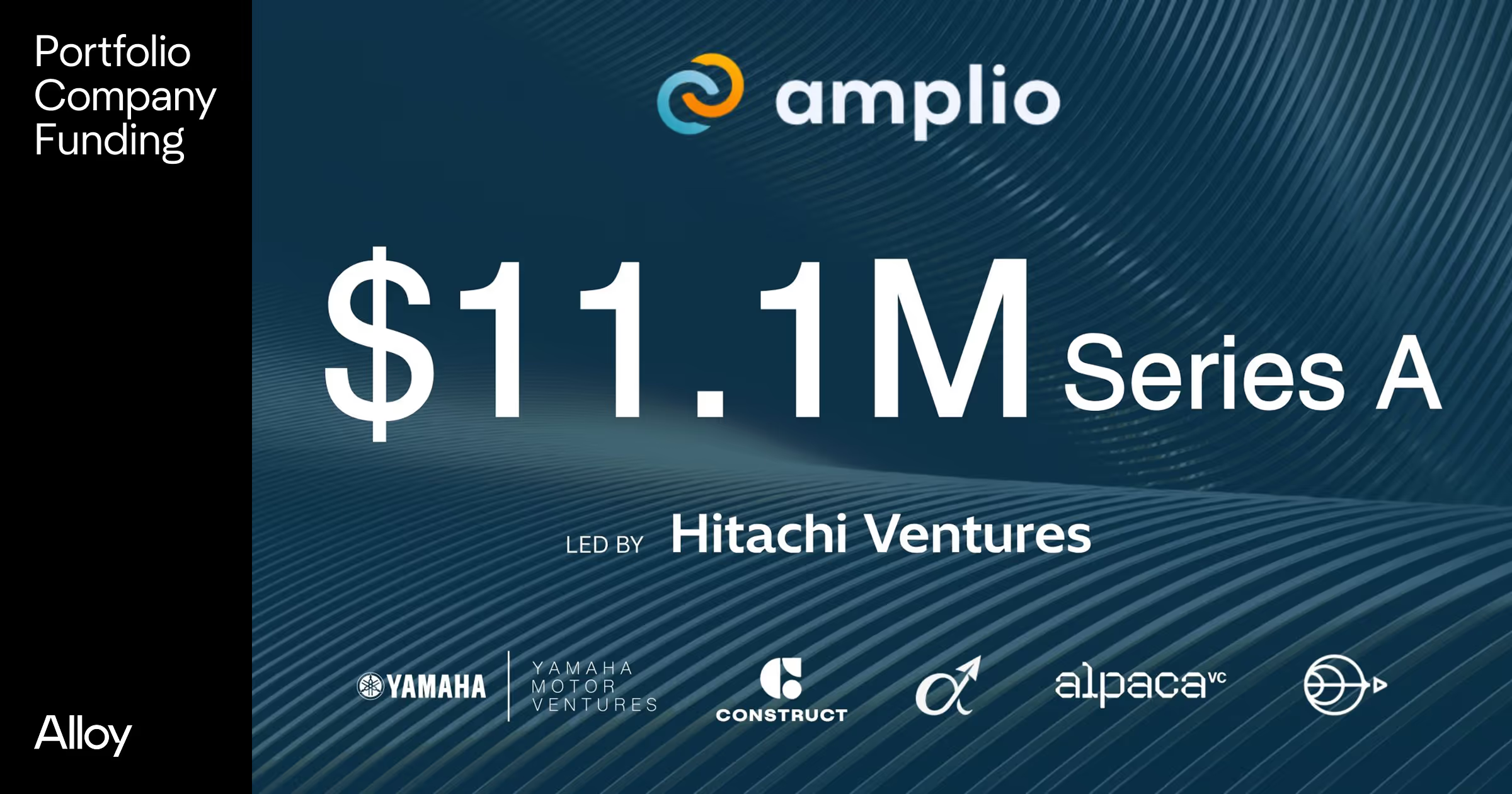
Drew Beechler: And so you're now, over two years into that journey, when was an aha moment that, hey, we're gonna bet everything on this new vision. And we'll talk about this too you all just recently raised in an $11 million series A and so it's clearly, working and there's major opportunity now in this new vision.
But when was that aha. Was it The first contractor, they're like what if you paid US X or, and they were like, yeah, we'd pay you easily X. And you're like, wow. I thought that was three times more than, what was that kind of opportunity? I feel like there's always one of those where you're the pleasant surprise that I think this is gonna work.
You.
Trey Closson: Yeah,
totally. So I, I think that interestingly enough it was probably nine months or longer into doing this like surplus inventory marketplace. So our first customers were were folks that I had either worked with previously or connections of connections that, that I had worked with.
So basically I was just. Plumbing my network as much as possible to try to convince people to to work with us. And and I think that's like the most important piece with early sales conversations. When all you have is a vision and like some loose idea of accomplishing that.
You have to either work with people that trust you already or quickly convince somebody that even if you have no idea what You're doing, that you can figure it out and that you'll create value for them. And then it becomes like a personal obligation. So our first customers.
I woke up every morning thinking I don't want to disappoint them, because often oftentimes they were either friends or like close colleagues and and that was a good you talked about forcing mechanism mechanisms earlier, like that was a good forcing mechanism that. I saw these people at at events and like I went out and had breakfast with them.
I can't show up to the breakfast if I've screwed up something for them. and so the first aha moment was the first major. Manufacturer that became a customer that I had zero connection to or that Taha had zero could a connect connection to. And because like we could in the moments where we were questioning what we were doing, we could always ask ourselves a question.
Are these early customers working with us because they know us or are they working with us because we're actually creating value for them? And the first time that a manufacturer worked with us that had zero connection to us at all and we beat out incumbents was the major aha moment of okay we're onto something important here.
And that customer general was General Motors. Not just some small mom and pop around Atlanta. It was yeah. Fortune 100 organization. And and so at that point we, we had meaningful revenue. But it was the first time where it was like a complete random connection.
In into Amplio.
Drew Beechler: at least, one version of product market fit is, unaffiliated customer, revenue. I think, I think it's really important. Maybe you highlight that too, your early sales and partnerships in this front.
You were selling into very large corporations successfully, and how did you sell into these large corporations when all you have is a vision in many ways
Trey Closson: So I think that like advice that I typically give to other founders is if you can sell to SMBs and mid-market organizations and you don't need enterprise customers early on. Avoid enterprise customers if you can. Because it's just, it takes a long time. It's challenging.
Sales cycles are long. We tried to sell into SMBs and mid-market organizations, but we found it's actually easier to sell into enterprise organizations. And I think the key insight there is that, that because, the value prop is just so much more salient for a large manufacturer than it is for an s and b or mid-market company with an s and b or mid-market company.
You're talking to the the owner who's making a decision to sell inventory. And they need cash as opposed to a holistic solution to, to solve the problem. The biggest value drivers for what we do at Amplio is getting inventory out of a warehouse. So resolving inventory, carrying cost, taking over the solution so that the organization itself doesn't have to extend resources to solve it.
And then third is really that cash return that we get for selling their inventory. Whereas the small companies they just want as much cash as Possible. So then going back a little bit to your question of what do those early partnerships look like?
It's, it's trying to convince somebody that that what we're doing is different and that it's worth experimenting with. And then it all comes back to, to trust of do we have a shared history in some way that they can trust that I'm going to accomplish what we've set out to accomplish, even if it looks different than the initial idea that we had.
And then. The whole goal of those early relationships is getting case studies so that you can then use those case studies in conversations with unaffiliated or uncorrelated manufacturers that, okay, we did this for X, Y, Z. They look like you, they have the same problem as you. Now it's easy to believe that we can do the same for you as well. And so I, I think that's the biggest insight is work with people that you know and trust pursue a problem that, that you understand and then that you have a network in. And I think that, you highlighted this a little bit earlier too, that the benefits to the startup of working with these big companies is obvious.
It's early access to customers. But then for the big co the large enterprise. The benefit is that they have the opportunity to have early access to experimentation. And what I mean by that is that the incentives for most large organizations is not to experiment.
It's to continue doing what you're doing and make little optimizations along the way. But most folks are not incentivized to, to try and experiment where. a high degree of possibility that the experiment will yield a result. That's not positive. and so the, these large organizations then get to have these little out of the money call options by working with startups that, okay, if this does work, then it's a huge value creation.
If it doesn't work, then okay, we tried something and it didn't work. but you have to convince people, early on that the vision is worth pursuing together and that they can have significant influence on what the product looks like moving forward as well.
it's a lot of selling hopes and dreams.
Drew Beechler: Yeah, it totally is and it's so important. I think that bringing them along for the ride and how do they feel? Part of the team, part of the vision, part of the solution, how you structure all that is so important. One other. Big co relationship that you all have really formed is on the financing side and investment side as well.
So your most recent series A was led by Hitachi Ventures, also had participation from Yamaha Ventures, which I think is just really salient and important in this conversation. Why did you choose to work with strategic corporate VCs specifically in this round, and how has that been?
Strategic advantage to the Amplio business since then.
Trey Closson: Hitachi Ventures and Yamaha Ventures have been awesome partners with us, and it's just been. truly beneficial to, to work together. I think that some of the reasons behind why we are working with them and wanted to collaborate together.
So both organizations they were able to very quickly in the diligence process, ask their business units. Do you have this problem that Amply was solving? Is it solved by somebody else? And what took, more traditional investors longer to understand the problem?
Hitachi and Yamaha they got it right away. Because they, they had that access to the business units to be able to really verify the problem. Then and then they were able to to understand the vision of what we're building in ways that, that other investors just took longer to convince.
And so it was such a positive relationship with both from the very beginning. And they have been, just awesome collaborators and helping us to continue to evolve what we're doing now. And then I think that the added benefit too is that, that they're investors.
their business units are not required to be customers of ours. But then we have, a warm access point to the business units within Hitachi and Yamaha to pursue commercial relationships. And so there's significant value to, to us outside of just working with with the investment groups within each of these companies.
and then I think to the incentives for for both Hitachi and Yamaha the investors are incentivized to make. Great investment decisions and they're incentivized to make winning investment decisions. And so what I mean by that is that that they're not, setting out to solve a problem for Hitachi or for Yamaha.
They're setting out to make money. and so we wanted to have investors that were aligned with us in the long run. And it wouldn't just be short-term investors, but that would really be long-term partners with us.
Drew Beechler: We're coming up on the end here, and this has just been an incredible conversation. Thanks again for just the time. what advice do you have for other founders or even corporate leaders considering an approach like this, whether it's jumping out and starting their own company or working with an early stage startup as their first customer, as a design partner in a business what kind of advice would you have for companies and people thinking about.
Stepping into this world.
Trey Closson: Yeah, so I think the first one is the most important decision that you can make in the midst of this is finding the right co. Founder. The idea is obviously important and pursuing an idea that's worthwhile is important, but having the right co-founder that you can enjoy working with and weather the storms is the most important piece.
And so that's the first piece of advice is if you're wanting to start something. Find somebody that you can enjoy working with over the long term. The second is that if for the founders that are looking eager to start something just ask lots of questions.
Be really curious and when you're asking questions make sure that you're creating value. So even you don't have a product that exists. If you can create value in some way, whether making it make a connection creating a rapport, like doing something that creates value for somebody it, it earns a lot of goodwill and then earns the right to come back when you actually do potentially have a product.
And then I think for the companies that are considering this type of approach the incentive alignment within a large corporation is like I mentioned earlier, to make. Micro optimizations along the way and not rock the boat too much through experimentation. But the only way that you can have long-term significant sustained growth is through experimentation.
And you need to place. Bets along the way with with experiments to try to find new ideas to create either new business lines or to make macro optimizations to, to your business. And if you're not placing those bets then you're gonna die at some point. It might not be within your lifetime, but the company will eventually die.
Drew Beechler: Do you think that the fact that Koch and Georgia Pacific are private companies as well contributed to their ability to think in longer term horizons and overcome that and get more to the experimentation culture really.
Trey Closson: Yes, a hundred percent. I think that that, that is at the root of this for Koch and gp. And what I mean by that is that Koch is able to think in in the long term because quarterly results in annual results matter. But they are thinking for the long-term time horizon and are much more comfortable with taking risk because The shareholders are the Koch family and probably a few others at this point. And if there is a positive expected value for an experiment, even if it has one to 10% success. They're willing to take that bet because they want to a again, they wanna play for the long run, and they're not having to drive towards quarterly earning reports or annual financial presentations.
They're really looking to make outsized returns over the long run. And so I think that being private allows them to make those right. Bets because they're not having to cater to the public markets. And I the public markets are incredibly beneficial in creating liquidity for investors, founders giving access to to investment.
But then it often leads to short-term decision making that doesn't allow for that experimentation and risk taking.
Drew Beechler: it's so important that how do you take action, drive more urgency, take more experiments, more shots on goal, I think is just a resounding theme of this and I think is such an important perspective. Thank you so much, Trey, this was awesome. And thank you everyone for listening and we'll be back with another episode coming soon.
Trey Closson: Awesome. Thanks Drew.








































.avif)