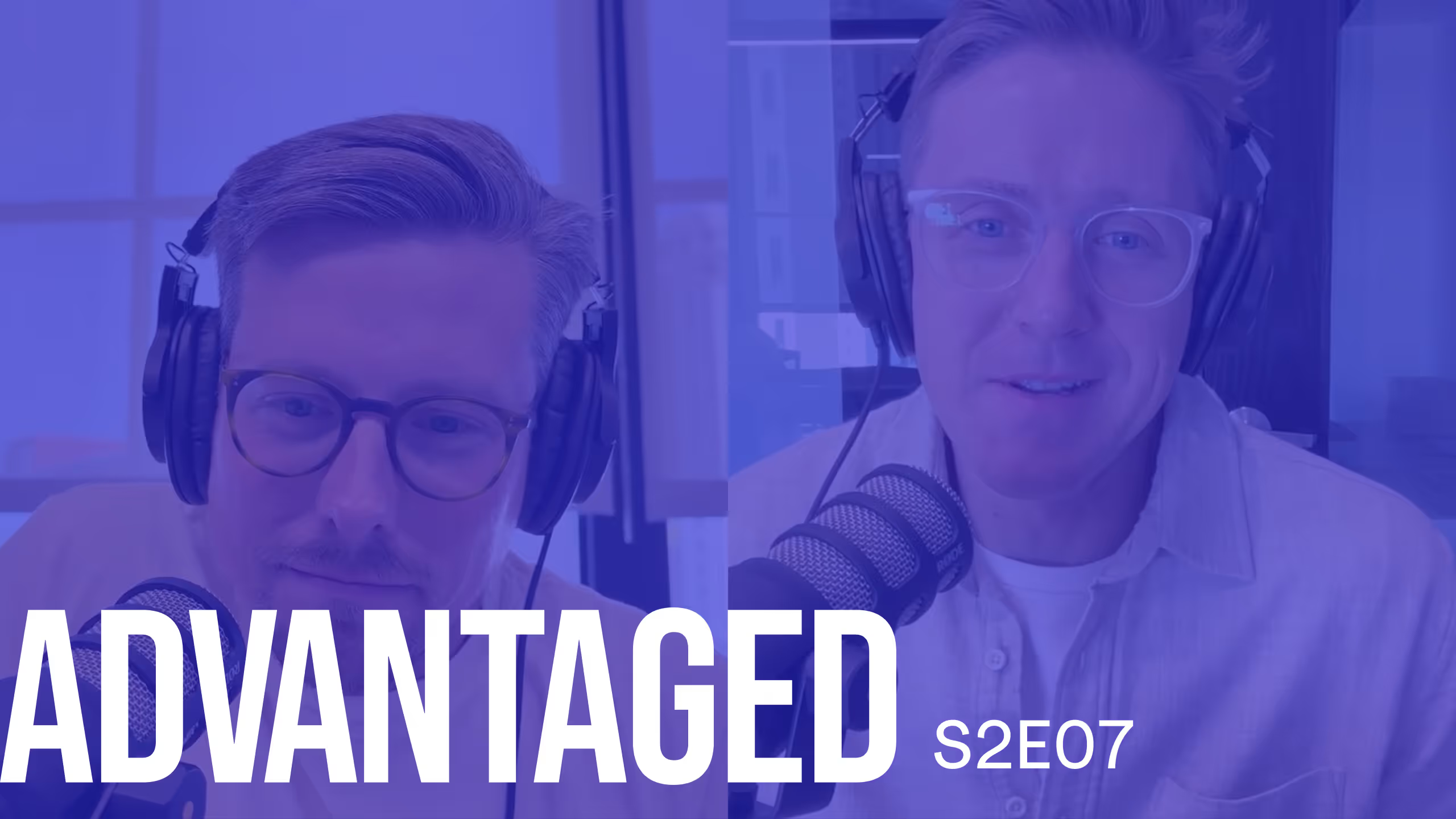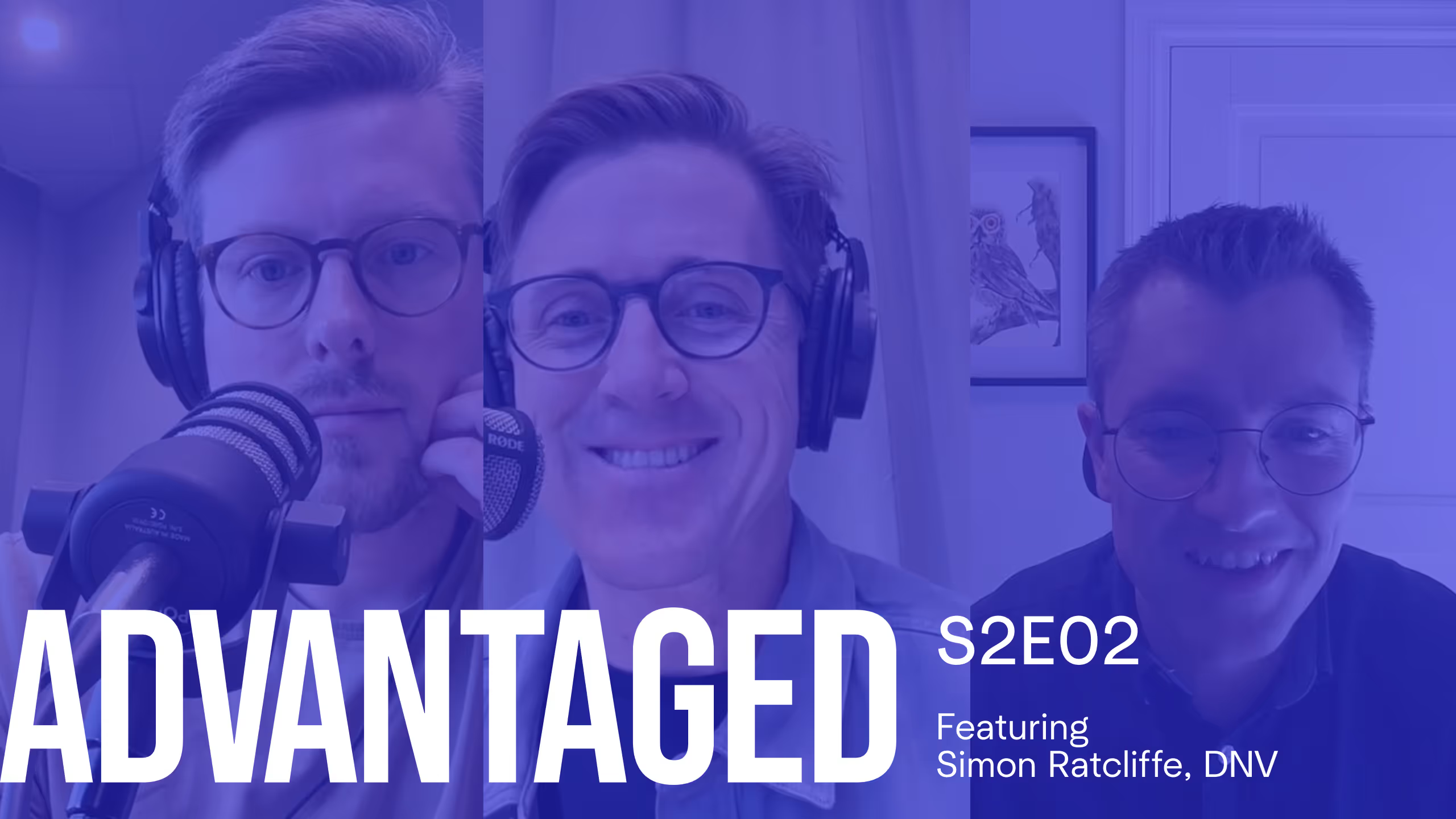
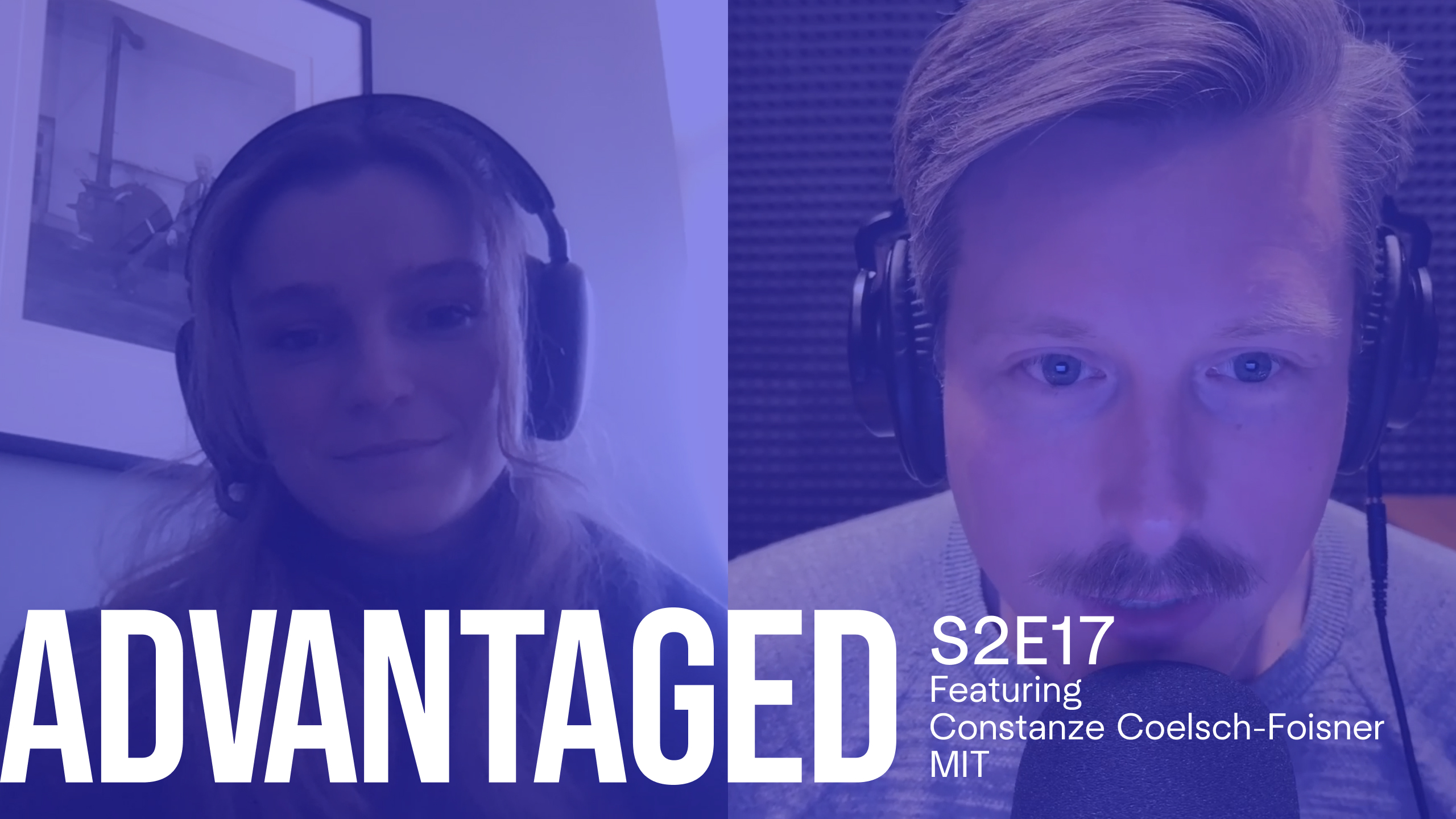
In this episode, I sat down with Simon Ratcliffe, Venture Building Director at DNV, and our CEO, Elliott Parker, to explore how a 160-year-old global quality assurance company is transforming its approach to innovation—by building, funding, and spinning out new digital ventures.
Simon's journey from mechanical engineer to leading DNV's venture building and spinout efforts is a compelling case study in corporate transformation. We discussed the evolution of DNV's innovation model, the realities of spinning out ventures from a large organization, and the lessons learned from both successes and failures along the way.
Meet Our Guest
Simon Ratcliffe | Venture Building Director, DNV
Simon leads DNV's venture building and spinout initiatives, working at the intersection of corporate venture capital, startup partnerships, and internal innovation. His background as an engineer and product builder gives him a unique perspective on the challenges of scaling new businesses within a global enterprise.
Episode Highlights & Takeaways
- From Engineering to Innovation: Simon's early career at DNV involved classic engineering roles, but his curiosity and drive to improve processes led him into digitization projects and, eventually, innovation leadership. His first digital product failed due to a lack of customer understanding—a lesson that shaped his approach to venture building.
- Building the Venture Spinout Model: Simon described how DNV's innovation efforts matured from isolated pilots to a hybrid model that blends internal incubation with corporate venture capital. This structure enables DNV to fund, scale, and spin out promising digital businesses that don't fit neatly into existing business units.
- Spinout Successes and Learnings: DNV has spun out several ventures, with Simon emphasizing that autonomy, the right team, and aligned incentives are more critical to post-spinout growth than brand or corporate resources. The ability to attract external investors has also served as a key validation point.
- Challenges and Advice: Executing a carve-out from a large corporate is complex, involving everything from team dynamics to unwinding legacy agreements. Simon's advice for other corporate innovators: learn to sell your value proposition internally, experiment within your constraints, and don't hesitate to bring in outside help when needed.
- Customer Understanding Is Critical: Early innovation efforts failed when DNV's team misunderstood customer workflows. Deep customer discovery is essential before building new products or ventures.
- Hybrid Innovation Models Unlock Growth: Combining internal incubation with a corporate venture capital approach enables more scalable funding and greater autonomy for new ventures.
- Autonomy and Incentives Drive Success: Ventures grow faster post-spinout when given freedom to build their own teams and align incentives—sometimes more so than access to corporate assets or brand.
- External Validation Matters: Attracting outside investors is a powerful proof point for both internal stakeholders and the market, signaling real value beyond internal belief.
- Pragmatic Experimentation: Innovators should experiment within their constraints, use external consultants when needed, and be flexible with spinout criteria to seize opportunities as they arise.
Listen or watch the episode below or on your favorite podcast player.
Be sure to subscribe to Advantaged on Apple, Spotify, or YouTube.
If you're interested in exploring how your organization can build, fund, or spin out new ventures, let's connect.
Full Transcript
Below is an un-edited transcript of the podcast conversation.
Drew Beechler: Welcome to Advantaged an Alloy Partners podcast. I am Drew Bechler, our VP of Marketing here at Alloy Partners. And your host of Advantaged Alloy Partners is a venture builder. We partner with leading organizations and entrepreneurs to co-create advantage startups and venture studios that help unlock growth and transformation.
Drew Beechler: At Advantage on the podcast, we interview corporate innovators, founders, investors, all around venture building, startup corporate partnerships. We're telling the stories of how corporates and startups are winning together. Here today with me, we have myself Drew our CEO Elliot Parker and Simon Ratcliffe, the Venture Building director at DNV.
Drew Beechler: As part of the DNV Ventures team, Simon's responsible for venture building and spin outs, which we're gonna talk a lot about here today while also scouting and investing in startups that create strategic value back to DNV. And so if you're unfamiliar with D-N-V-D-N-V is a massive global quality assurance and risk management company headquartered in Norway.
Drew Beechler: It's a private company founded over 160 years ago. And they help organizations improve safety, sustainability, and performance, especially in maritime energy and healthcare sectors. And so welcome Simon to the show. So excited to have you here. So excited to get to know you over the last. Month or so.
Drew Beechler: So maybe, in our conversations in the past I've been really fascinated with your background and so maybe just share you, you started as a mechanical engineer and kind of what has taken you from mechanical engineer now into corporate kind of innovation side of things and venture building and spin outs.
Simon Ratcliffe: Thanks Drew and Elliot for inviting me. I am an engineer by education, by background, and I've had engineering jobs. When I joined DNV, the first job I was doing was approving the designs of pressurized equipment like valves, boilers, things like that, that were going onto ships and offshore units. So what I like, describe that as like proper bread and butter.
Simon Ratcliffe: DNV, third party technical assurance work, right? Drawing comes in, you review it against the standard, you do a bunch of calculations, look at the welding diagrams and you say whether it fits or doesn't fit. That's what I used to do in DNV. But naturally, like I think when you're an inquisitive person, curious person and you are working within.
Simon Ratcliffe: Processes. You always, it's always tempting to try and find ways to, could we do this slightly better? Could we improve the way we work maybe to achieve more customer satisfaction? And I think if you're a young engineer with that kind of mindset, you can quickly become more valuable to your company than just doing the kind of like the core job.
Simon Ratcliffe: So I was noticed because of being forward leaning on things like how should we give quotations? Like guys, I noticed that lots of our quotations are coming back and we have to do rework because we didn't quote properly. Can we improve the way we give quotations to avoid this? Little things like that.
Simon Ratcliffe: And I think that's quite, that's not like a tech innovation. Role in a way, but that's an innovation spirit because you're trying to find ways to improve a process inside a kind of fairly well-run corporate. I was asked then so being forward leaning like that and I was asked to contribute to digitizing the department I was part of.
Simon Ratcliffe: This was back like 20 16, 20 17. So if we're in the AI revolution now, 20 16, 20 17, in the. In the kind of corporate corporate boardrooms, then it was all about digitization, right? We need to digitize. So let's get some of the younger guys and girls to come up with digitization initiatives.
Simon Ratcliffe: And that's how I got started. Me and a friend, we started to try and digitize my job away. Why my job, not his job, I'm not sure. But we decided to try and digitize my job away. So the idea was that a customer would be able to interact with a digital tool rather than waiting for an engineer to go through the calculations and do a load of work.
Simon Ratcliffe: That was my first taste of proper innovation. And. We failed, in my opinion, failed spectacularly because we didn't understand the customer at all. We built this thing, we took it on a road show to customers. I remember it was in Northern Denmark. We went over it from Norway to Denmark in a ferry.
Simon Ratcliffe: Went to see some customers, took our new MVP on the road with us, showed it to these customers and said, would you use this? If you use this, it's gonna be so much better for you and it's gonna be better for us. It's a win-win. Would you use it? And they said yes. And then we went home very happy with ourselves, and then they never touched it.
Simon Ratcliffe: They never touched it. And that was my first lesson, right? Finding out, so guys, you said you were gonna use it. Why didn't you use it? And it's because we'd fundamentally misunderstood how the customer actually works. In order to use this tool, you have to be an engineer, like trained, with a degree in engineering and know what to do.
Simon Ratcliffe: The customer's process involved admin assistants sending emails, so we were trying to replace an admin assistant sending an email with a complex engineering process. No wonder it didn't work right, and if we just asked the right kind of questions, we wouldn't have put a lot of effort into coding this thing up, right?
Simon Ratcliffe: It was quite an endeavor to, to code rules written for human engineers to interpret into software at the time. Especially more or less in spare time at work. So that, that was like a hard lesson. And then I read some books like, the classic innovation books. I thought, why didn't I read these before?
Simon Ratcliffe: Wow, like everything we did wrong is in these books. That's crazy. So we should have read the books and if we had done we would, maybe we would've saved ourselves some trouble. But I think that's when I got the bug. So that was my first digital kind of product in my opinion. Failed. It still exists though.
Simon Ratcliffe: It's of course been re repurposed for internal use. 'cause it's a good, it has some good features, but it didn't. Become the customer facing tool that I dreamed of. And the guys who had my job still have that job. So we didn't engineer, we didn't automate anyone's job away. But that was the first taste, like going from engineer to an innovator type of role.
Simon Ratcliffe: And failure like that is rewarded. So then you get to do it, you get to do it again. And and and then my next chance was trying to start an additive manufacturing business for d and v. And I went to Singapore to do that. So that was. Trying to figure out how can DNV make money from additive manufacturing?
Simon Ratcliffe: Bear in mind that we're not a manufacturing company. We don't own and produce design, things like that. So usually it would be how do we just sell existing services towards additive manufacturing. But my job is to try to figure out are there new challenges, new risks that need assuring that come from additive manufacturing being used in shipping and oil and gas and things like that.
Simon Ratcliffe: And that was my second digital play. I came up with a product that was about assuring the digital side of an additive manufacturing identifying things in digital inventories. I sold quite a few thousand digital identities, but I could only get. Two customers. I couldn't get a third customer, couldn't get a fourth customer, so had to cut it.
Simon Ratcliffe: This is so two digital products, and then you're invited to keep trying again because you are doing things in a different way that the corporate haven't seen before, really. So you're asking you're being asked to try again and again. And one thing leads to another and you are, you're leading a whole incubator.
Simon Ratcliffe: That's that was my route into it.
Drew Beechler: In those
Simon Ratcliffe: engineering for a.
Drew Beechler: yeah. In those first two projects you were, had an engineer title, not yet on the innovation team even or had created the incubator kind of program even, right? Yeah. Yeah. What and so then tell me more about, I. Your role now on, on the ventures team and even maybe that the period too, like in, in the incubator that you spun up and worked on as well.
Simon Ratcliffe: The Additive Manufacturing Project became, it went on for a while and became a good pilot for how do we do, how do we explore new stuff and how do we explore new stuff that doesn't fit perfectly in existing? Existing business verticals. We have a maritime business, however, we have an energy business.
Simon Ratcliffe: So if you're exploring additive manufacturing supply chains, which one do you put it in? It goes across. So it was a good pilot for how to build a project team up with multidiscipline skills and how to go out there and start learning from customers directly. And that grew into an incubator in our group center.
Simon Ratcliffe: And the rationale for that was, yes, we have incubation operations all around the company. Where would you do the stuff that is falling between the chairs? Where would you do the stuff that's a little bit further like forward looking where maybe it's still in I mature market? Like at the time, a few years ago and probably still today, hydrogen is a good example of that.
Simon Ratcliffe: The adoption's not there widely yet, so it's still forward looking. And then we, so we had a an incubator in our kind of group center and I had the privilege of running that and trying to figure out, okay, what should we do? What ideas have we got? And then it's very easy to have lots of ideas.
Simon Ratcliffe: Then the next challenge for a corporate is usually then how are you then gonna work on them? Have you got any people that, that was the problem we had in our incubator. You need people to work on these things. So building a rhythm, building some sort of cadence or testing ideas and shutting them down when they're not working is like the first challenge, which we managed to do.
Simon Ratcliffe: And over time I learned that. It's a volume game, all right? Like you need to start and kill and start and kill so many things. It's very difficult to do that from entirely within the corporate. And then, and strike gold. And you might strike gold. Okay. And actually I feel like we did on with one particular project deserve to continue to live.
Simon Ratcliffe: It was getting traction with customers. Every metric we asked 'em to meet, they were meeting. And so we wanted to continue to invest in it, but then you realize quickly in a corporate, your innovation budget doesn't go very far. It can pay for a team of two or three, maybe part-time, but you wanna go full-time.
Simon Ratcliffe: You wanna start hiring salespeople. You wanna start actually trying to start to scale this thing beyond MVP. It's not about building necessarily, it's about actually trying to get the traction with customers. The budget required for that is usually your entire incubators. Budget and then some, right?
Simon Ratcliffe: And what sort of portfolio is a portfolio of one? You can't, it doesn't make sense. So I realized that the problem to solve is how do you fund the scale phase? That's really challenging. But meanwhile we have a corporate venture capital team. It is still fairly young as well, but we have a classic CVC team.
Simon Ratcliffe: We invest in startups for strategic collaboration and through our CVC team we are learning about the startup environment and we're of course interacting with startups and we see that there are startups out there. Who are working in similar spaces to us. They don't have the corporate assets, they haven't got the deep technical knowledge that we have.
Simon Ratcliffe: And they have far less going for them in many ways, but somehow they can go up and down the kind of VC main street and raise millions of dollars for an idea. Meanwhile, in the corporate we barely give it any crumbs. So I think that's when we realized that. What if we could invest in our own growth ideas in the same way that a startup goes and gets venture capital.
Simon Ratcliffe: So combining an incubator with our CVC team and creates a venture building program where when we find something that we think is promising, it's digital, it's scalable, it's strategically aligned, it can grow. raised the opportunity to actually invest in it with our CVC fund rather than expect the annual operating budget to pay for it, because that's, that is not gonna be good enough.
Simon Ratcliffe: So that's kinda, that was the evolution. And I moved, of course, with that idea, I moved into the CVC team. So now our CVC team is quite hybrid between. C, investing in startups, working with those startups to create strategic value in the kind of the core business and also the venture building element where we like, okay, let's take the learning from CVC plus the capital.
Simon Ratcliffe: We have to try and grow some of our own digital businesses.
Elliott Parker: Simon is that journey you went through is pretty interesting and a lot of innovators inside of corporations, they go along a similar journey. But often find that they get stopped along the way by leadership teams that aren't going through the same thought process. Tell us about your leadership team.
Elliott Parker: How are you keeping them in the loop as you're going through and learning these things? Were they coming along as well and were you aligned the whole way? Was there the proposal to start building external ventures, was that, how was that received? Did they view that as a natural progression from where you had been and a solution to the problems?
Elliott Parker: Or did they view this as, why would we do that type of thing?
Simon Ratcliffe: If the leadership, any of my leaders are listening or watching, of course, they're all fantastic brilliant people. But no, I think that they, but they are really, I think a lot of them are, and you only need one to really champion what you're doing. Two helps. But if you have the people who, if you can explain to them and they can go along with what you're saying and are willing to experiment, then you've got some kind of freedom to operate.
Simon Ratcliffe: And in particular, getting our venture building kind of play set up within our CVC, it was being able to explain to the CFO that we will return the innovation money to the company. This is a way you'll be able to actually track what you've spent and show a return on investment in terms of enterprise value.
Simon Ratcliffe: And that's not something I think we've done before. Usually projects, like especially innovation projects in corporates, it's expenses. It gets spent. Was there a return on investment? We don't know. We have no real financial tools to find out, but here I'm creating a financial tool because we have an idea, we spent some money on it to get it to a certain point.
Simon Ratcliffe: We then invest in it and we can actually demonstrate back to the company, to the CFO in particular. It was worth X. Now it's worth y. It's been a success. And would you like now to buy the company back, or would you like to send it off in its way? Would you like to keep it separate? Like we're creating options, so it's about creating options for your leaders.
Simon Ratcliffe: And being able to measure things on in the terms that they like best understand. And so the finances it's return on investment and and enterprise value. With corporate development and digitization, it's often about learning and demonstrating that we're spreading.
Simon Ratcliffe: Ways of working and learning around the company practically, like not academically, but actually by doing so, if you keep those kind of stakeholders on board with the things they wanna see you get freedom to operate, then of course it's up to you to deliver. And I think me and the whole team, like we do. We're very aware of the privilege we have to have, the jobs we have, and that most CVCs and corporate innovation teams have limited shelf life. So you do need to need to be humble about the, returning results as quickly as you can because the music might stop. It takes one CEO change, one CFO change and the music could stop.
Simon Ratcliffe: So you have to be you have to be aware of that.
Drew Beechler: And how is it going so far? Maybe share, you've had a couple of spin outs already. Share over, over the last handful of years, what would've been some of the successes or learnings as well, and how it's going.
Simon Ratcliffe: DNV as a kind of, as a CVC team. We have we have three spin outs that have come from DNV and gone outside. The first one happened a few years ago and really was at the very much idea stage. . A member of DNV Technical, an engineering team out there in the business.
Simon Ratcliffe: Had an idea and wanted to wanted to pursue it. And the company let him do that in return for some shares. And so that was very much a pure startup play. Not really a deliberate venture building play. More of a pure startup play where we let some IP go in, return for some shares and see what happens.
Simon Ratcliffe: And that's going fairly well. But the ones I've been working on have been much more deliberate plays where we say we would like to grow this business. So let's actually do something about it. First one I did was last year, at the end of last year, and that's in the maritime space. And the second one we, we executed at the beginning of this year, and that's in the renewable energy space, in, in the wind power space.
Simon Ratcliffe: And what we've seen since those companies have been created, because that's what we have to do, we have to create the company, and then you have to move the business into the company, including people. And what we're seeing with both of those is that the pace. Growth has massively increased outside the company.
Simon Ratcliffe: And actually many of the corporate assets and many of the corporate assets that we thought were really valuable have proven to be, less not, yeah, less valuable than maybe we thought right there actually, they weren't as important for pace as you might imagine. And actually, autonomy was more important, right?
Simon Ratcliffe: Freedom to pick your own people was more important. The size of the investment from the mothership was more important than the brand. And access to key account networks and all that kind of corporate data, right? They're useful. They're good. But the benefits of spin out were more important.
Simon Ratcliffe: And the, yeah. Pace of growth revenue growth in particular has been great since they, they've left. The other amazing thing about it that I hadn't quite predicted or thought about was that the type of talent we can attract, it's quite different. So we've hired people into those companies. I don't think we'd got into our corporate, not just different types of people. They wouldn't have gone for a job in the corporate, but they were happy to go in a job from, in a corporate spin out. And we've aligned incentives in a very different way than we can do inside the corporate as well. The DNV is a foundation, is owned by foundation, right?
Simon Ratcliffe: So there are no shareholders of DNV. It's it's a foundation that owns DNV in order to deliver a purpose. So there's no shareholders. So I can't give you shares to motivate you, but if we spin a company out. I can create option schemes and share schemes and align incentives with management in a way we can't do inside the company.
Simon Ratcliffe: And also, if we wanted to do inside the company, we'd create a huge HR project about how do we reward people and what the bonus schemes look like in this company. We can't, I, we can't bite that amount off, but if we carve a company out, we can experiment a bit more. And shares and options have been an important part of it.
Elliott Parker: Simon, you put your finger on One of the most important things that we see in these corporate created ventures. It's the incentives. If you get the incentives right, it can be a powerful motivator, not only to recruit world class entrepreneurial talent, but to enable them, power them to succeed and do amazing things.
Elliott Parker: But it, it comes at an upfront cost, right? Often the challenge is the corporation looks at the spinouts, says we should own all of this or the vast majority of it. Why would we make room for anyone else? And the baby's kind of killed from the beginning. How did you manage the incentives?
Elliott Parker: What'd you do different from everyone else? How'd you get it right?
Simon Ratcliffe: We probably don't do enough. So first things first to get clear. If you, if I show our incentive kind of structure and cap table. To a Silicon Valley venture capitalist that just say, get out. Not enough founders need to have more management, need to have more. You guys are too heavy on the cap table, not interested.
Simon Ratcliffe: So we probably, we. We could do more. But as you write point out, Elliot, the corporate is not that comfortable with the idea of giving everything away. Even if you make the argument that Yeah. But at the moment it's a it's it's a nothing. It's a loss making business.
Simon Ratcliffe: Come on. Let's give as much away as we can stomach, maybe they'll return a fantastic growth story and then we'll actually have something to be proud of and have a company we can reintegrate. If we start dividing up the end, the end prize now. We probably won't have anything.
Simon Ratcliffe: So it's a balance of making that argument of saying, let's just try ag and against also, we can't actually give everything away. In Norway, we have, of course you have income tax rules in every country, and there are wealth taxes in Norway as well. And I can't just give away shares of a valuable company to you without consequence.
Simon Ratcliffe: The tax matter what is Phil. So we have to, you have to balance it. So I think I'm en I'm encouraged to be a little bit bolder on the next spin out. I'm working on a spin out now and I would like to maybe a bit be a bit bolder with management chairs a little bit more for the management.
Simon Ratcliffe: Take a bit more there, because so far so good. It seems to be working. So I think we could dial it up a tiny bit, see if we get not necessarily more motivation from the team, but we might get. More motivation from other investors to join us on the journey. And I think that's also been an important learning.
Simon Ratcliffe: The first spin I did, we, we did achieve external investment. So we have new investors. We were diluted from owning everything down to below half. And having the other investors at the board table has really sharpened really sharpened the focus on growth. Much more than me and my colleagues in, in the CVC team, the external investors, they bring it, you know? and uh, even if we'd like to be as, as tough as they are uh, it's tricky, especially with with your colleagues, so that's having external investors is good and I think it might be worth it. Giving more away to try and attract external investors is worth it.
Elliott Parker: Yeah it's like a magic trick, isn't it? There's the the percentage ownership doesn't matter as much as the underlying economic. Economic value. And by, by bringing in those outside investors, you can see the economic value of what you own increase if you get the right partners involved. One of the we tell a lot of corporations the the most, maybe the most underappreciated metric for innovation success most organizations aren't using but should is what is the the extent to which outside investors are clamoring to invest in the things that you're building.
Elliott Parker: The fact that you were able to attract outside investors into your first spin out is obviously a good sign that you've got something valuable there, that you're onto something and it's not you're not subject to internally convincing yourself that it's a good idea. You have outside market validation that says, yeah, this is a good idea.
Elliott Parker: So good that we wanna put our money in it alongside you.
Simon Ratcliffe: It's a proof point, right? So everything you're doing as a corporate innovator is about trying to move from doing things especially when you're working in a traditional organization trying to move away from doing things based on belief. Or like I, we will, we would like to will this into belief, into being this should be true.
Simon Ratcliffe: This is the future. Therefore, if we build it, they'll come and all these kind of things, right? Doing things based on belief to doing things based on evidence. And the first step of that is usually I. Going on an innovation course and learning about customer insight and testing, willingness to pay and all these kind of things.
Simon Ratcliffe: And oh, if the customer's gonna pay for the pilot, it's more valuable than doing a free pilot and all this kind of stuff. But the next level, absolutely, Elliot is the next level, is angle. Someone else put their money into this. You are really taking it to the next level of proof of value, then there are many barriers why someone might not wanna put their money in cap table and power of the corporate and whether I'm gonna get a good exit return and so on which may stop someone doesn't mean the product's not valuable.
Simon Ratcliffe: You might not be able to grow a good business. But it is a very attractive data point, especially for senior leaders. CFOs in particular, I. How do I know this is a good idea? This guy who you've never met, but it's a great reputation as an investor is willing to put some money into it. Oh, that's very attractive.
Simon Ratcliffe: Sounds good. Do a crack on. Yeah, get on with it then. So that's a very powerful proof point. Absolutely.
Elliott Parker: Yeah.
Drew Beechler: related to that, I don't know if that kind of falls into some of, we talked a lot about before you're . Pretty crisp criteria for what is gonna make it to spin out. So maybe share some of that kind of thinking and what does market validation, in that kind of context mean when you're thinking about, is this worthy of a spin out as well?
Simon Ratcliffe: Chris it's you to describe it as crisp drew because of course rules we broken, so it's nice and crisp. We'll break our own rules, of course, naturally, but really it's about. We have to believe it as a corporate venture capital team. So we have to think this is a digital scalable business that like that deserves to grow and we think there's growth potential in it.
Simon Ratcliffe: So we take the case, that's a question that comes up oh, how do you decide what to do? We have to like it in the team and we have to take that case towards up towards our investment committee and we use the same investment committee to govern the spin out. Let's do this spin out versus that spin out.
Simon Ratcliffe: It's the same committee that governs our investments in startups. Exactly the same committee, same meeting, same process. We write an investment memo. We, we do the modeling and all that kind of stuff. So we have to want to do it. The second thing, the second point needs to be is that the.
Simon Ratcliffe: The part of the company where we found this, rough Diamond, that's the part of the company that kind Current currently owns that, that idea, that business, they have to be up for playing to our rules. So they have to want to grow the business as well. They have to allow us to, to do it our way which means giving it autonomy giving up a little bit of control for the business, giving up almost complete control actually.
Simon Ratcliffe: And that's how we want to do it. So spin out isn't we're not doing it to spin stuff out, like spin out is just the, at the moment. The only way we can give the autonomy needed. There may be other solutions. We might be able to do it internally somehow, artificially, but so far spin out has created the right environment.
Simon Ratcliffe: So we have to believe in it. Digital, scalable with growth potential. The part, the company that currently holds the keys need to be up for playing to our tune and wanna go with us on this. And then thirdly, we need somebody in the team. Who's up for it and wants to follow on that journey. Now they may not be the best fit to be the CEO of the spun out company in the long run, but you still need somebody who's up for leaving with it and helping to transfer all that hard work that they've done up to the point up to that point.
Simon Ratcliffe: And there'd be, that's something I've just missed really. What is that point? That point is that they have customers and revenue, so I'm not doing really early stage stuff. I have an idea who wants to, I have a brilliant idea. Really, someone should really work on it. We're not doing that. The kind of the business, the customer facing, operational part of the business is the best place to learn what customer problems need fixing and what opportunities there are for new digital plays.
Simon Ratcliffe: That's the best place to explore that and discover those things. So we take stuff where that's happened already and someone's. Got it to the point, they have some customers and some revenue and we're dealing with a scaling part now. So investing to grow, that's where we're coming in. We have to like it and have to believe in it.
Simon Ratcliffe: You have to be up to play with our rules. There needs to be someone on the team who wants to go. They don't have to be the perfect fit, but we need someone who wants up, who's up for it. If all those things are true, then we have something to play with and then we can start working on it. But it's always case by case a little bit, right?
Simon Ratcliffe: How you're actually gonna do each one and the rationale for spinning something out. Could be very slightly each time. And of course we can break our own rules if we like to, because there are rules and we'll do what we like with them.
Drew Beechler: What have we talked a little bit about this, but what have been some of the biggest challenges and hurdles that you've overcome to get some of these new companies off the ground within kind of the confines of an organization like DNV of that size and, so many years in, in kind of corporate structure.
Simon Ratcliffe: The experience I've got starting from you, the two spin ups have done, we've started from a point where we have a business that maybe just isn't growing, but they do have some customer, some revenues. There's an element of kind of problem, solution fit that's proven and willingness to pay, proven.
Simon Ratcliffe: So if we take it from that point of, from that point, the barriers and challenges are around actually executing a carve out. So things can be really deeply integrated like. Ba like how you've built them, the software you've used, the systems you're relying on, the agreements you've made in the process of getting to that point.
Simon Ratcliffe: One of our spin outs, we had to unpick an a, an agreement with an external party. That was quite challenging to to unpick. And we needed to unpick that because it was gonna be problematic for the spin out to then raise more, to be attractive to investors if we hadn't managed to undo that.
Simon Ratcliffe: Un picking stuff and getting things out can be challenging. The other challenge is do you have the right team? And how do you balance needing the team? You've got to actually get it out, but also. Accepting or getting the team to accept that they're not the best people to lead this into the future either.
Simon Ratcliffe: That's quite difficult. So supplementing the team after spin out something we've been doing, right? So hiring new leadership often and bringing in fresh faces with non corporate people. But that's all good. That's, if you've got great things that have got to that point, customers revenue, it's time to just grow.
Simon Ratcliffe: Wouldn't it be lovely if there was like. If I had a deal flow of like hundreds of those, I would be very happy if I don't have a deal flow of hundreds of those. That's the problem in the corporate, and that's my next challenge I think. So we've done one, two, I'm working on a third. I don't have a lot following up because we are when I don't think we're creating enough new digital business opportunities still.
Simon Ratcliffe: So I think we're gonna have to go a little bit earlier in. In the kind of the life cycle of these things and see how we can encourage more new digital business plays to even be started. 'cause there is a whole host of challenges in corporate. Why you're not doing a lot of that. And that's hugely to do with, focus on, on, on the existing focus on the now rather than spending time on the new and the way you drive a company to create bottom line rather than investing in in new things. Taking risk inside a corporate is very difficult, so CVCs and CVCs, it's risk capital, it's patient capital. In an operational budget, there is no space for risk really.
Simon Ratcliffe: It's you need to deliver your targets this quarter, next quarter and the quarter after that. So we need to figure out how to create more opportunities to grow new digital businesses. 'cause that is part of our ambition.
Elliott Parker: You're raising a really good point here, which is the kind of the impetus or the reason behind why a, a large organization would want to do this at all you talked about. Is a way to fund innovation. It should be self-sustaining because these things will pay for themselves if they're successful because of the fact that they're outside.
Elliott Parker: They're bringing other investors and so on. But in the scheme of DNV, which is a pretty large organization, the financial return from these things. I would argue probably doesn't matter a whole lot. And I imagine you get some of that internally. So why are we doing this again? It's not gonna move the needle, even if it's wildly successful from an exit perspective, it's not gonna be it's not gonna be a big deal in the scheme of things.
Elliott Parker: And so I'd be curious to know why DNV is decided to do this at all. And we've got our reasons, obviously why we recommend organizations do this, but I'm curious how you. Rationalize that internally. What objective what's success look like for DNV through this activity? What are you trying to do?
Simon Ratcliffe: It's. It's a good observation because you're correct that when you're in a big corporate, which has large existing running business, your new idea, especially in the early days is insignificant and also will be insignificant on my p and l. So getting attention and funding for something that's so small is difficult.
Simon Ratcliffe: But why are we are doing it is because we would like to we would like to diversify the way we make our money. We would like to create more recurring revenue in our, in our in our company. We're a company that's grown over the last five years. We have a, we had a growth target, top line growth target 45%, which so partly from organic growth, partly from inorganic m and a activity.
Simon Ratcliffe: And we smashed it. It was 45% more than 45% growth over the last five years. But growth in like new digital recurring revenue. Not as good. And that's the, that's what I'm trying to address, how to do more of that. So yes, although it might be small, we're finding new ways to deliver value to customers that is good for the customer and creates recurring revenue for the company, which is of course attractive to have diverse.
Simon Ratcliffe: Business models and diverse ways of making money. We do lots of advisory time and materials work. We have a ship classification business, which has its own special business model. We do, certification work and so on. So digital recurring revenue. And why is revenue important to a company like DNV?
Simon Ratcliffe: DNV is owned by foundation. As I've already mentioned, the foundation has a purpose safeguard life, property in the environment, and I like to think of it as like how we measure how much purpose we've delivered is revenue, right? If I have a service that I believe safeguards life, property in, or the environment.
Simon Ratcliffe: How can I measure how much of safeguarding I'm doing? It's by measuring the top line, right? I've sold one or I've sold a hundred, I'd like to sell a hundred. And so creating digital, recurring revenue for us is just a measure that we are creating new ways to safeguard life, property, environment.
Simon Ratcliffe: And that's what it's all about for a purpose driven organization. And we want 'em to be profitable in the long run because that allows us to continue to exist and to deliver more purpose in the future. So if we spend 5%, more than 5% on our top line in the whole company on research development and innovation.
Simon Ratcliffe: And that's quite a big commitment. That's a lot of money. But we do that in order to. To make sure that there's sustainability in our business models and in our services and in our products, and and that we can continue to deliver purpose in the future. So it's not it's not for charity.
Simon Ratcliffe: It's it's to make revenue, to eventually be profitable so that we can continue to exist in another 160 years and to continue to live a purpose.
Drew Beechler: Maybe one. Last question to end this on Simon, what advice would you give to others looking specifically to build and scale new ventures inside a corporation to do spin outs and venture building? What kind of advice would you give to those that are struggling to get their first, company or spin out off the ground or struggling to get the internal buy-in?
Drew Beechler: Is there any kind of advice that you would give to folks like that?
Simon Ratcliffe: If you're struggling to get internal buy-in that is, that is quite a difficult, then you really need to figure out how to sell what you're trying to do, right? So you have a product which you've, you're probably really good at figuring out how to describe that value proposition because that's what you're, your corporate innovator.
Simon Ratcliffe: You're good at value propositions and things like that. You need your own value proposition too. So you need to be able to sell to your leaders. Why This is interesting. And you need to understand their point of view and you need to turn all your tools you've got about product building and understanding customers.
Simon Ratcliffe: It's the same tool set to understanding internal leadership. So once we can start talking about return on in innovation return on investment, things start to move along a bit. And the second piece of advice, don't be scared to experiment with like within your constraints. Okay, so I ran an incubator in our group center, When you are in the group center, the only lever you can really pull is cost. Your objective is to cost less this year than you cost last year. That's what happens in a group center, right? You're not a money making part of the company, so you just have to cost less. So we couldn't hire people if I wanted a fantastic sales lead generator for my innovation idea, I couldn't hire them permanently.
Simon Ratcliffe: But I did have a budget that I could hire lead generating consultants, that's okay. But we've never done that before. But we wanted, we, we wanted to try it out, right? 'Cause usually we'd hire permanently, but you, we didn't have, we can't do that. So experimentation with outsiders to help you you need to bring as much outside in as you can.
Simon Ratcliffe: And if you can only do that through hiring consultants, fine. That's a great place to start. So I wouldn't be scared of paying for help. We had a lot of help on both our spin outs and the first spin out. In the very early days we had help on product strategy and then UI work and things like that.
Simon Ratcliffe: We had, we paid, we brought that in rather than using our own people. And on this, on, on the other spin out, I had help on fundraising. I paid for someone to help coach the team through the fundraising process and improve their improve their pitch material and improve their kind of like stance towards investors.
Simon Ratcliffe: So don't be scared to, to pay for help. Yeah, understand your stakeholders, get some help in and take the opportunities that are presented to you. So we talked about the rules we have, like what, why should something spin out should be strategically interesting? That's the first rule. We broke actually on our first spin out.
Simon Ratcliffe: First spin out we did because it was strategically unaligned. It was once upon a time strategically aligned. Over time it became unaligned. And then that part, the company was like, would you like to take this off our hands? We no longer see the strategic link. It's not perfect because I would like to do stuff that's strategically aligned, but it's the opportunity I had.
Simon Ratcliffe: So we took it and we make the best of it to show the system working. And then the next one I've done is strategically aligned, right? So take the opportunities that presented to you and experiment with them as you can within your constraints. Maybe that's not the most concrete of advice, but I think every corporate is quite different.
Simon Ratcliffe: So it's very difficult to give generic advice in to, to, to corporates. We're all very special.
Elliott Parker: I just think it's remarkable what you've done so far, Simon. And congratulations to you and to the DNV team to be forward thinking like this and to look at outside ventures as a way to go achieve some of the organization's goals and to innovate in ways that would be hard to do internally.
Elliott Parker: I love the, your your kind of roundabout way of getting there. Starting out as a mechanical engineer and stumbling into this fun area of innovation and realizing, boy, these things some of the things we're doing aren't working as well as we'd like. Maybe there are other ways. And just commendable, super fun to hear about your journey.
Elliott Parker: Excited to hear about the third spin out you do here soon. And I hope that there are many more that you'll find ways to generate more ideas behind those and see a long track record of success coming outta your ventures activity.
Simon Ratcliffe: Thanks Elliot. I hope there are many more as well, and I, like I said, that's the next challenge. How do we create. Deal flow for a spin out machine or for a venture building machine, creating deal flow is really challenging. That's the experiment I want to do next. And I am curious how, what kind of help I can get on that.
Simon Ratcliffe: We haven't tried some of those, like those models where you run a corporate venture building team outside the company. That's not something we've tried and I dunno, many people that have. So that's something I'm curious about how that would work for us. Because yeah, you just gotta fix one problem after another.
Simon Ratcliffe: So now it's a deal flow. We've done two, gonna do a third, now I have a deal flow problem. Gotta fix that. So there's always something to work on. And we'll see if these are successful, not because we spun them out. We'll see if they're success successful in a few years time. When. They're attracted to buy back again or they're attracted for some other kind of exit scenario.
Simon Ratcliffe: And it's about creating optionality. So let's see what happens to these two companies. You you can find out all our portfolio companies on our website so that you can figure out which these two are running in the maritime space, one in the winter space, they're gonna grow, they're gonna be successful.
Simon Ratcliffe: We'll I look forward to buying them back. That's the, and the team that, that grew, those companies will have their reward on that day. That's the, that's the attractive element to it.
Drew Beechler: I love that. Thank you so much for joining us, Simon. This has been an awesome episode.













































.avif)