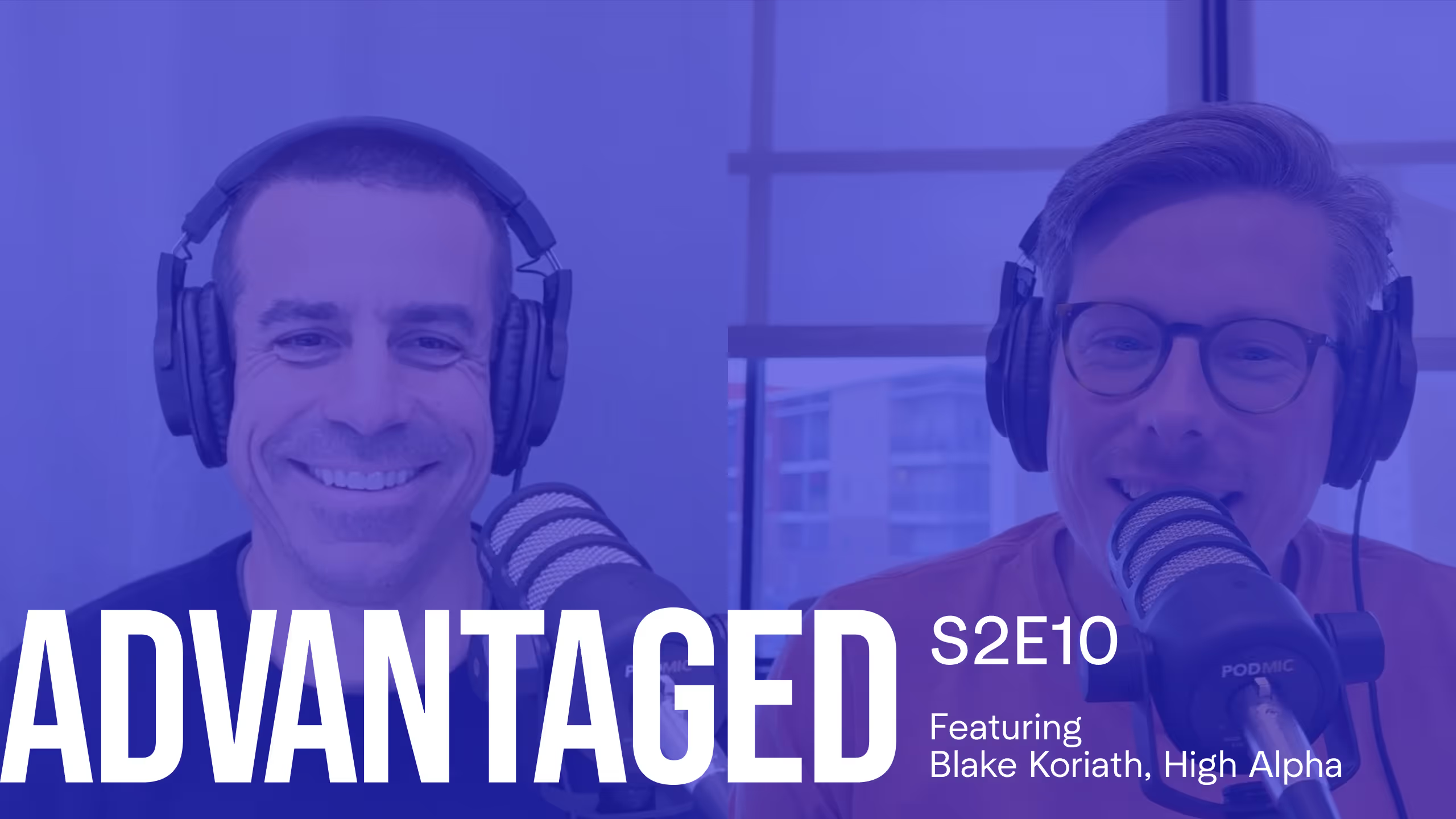
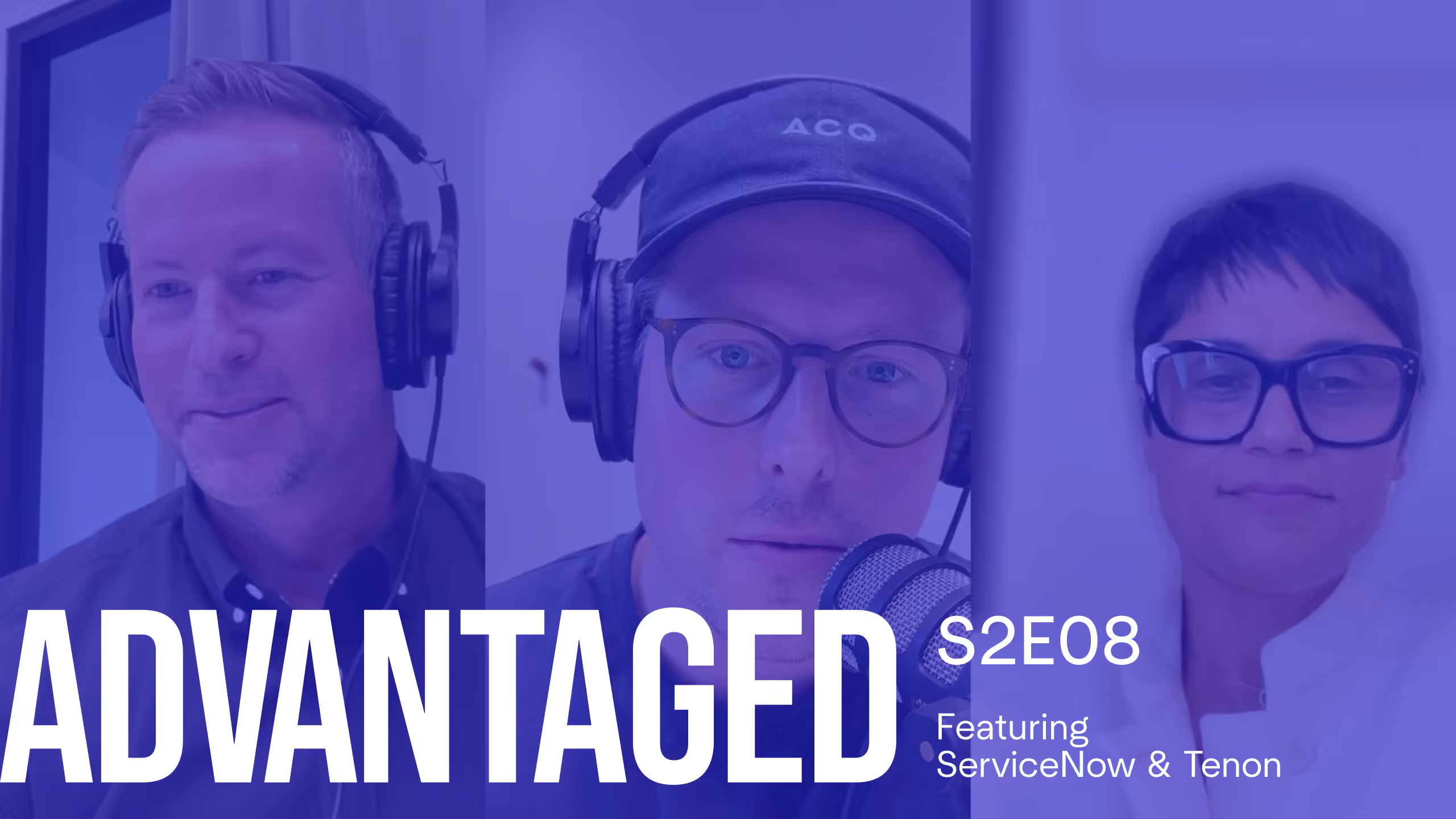
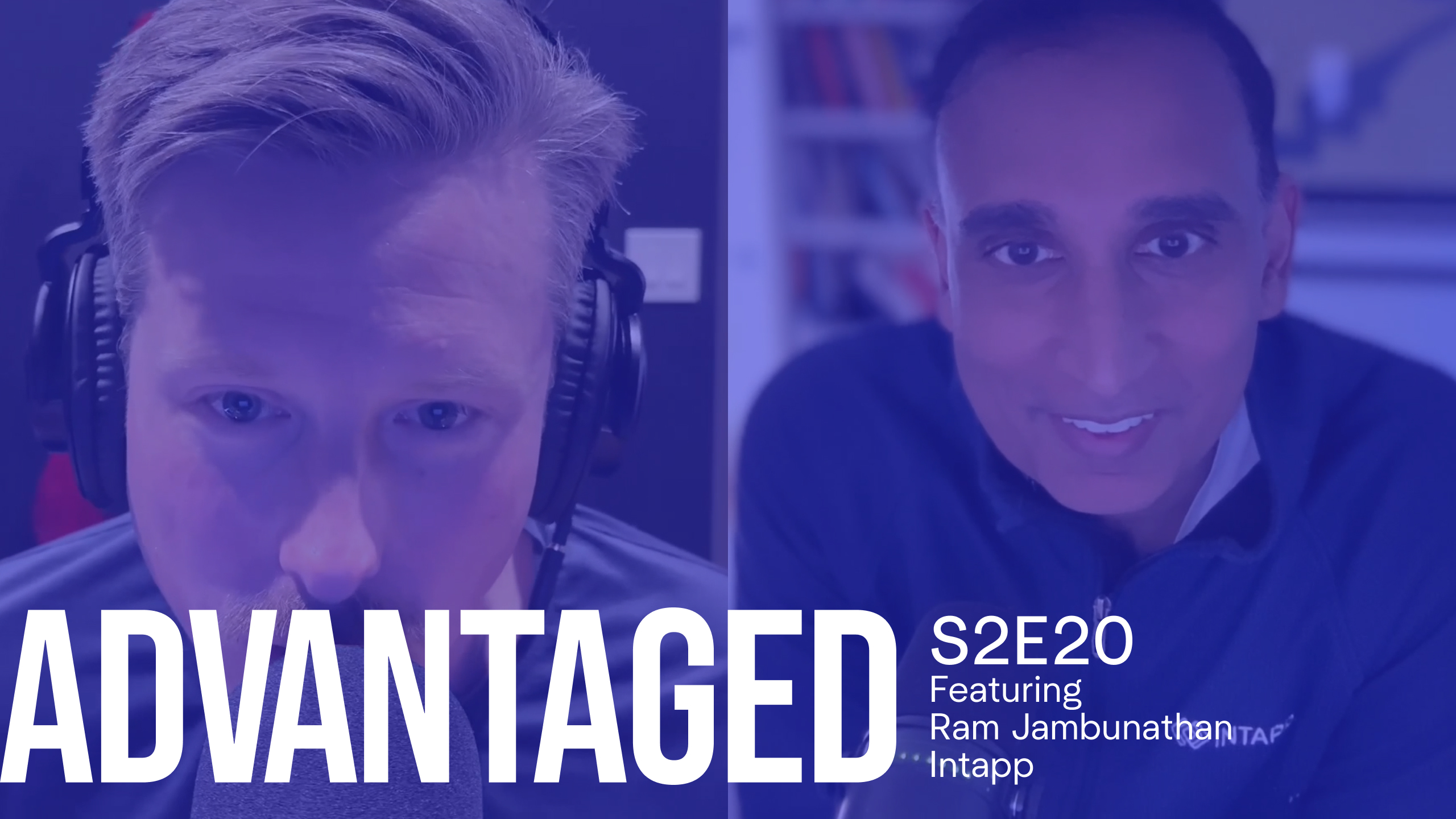
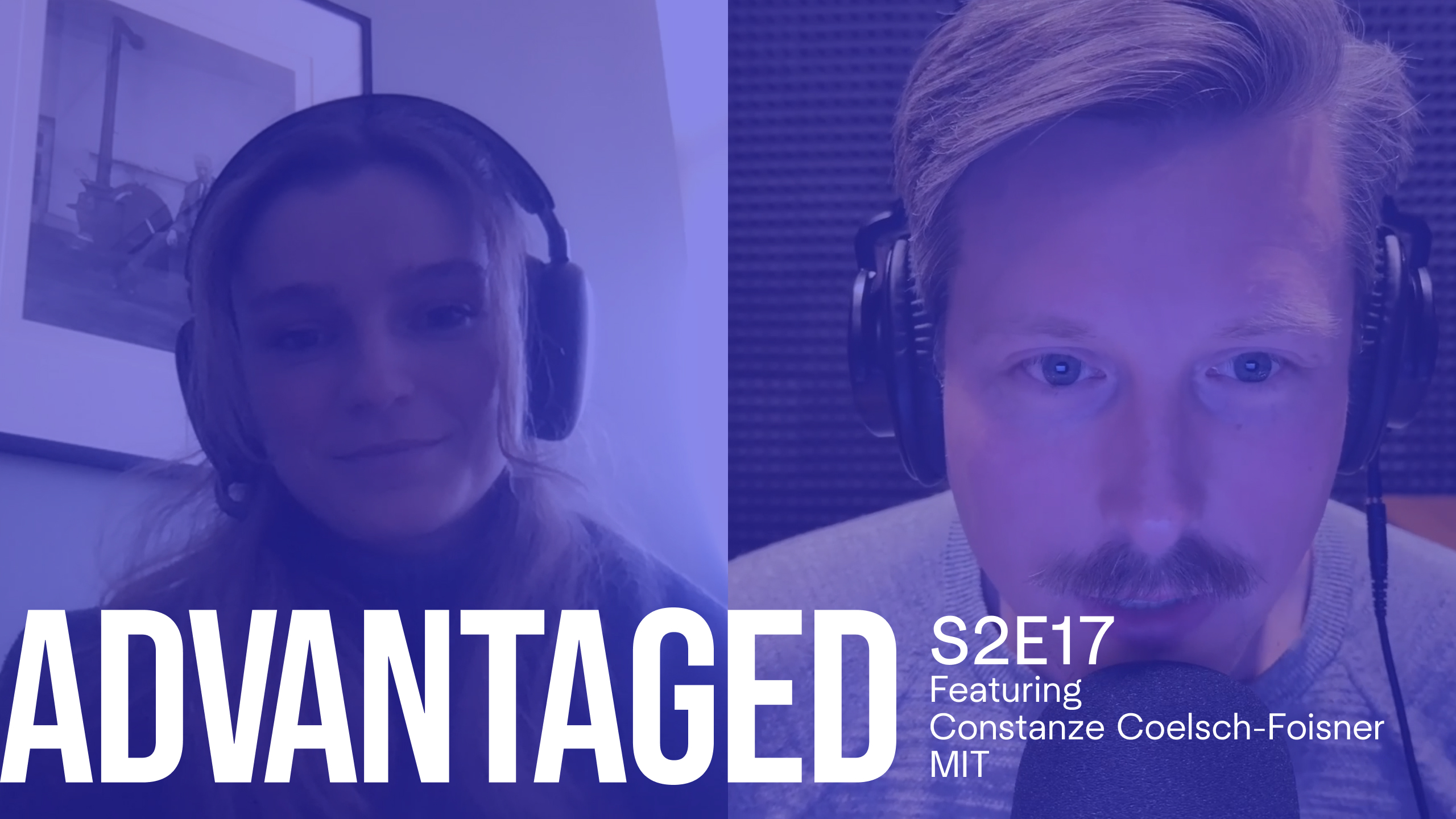
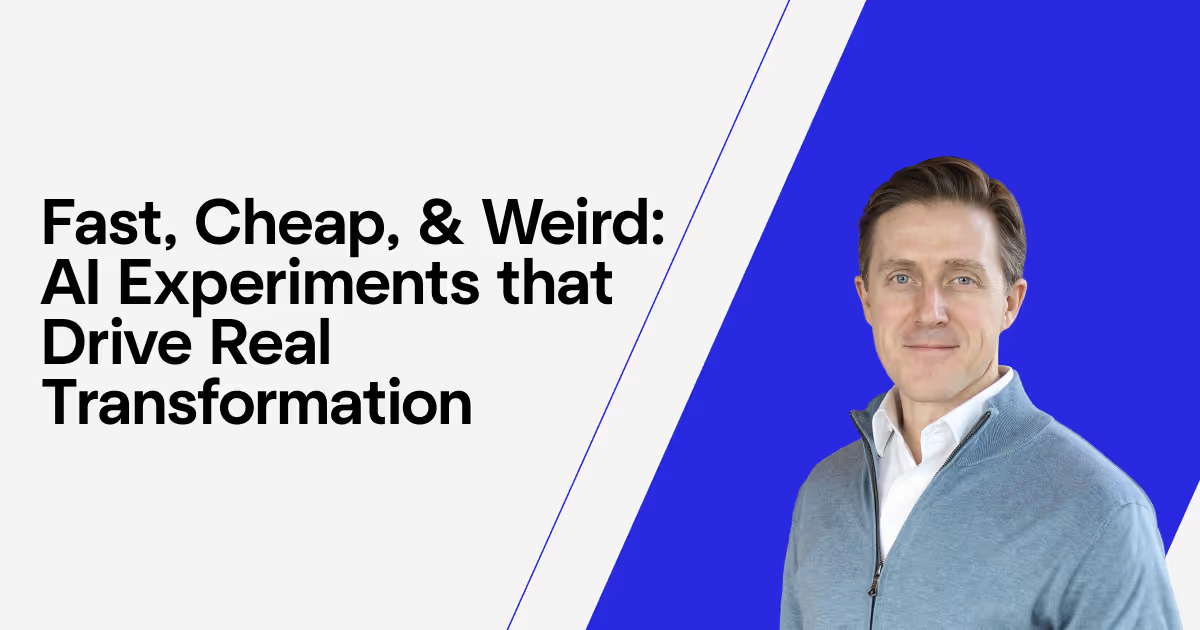
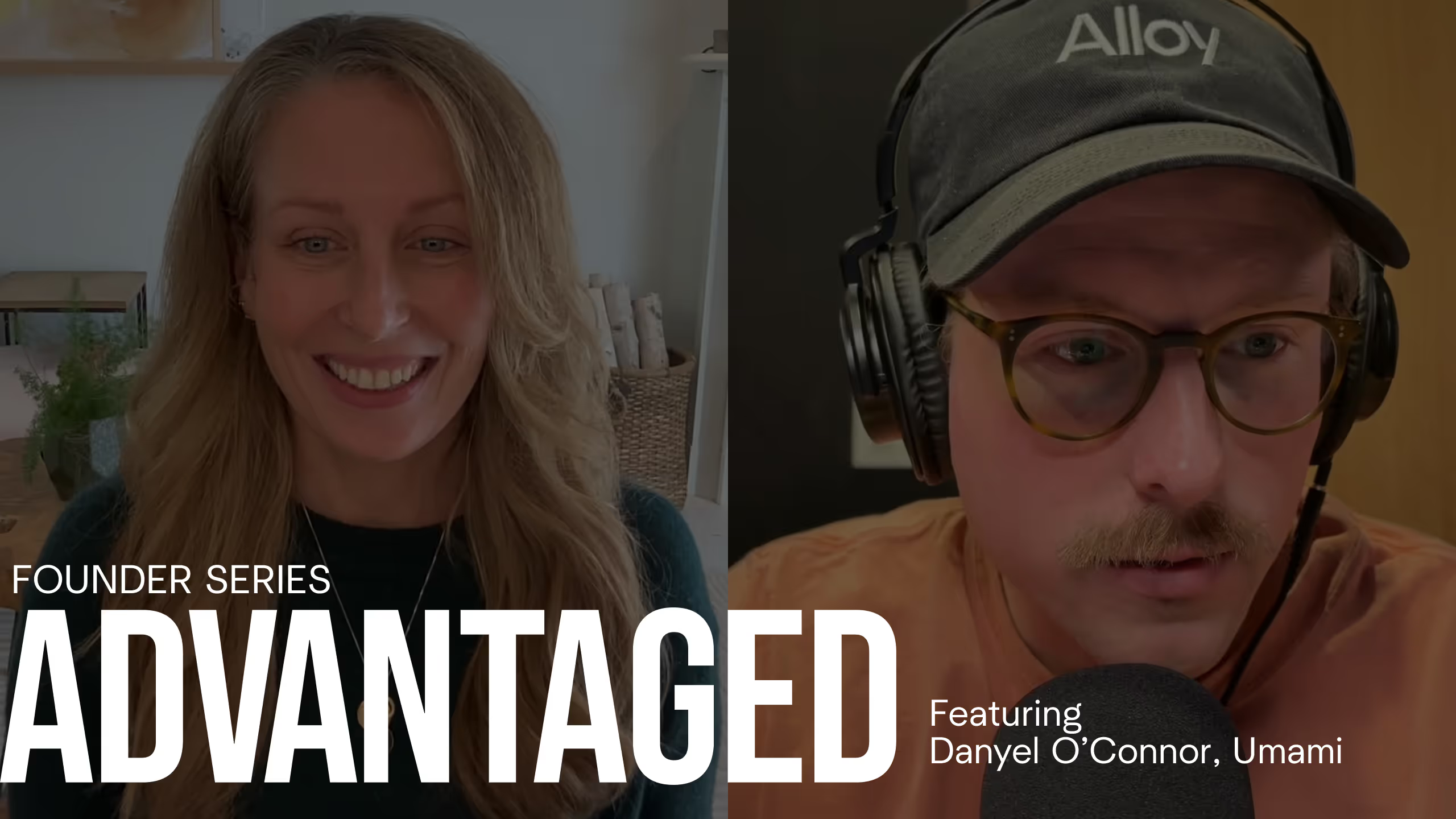
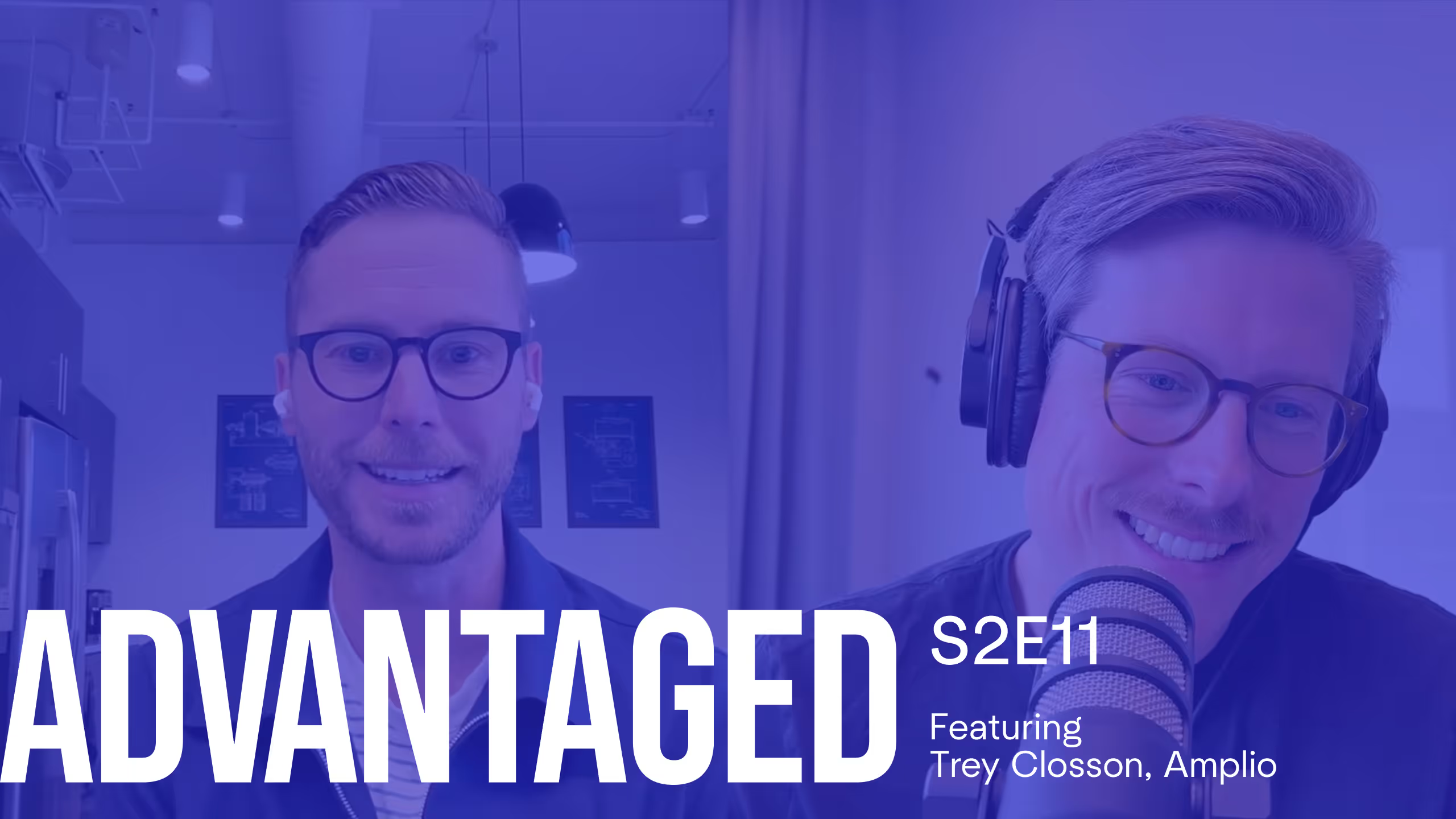
In the latest episode of the Advantaged Podcast, I sat down with Tom Schneider, Senior Manager of Venture Building at one of the world's leading transport and logistics companies, DSV.
On Advantaged, I talk a lot with leaders who are building new companies from inside very large, very complex organizations. This conversation with Tom stood out because logistics might be one of the toughest environments you could pick—and yet, in many ways, it is one of the most advantaged places to build.
Tom helped build and run Schenker Ventures' venture studio, where the team launched a portfolio of logistics ventures and spin-outs. In our discussion, we dig into why a global 3PL turned to venture building, how they actually structured the studio, what they learned from ventures like NxtLog, and why he believes AI is fundamentally changing the pace of experimentation for corporate builders.
Key Takeaways
Logistics is a hidden but advantaged frontier for venture building
Logistics is low-margin, operationally intense, and largely invisible to end customers, but that also means there are massive, underused assets—data, routes, warehouses, customer relationships—that can give new ventures a real head start.
Venture studios work best when they match ownership to strategic distance
At Schenker Ventures, the team ran two tracks: strategic ventures kept close to the core when they sat on key playing fields, and studio ventures with minority corporate ownership when ideas were further from core but could still leverage the network.
Revenue is the only real validation signal
Tom is blunt that scorecards and positive feedback are not enough; the ventures that survived were the ones that earned revenue quickly, even if the first "product" was a simple Python-powered PDF instead of a polished platform.
Talent and incentives are make-or-break inside corporates
Schenker Ventures intentionally hired people who had already built something and used internal "tours of duty" with high-potential IT and sales talent to find future founders. Like most corporations, they struggled, though, to fully match startup-like upside with corporate incentive structures.
Overbuilding platforms is a common, costly mistake
With NxtLog, the team invested months into a sophisticated front end before they had enough paying customers, then had to lay off the development team and refocus on the underlying data and algorithms that customers actually valued.
Corporate assets are a powerful distribution and learning engine
Key account managers, sales teams, and operations leaders significantly reduced customer acquisition cost and sharpened product–market fit by opening doors and pressure-testing ideas with real RFPs and business reviews.
AI is changing the cost and speed of experimentation
Tom now uses LLMs, open APIs, and lightweight apps to move from idea to working prototype in days, often using synthetic or de-identified data, which allows him to show tangible value to customers long before a "full product" exists.
Listen to or watch the episode below and be sure to subscribe to Advantaged, the leading corporate innovation podcast, on Apple Podcasts, Spotify, or YouTube.
Transcript
Below is an un-edited transcript from the podcast episode.
Drew Beechler: Welcome
everyone to Advantaged and Alloy Partners podcast. I am Drew Bechler, our VP of Marketing here at Alloy Partners and your host of the Advantage Podcast. Alloy Partners is a venture builder. We partner with leading organizations and entrepreneurs to co-create advantage startups and venture studios that help unlock growth and transformation.
And here on the podcast, we interview corporate innovators, founders and investors all around venture building and startup corporate partnerships. We are telling the stories of how corporates and startups win together, and today we have myself along with Tom Schneider. Welcome Tom.
Tom Tom is the senior manager of venture building at DSV, one of the world's leading transport and logistics providers.
Tom was part of Schenker Ventures and their venture building team prior to being acquired by DSV recently, and he's been on quite the journey building ventures, particularly in the logistics space, and is fully dedicated to one of the ventures right now that they spun out of Schenker Ventures.
And so we will get into a little bit more of that later on in the show, which I'm really excited about. But just to start with, Tom, could you just give a little introduction to yourself and share your career story and how you got into venture building specifically?
Tom: Yes, definitely. So I didn't start working or studying and plan to be a venture builder, right?
My background wa is industrial engineering and with a very. Big focus on mechanical engineering, right? Because math and physics, I was good than that. So I just gave it a try. And then I started industrial engineering, right? As mentioned went to Munich. I was part of the Volkswagen group for a few years.
5, 5, 6 years. Focusing a lot on commercial vehicles autonomous vehicles. How can they park how can they drive? How can you basically interact with these vehicles on the big logistics areas of of the world, right? Or in the world? And this is the first time where I got really in touch with business modeling, right?
Be, Especially if the driver's not part of the vehicle anymore. We have a lot of opportunities with data and database business models to really create new value for OEMs where others were basically in this field before,
right?
That, that was super interesting for me. And parallel
to that, I was
self-employed because I really like building new ideas from the grownup.
And then thought about, hey, why not doing it for others and doing it for myself. So this was basically then my side job helping a few customers validating all these stage ideas, right? because what I've seen in the past, especially with big corporates, is.
, There are a lot of good ideas, but they have a very hard time validating it, right?
they don't really often know what is the market, how big is it, is anybody else out there, and how can we build the first thing there? So this is what I did. There, I was self-employed then as already mentioned. And then Schenker basically. Reached out over LinkedIn to me and asked, Hey, Tom we would like to balance both sides, being a corporate and creating something new out there.
Would you like to join our team because we believe you can both because you have proven you can both. And, yeah. Then I joined Schenker created a few things there, which we will, I think talk about later on. And now I'm part of DSV. Trying to create a legacy around NxtLog in the markets.
Right? So that's what I plan to do.
Drew Beechler: Yeah. Let's take a step back maybe from NxtLog at least, what led Schenker to venture building and kind of this approach of creating new startups and new companies, new ventures out of Schenker Ventures. Why was it the right time for them to start doing some of this?
Tom: In logistics, you have a very low margin business most of the times, and especially if you are a 3PL. So somebody who is only managing the transports and basically organizing the global network, then you need to figure out what would be your next big step or what is your next
big step,
right?
Because there are new platforms like Project 44, I think it's a US company that is jumping into the market.
Drew Beechler: We were I don't know if you knew this, we were an investor actually in Project 44 at the venture firm that I was at prior. So yeah, I have a little bit of exp. We were a small, investor, But yeah, there's, this has become a new, a pretty big kind of upstart market for sure.
Tom: Yeah, exactly. And what they basically do is they start digital first because they don't have the old logistics service provider legacy behind them. And they go really full digital, full solution oriented and full data first.
And basically try to go between the logistics service provider and the customer, and then basically organizing who gets. Which offer order and
which money.
So this is basically the goal of these platforms and this is what Shane
Recogniz what the others are recognizing too. Right?
And this is why they said, Hey, we have so many assets. We know where the things are. We have basically used every route in
this world.
We have thousands
of customers.
We know what they transport from where to where, right? And
there need to be.
Assets that
could be leveraged in the market in a different way that we are not using today.
And we believe and then Schenker believes that this this approach venture building is a very good one, right? Because you start small, you use the assets, you try to build a company around, and then you create new revenue streams with assets that were not monetized before.
Drew Beechler: Yeah, we like to use the word experimentation, all the time. That's really a lot of what venture building is around is this
relatively, low cost, cheap, fast, just experimental motion that's very focused on lessons and learning and how do you find the next big thing?
By
creating
these startups, 'cause they're built to learn. You're, they're, they are learning machines, if you will. And you all, I would say were very successful in this as well. How many spin-outs did you have? What was some of the success that you all saw while doing this?
Tom: we've done two things, right?
So we had the studio where we had minority shares as DB Schenker. And we had the big strategic ventures that were rather. Good assets, strategic investments, making sure the next big thing or the AWS moment for something like DB Schenker right in the studio we ventured out five ideas from which three survived so far in the markets.
And how we basically did it was right. We sent out, there with a little bit of pocket money and they had a few months to win the first when VCs or the first money or even bootstrap themselves to success.
And then they basically
needed to live. If they don't manage to, to get the money they need in order to grow, then the idea was basically that, right?
So this was our studio approach what we learned is we were quite successful there because we understood a lot of market dynamics before we even ventured them out. So they had already a good head start. And were able to use a little bit of assets that, that we had on the Schenker side.
And
from a real strategic venture building point of view, we started five ideas.
And three had six figure revenues after one and a half to two years. And three of them were basically owned companies. One of these five ideas, which is not part of
the three.
was quite interesting for a company in London. And they asked to create a joint venture around the asset that we created, but then it basically stopped a bit because we weren't able to take business decisions during the acquisition process, like always.
So let's see where it takes us. But it's, from my point of view, a very good outcome to have three out of five that already earn. A good amount of money and one that could be even a joint venture case with another company that is interested in it.
Drew Beechler: we talk about this quite a bit and I'm just curious, what was the discussions in your
scorecard,
if you will, around how do you decide what is the strategic internal venture building versus what deserves to be
a
spin out to live or die on its own? What. Some of those discussions, how did you all think about when it deserves one or the other?
Kind of from the strategic per perspective.
Tom: We try to create scorecards but to be honest, if we would follow the scorecards, the view of the strategic ventures would be
studios no. And the
other way around.
So I don't think this. Scorecard approach wasn't very successful for us, but I will try to make an example for next Lock, for example, is a sustainability topic, right? So with data and all around, but we'll talk about this later on. We know that sustainability
and decarbonization
could be a unique selling point of logistic service providers in.
The market,
right? And we know that with sustainability there comes a premium.
So
we need to understand what the impact of sustainability on logistics and on the premium pricing is very close to the core because this could be one of the big strategic bets of. Schenker, for example, in the future. So we know this is close to the core.
Another idea was basically going into the factoring market, right? So basically handing out credit cards
to drivers and when they pay, they get a smaller
factoring factor on it.
And then basically the carriers have a higher liquidity and the faster liquidity in the markets, which is nothing of our core business, right?
We don't want to go into finance so far, but we see that our network could help. To really roll it out. So this was rather closed or a little bit far away from core. So we said, this is a studio deal and let's go
for it. So it's always a case by case decision, but it depends heavily on the strategic playing field that the corporate define for themselves and if they fit into that or not.
Drew Beechler: Yeah. that's a really good point.
I think
With both of these, something that we talk about often as well is all around talent. And I think your background is very interesting too. You said, why Schenker reached out, and having a lot of that entrepreneurial plus the big co.
Experience. But maybe just talk broadly. This is a major challenge that we always see, but what were some of the hurdles that you all saw, particularly within finding talent, incentivizing entrepreneurial talent to come and run and build these ventures, either internal or the external startups.
Tom: I think it started when we built Schenker Ventures,
right? So
everybody who joined Schenker Ventures already founded something or was, In
the process
of finding
something. So we try to get people who understand how to get from an idea to real market traction, because this was
really important.
Our goal initially was to earn revenue fast with new ideas and to scale it, right? We don't, we didn't want to do innovation stuff internally. We didn't want to have to educate the internal people
because we
knew this is a lot of time that goes into that while you're not creating any kind of.
Measurable output on the p and l. So this was the first step. The second step that, that we then did. And it was the wrong step, to be honest, but this is why I want
to mention
it. So the second step was that we tried to work together with the standard consultancy agencies at this point, right?
So this was 2021. They were good. In their skills, but they were
very expensive. When you create a business case for a startup. Right. So especially if you invest three months of consultancy into the early three months
of a startup, then your business case is so exploding that you cannot even cover it again with the revenue.
And then you already have a negative business case from the start on. So we learned that this is not working properly from our
point of view.
What we then
did is there are a few cool companies out there that basically automated the challenge to freelancer matching. So we tried to work together with freelancers to get very specific, parts
of our problem solved. For
example, if in sustainability, if you need some kind of legal support, understanding what other regulations there are upcoming, then you basically hire these people
for 20
hours, and then you have this information, right? So this was before. GPT, Emini, Claude, all this stuff happened on the markets, right?
So I think this is important to keep that in mind at this point.
And then what I always did was there are
talent programs
in corporates and
I really
looked at the IT talents and the sales talents in
this pools, and
I basically gave them three months of. Startup experience under
strength of ventures. And very
often it was really easy to pick who is really eager to develop something, to, to be part of a startup.
And
sometimes you already saw that the people rather would like to
be part of a corporate, and this is how we basically create our own talent pool, consumed it, and then basically grew the people with the startup out there.
Drew Beechler: we talked about that a little bit beforehand and I was hoping you would share that. I loved that example and I think it's a great program and relatively easy I think for someone to copy, but I think it's a great idea around how do you build up and. Evaluate internal talent that can be, directly placed into these two.
And I think it's a great idea, particularly Among young, eager, high grit and persistent talent that You might lose too, going to a startup, even as well, because they have that, some of that entrepreneurial grit you get this timeframe, you get to work with them and help build them up and mentor them.
I think that's a great idea.
Tom: Yeah. And they have this hunger, right?
They have the hunger to really
achieve something.
And if you give them the freedom to
act, and
if you're not
limiting them
on tools and things like that, then they can really get something done in the
right way, and
especially in the start experimentation environment. Sure. If they're junior and if they're young, to be honest, we are
experimenting, right? And even we are experimenting in areas where even expertise cannot
be even
built because they're so new. So why not let people.
Develop
themselves into experts in
this field, very
young and very early, and then having them close through
your startup
because they see what opportunity you gave them.
And that and these are the things
that
are the soft factors, how we manage
to get people on
board. When we talk about hard factors, that's a little bit harder for corporates, right? So when we talk about shares, when we talk about incentive
models, bonuses related to success,
to be honest, we really didn't find a, a good way to incentivize good talent
from a
monetary point of view.
Myself, I was incentivized just but with normal salary and a small bonus.
And I did
this because I believed in the idea and I had millions of data sets from all over the world
from a logistical
point of view, right? So this is what motivated me.
But
I completely understand that
when somebody's pouring 100 hours
per week into an idea
and want to scale it and want to make it big, and basically creates
the life around this idea for a few years, that they want to participate from it in a proper way.
So
that's that's for sure. And we had
ideas and we
had concepts, for
example, with virtual shares that then at the end are measured on revenue and profitability,
which
would then mean a big bonus payment for the person, which is not a
bonus payment to
buy a car, but a bonus payment to buy a house.
And
in Germany,
buying a house is a million or two if you're
in Munich. So,
this,
these are options that. That we prepared, but we never got a chance to really implement it.
Drew Beechler: Yeah, that ownership incentive is so key. We've talked about that before too and we focus quite a bit on that of,
It's a deal breaker almost in that we need the founders to have significant upside and equity into the business and the US and this is very different obviously, internationally, but there's also just lots of tax implications in the United States.
If you're a founder, there's qualified small business stock like the amount that you can write off on taxes. It's like millions of dollars that you can save basically by having founder shares. And There's lots of tax, incentives for entrepreneurs and for founders and investors in a lot of these companies as well.
So even small things like that, but they make a huge difference of if the founder doesn't have.
shares
in the company and they're just, comped on a bonus or on hitting targets and salary. it just changes the incentives dramatically. And so there's a handful of those things too that are very important, at least in businesses especially that are venture backed here in the US and in the businesses that I've started to run in the past too.
our rule of thumb is like, how do we make in the founding treat this if we're spinning out a company, treat it like what it would look like post pre-seed round, so then when it, then they're going to raise additional capital. And that's the biggest thing is how do you make sure that the future investors look at the cap table and they're not like, why does this corporation know 80% of the company?
I don't really want to invest in that. But you have to be able to have. Enough breadth and space on the cap table for it to go on and continue to raise more rounds and more rounds, or the other kind of side of that coin is you as a corporation have to be willing to carry all of those rounds,
Down the road, which could be a hundred million dollars, we're seeing series A, series B, a hundred million dollar AI companies. And so you have to be either willing to float that.
or
the thing that we talk a lot about as well is a great success metric is have you built something that is attractive enough to the market that other investors want to invest in?
And I think that's a such a great metric to look at. But part of doing that is setting it up from a incentives perspective in the cap table perspective and ownership perspective in a way that Makes sense. Obviously very different and in different international markets and things like that too.
But that's typically a lot of what we see here in the US and when we're talking about a lot of the startups here and it's pretty parallel, at least with Europe in similar ways.
Tom: One important thing, I think from a human point of view, right? Just.
Different. If you know that the call that you make on a Saturday morning in order to reach out to a customer can have a huge impact on what you get out of it. Or if you say Hey, I could do it on Monday because the salary and the bonus is anyway coming
in. So that's, that, that's a huge difference.
And it shouldn't be underestimated what accountability and therefore incentivation over it means. It would even mean.
And
I don't like
to talk
about fear or that people are afraid of failing. But
if you are
not hitting your targets and you have two months left from a burn rate perspective, then you're doing a lot of different things.
That you wouldn't do if you know that you're part of a corporate. And that's the difference. That's the accountability and that's the ownership. What differentiates a lot of founders
in the
open market from potential corporate founders to corporate ideas?
Drew Beechler: a hundred percent. Let's talk a little more about NxtLog in particular, just because there's so much more you can share on that, and you're spending all of your time specifically with NxtLog right now. But tell us more about NxtLog, where the idea came from and the decision now to, spin that out and what the story behind NxtLog.
Tom: It
was basically my second or third day at Schenker, and they told me, Hey Tom we have a very great idea for you as a venture builder.
We
ha we like sustainability and we have a lot of data, and we want to earn a billion dollars with that. So please find an idea that, that, that, that's doing that, the first thing that I did
was basically
talking to around 30 customers of Schenker and trying to
figure out a
little bit.
So
I asked
them, if you heard the buzz word, sustainability, what do you think about or what
is happening
with you and what do you see already today?
And a lot of
these customers told me, Hey, you know what Tom Sustainability, so far it's a nice metric in the CSRD reports.
But it's very
hard for us to understand what the cost impact on the p and l
is, right?
Because today. We don't know. It's okay to do it. And especially the European ones are a little bit more prone to, to,
do
sustainability practices. But if you
go somewhere
else and you're just starting a business, you're not
caring
For the sustainability measurements that you have.
But I already understood that they started looking at the regulations. And that they knew that there will be some kind of tech systems like European trading systems for carbon emissions, where on the horizon they weren't able to really figure out what
that meant but I already saw that there's a gap.
The second topic that they told me is today I'm working together with 20 logistics service providers. All 20 sent data. I have no clue if I can trust the data or not. I don't know what they sent me. I don't, I'm not looking at it, but I know at some point I need to look at it. and then I
need to make sure that it's correct.
And the third topic is that they told me, Hey, all my logistics first providers are coming up with this great ideas. How to improve my network,
but if they only own 5% of my
network,
then it's only
impacting 5% x, 10% reductions. So I don't have
the time to really
focus on understanding what the big impact would
be here,
especially from a sustainability point of view.
And this was the starting point.
And what we
then did, or I, at this point, I was alone in the team. What I did was I just looked
into the data of
DB Schenker
for 10, 20, 30 customers and I just looked at the transport data and analyzed it
and tried to figure out how
could I translate this into emissions.
And I saw a lot of. Data issues. For example, Berlin
and China, or
there is an air transport over 12 kilometers from warehouse
to warehouse. So there were
Insane data
issues in the data and
so I saw these are data issues that one of
the biggest
logistic first providers have. So
customers who
are not taking care of the logistic
transport data
should have these
issues too.
And all the smaller carriers
too, right? Because
they don't have the time of a big corporate
to really
set up
this data
Environment, so I understood, okay, data is key. If I could make their life easier from a data point of view, and if I could put together all
this information
that they have in a very easy, understandable format, this could
be something that might be
of interest for the market.
So what did I do? I sat there, created a small Python script, downloaded all my knowledge that I had from
the manual data Rs,
and basically connected my script with Canva. So Canva is this tool where you
can create
nice, beautiful reports and
basically set, this was my
first product
offering and then I went out to the customers and told them, Hey
guys I need this input data.
And you will get that. You can trust it because. Of X, Y, Z. And I basically mentioned what I did to the data.
And then I made the first sale, right? So I saw that
customers are investing into
a
nice PDF format and
a small Python script to get their data in a better state. So this was the first step. yeah,
please, sorry.
Drew Beechler: of find the, easiest easiest thing to ship and see if it provides value. From like an MVP perspective, you didn't go out and build a product, you didn't,
Have a fancy. Prototypes that they had to go through. It was just, here's the PDF and does this provide value or not? And if that provides value in that format oh, we could knock your socks off and make something truly amazing when we put this into a product or a software. I love that.
Tom: And then you are in the discussions
and the meetings
with the customers.
Then they look at the data and
say, Hey
Tom, I see, I
was always
thinking about switching from road to rail between Italy and Germany.
What would be the impact? And for sure you are then in there and say, ah, that's no problem. I can calculate that for you, but I have. I Had no clue how
to do it right. So I
went out of the meeting I
Googled a
bit around and I found some external tools to
put together, and then the next
time I said,
okay,
this is
the amount of emissions
I even
went out to, to this rail freight brokers and
asked them for real offers to make sure that I understand the price range right?
And the time
That That is
there.
And then I
fused everything together next nice PDF report
and sold
it again. And
what I have
seen there is that as soon as you are in the meetings with the customers and they consume the information
that you
give them or the product, they think ahead and listening there and understanding how and why do they
think ahead
helps you creating already the next step.
Within
the customer
y manner that you have. And then we were at
the point that
we said, Hey,
we have a
good customer group. We know what issues they have. We have
the first
smaller prototypes. And then we did a big mistake.
We
went out there and
said, we exactly know
how the product looks like.
Let's
hire a team and do it. We said the platform needs to
be done
first, right? And then people will come and then they will work on it. And they don't need a
PDF report. They need way more.
Then
we build it for six months. And we got no customers,
right? And we had two months
left of
of investments.
So we had to lay
off our whole development
team again.
That, that was a hard time to be honest, but you had to decide, right?
Do you let NxtLog die or do you
give yourself six months
more?
And
then
we went out there and
tried to understand what the issue was.
And basically the issue was that we
focused
too much
on having a nice fronted and too less on real value creation through our algorithms,
for the
customer, it was more important that the data was clean in an Excel sheet.
than having part
only half of the cleaning logics in a nice,
beautiful front that, that they don't like to use.
So that was, a very good learning curve.
It is obvious, but when you are down in the rabbit hole trying to set something like
that up, you can easily forget that. At
And then to be honest, the whole world changed with large language models, with tools like Cursor
now Google, Anti-Gravity, all this stuff.
And it's basically
equipped me
to perform
on a.
Good enough level as a full development team, right?
Because then you have an idea. You say, okay, I would like to create an air simulation to understand
what
are the aircraft types that are out there and what could I recommend the
customer? So which, what
is the carrier, like American Airlines or Lufthansa,
that a customer can fly with in order to get the best? A forming machine type from an aircraft point of view regarding emissions, right? And that, and
in the past you had to set it up. You
had to define requirements, then you needed some experts. What I did now was basically I had the data at my hands, then
we connected my
teammate and
me connected it with some open open source, API.
Received for flight numbers the aircraft pipes, and then we created a big Excel sheet.
And
then I basically dropped this
Excel sheet into
a
Gemini app or a Claude or A ChatGPT, it doesn't matter who the provider is. And then
said, Hey, please create me a Streamlet app out of that. And then it created
a streamlet out that, and then I hosted it locally and
I uploaded the customer
data in it locally.
And then we had the solution done and then we pitched it to customers and it took
us two days. To get from an idea
to a first productized version that was
able to show real or to show real impact with the real data of customers.
And this is a game
changer because it enables you to, especially in B2B, to create ideas that people can touch and feel, which automatically increases
the trust in you as an early stage startup that
you
can really deliver the value that you're
promising.
Drew Beechler: Yeah. that's such a good point. Where is NxtLog now in its journey and what is on the horizon for next year? For NxtLog.
Tom: So NxtLog so far is
closing. Now more customers. So we are on a good traction. We are still in an proof of concept, a minimum viable product state at the moment, especially
trying to
figure out how we
can move away.
So
we know that cleaning data. Won't
be un selling point for a
long time because
systems will improve.
There
will be
now even
A AI enhanced
data cleaning stuff on
the customer side.
So there are a lot of things that are happening on this side. So it's a good entry point, but it's definitely not there to stay.
So we are now capitalizing completely on
this decarbonization simulation
and translating carbon emissions
into the financial impact of
p and ls
in the future, right?
So we are trying to connect emissions
With the
financial impact based on regulations, operational causes, things like that. And my vision for next lock
is that when you share your transport network with Next Lock, you have the global opportunities for
decarbonization transport networks at your hands.
And you see exactly
the simulation on emissions lead
time and cost impact for each
and every of your lane. So you
can just
by click decide who you want to work
with and
then understand ultimately in 2030 and 2040 is how much worth is one Euro invested into my supply chain
today.
Is it five, is it seven?
Is
it eight? Is it 10? And what is the best financial decision to additionally decarbonize my supply chain too, right? So
That's my goal. And what we are trying
to do is exactly leverage
this DSV network to push this service out
to customers as good as possible
with the
data power and with the network
power of DSV.
And see how people react to it and how much
value we can really generate in the markets.
Drew Beechler: Yeah you've mentioned this already, but I'll just ask this in a concise way
just
to highlight it all. What's been the value of this being a DSV?
venture or
A, a DB schenker venture? Like you mentioned, the network the algorithm data, but like maybe what are the three or five things that have given this just such a huge competitive advantage compared to if you were to start this completely outside the corporation and on its own.
Tom: I
think the golden resource
of these corporates
and companies are the key code management managers and the
sales operations people.
Why?
Because they're so deep in the customer networks
and in the discussions, in
the request for quotations, and the tender discussions in the quality business reviews.
they know
what. It's
important for the customers. And if you have an idea,
you have a very
short way
to leverage
the knowledge of
these people and the
depth you're offering.
So it
is hitting the nail when you talk to the customer
directly.
And the
second topic is they
can open doors and you have more than warm leads in the network
that you can access. And that's
Insanely important.
If you see how much money.
Lead qualification, lead outreach tools cost and
What evaluation they have in the markets.
You know how hard it is to target
your ICP
in the best possible way with a low customer
acquisition cost. That's what companies can do and corporates can do,
and this
is my
number one favorite
working together with them. Right?
Drew Beechler: it's huge. It's such a big, important difference and it just, completely changes the trajectory of
the company,
and that network effect. For sure.
Tom: And the quality of
the product, right? It's insane How big the quality is after you have refined it with the sales people that really know what's happening out there or with the operations people, right?
If you want to create a warehousing startup and you have 3000
warehouses all over the world and people who
do the job
every day, and they're basically the,
The
user group at this point. Then you don't
even need to go out
to a customer
have a different warehouse. You
go into this warehouse and
to test, and you are
the
same company.
So you go there, you don't have
to ask, you go there and you bring some suites with
you so people
like you and then they talk
to you and
you
understand a lot.
And that's the stuff that, that's really good.
The second topic is
The sheer amount of data. That, that you can get your hands on
For
sure.
It's somehow hidden in SAP systems or
an ERP system, and it's painful to get to it. And then you need somebody who understands the columns and what the data's all about for sure.
But when you have the data, that's something that. Companies
just built years of products for in order to get access to
this data. And then
you have it.
And that's something that you get way faster
within corporates.
And this is why I believe it's
very important for corporates to have good
data
catalogs to understand where the data assets are, to exactly
enable teams like venture building architects or business developers
to access
this data and really make sense out of it in their own context, right?
So that's
really important.
And the third topic, and it's, it could be, it's sometimes helpful or sometimes it isn't. It's the brand and the trust in the brand. So if you go
out there and you
say, Hey, you are a
startup that is support and funded by DB Schenker I would like to get all
your transport network.
Of the full year. Then there are
two options. The customer says, great,
DB Schenker is amazing, and they're doing
logistics. So when they invest in you,
they trust you. So I
trust you. So that's that.
That's the first logical step that a few customers do. Other customers say, Ooh, it's DB Schenker.
Ooh,
that's a startup. They want to get my
full data set. Ah, that's hard, right? So what, so you need to find this, the
sweet spot between brand
recognition. And
having the where needed. And very often companies do that by Next lock powered by DB Schenker with their own it
set up with their own contracts and stuff like that.
So you try to combine the best out of both worlds.
Drew Beechler: Yeah, that's such a good point where you're contracting with.
NxtLog, not with DB Schenker. There's a, there's separation there. That's why we advocate a lot for the external approach as well. Where it is a, it's not a fully owned entity, but they are able to tap into some of that brand power, but also still be able to move fast and be nimble and yeah, live and die on its own
Tom: Yep.
Drew Beechler: One
Question I wanted to ask, and there's a lot here, but what are some of the biggest lessons that you've learned from building and scaling ventures inside a large corporation?
Tom: Testing is better than ego.
So, even if
you think that
your idea is great give yourself the chance to be proven otherwise, right?
So that's that that, that's important.
The second topic is
validation only comes with revenue. If you are not selling what you're talking about, then customers. I might not even
care about
it.
They try to be friendly. But they're not
buying and if they're not
buying it, they're not
really interested or it's not priority.
Drew Beechler: Yeah, buying is the signal, not just, giving you good feedback or taking the call. It's, putting your money where your mouth is.
Tom: Correct. The third topic is
a
founders should always build by themselves and be out there in the markets.
I didn't
understand sustainability a lot
from transport emission point of view,
but I really worked
a lot on understanding how this works, how the metrics works, how insetting works, how off offsetting works, because only if
you know the domain that you're working in, you can find the
gaps and find the niche that you can fill out as
a startup and then grow from there,
right? So that's really
important.
And the
fourth topic is leverage
the tools that people, four years ago. Didn't have, right? So we have, I don't know, X thousand large language model, few
tools. You have coding agents that
basically enable every
business
user to really create a first prototype.
Don't
be afraid of testing things.
And using these tools.
and now a lot of people
talk about data security and I don't want to share them everything with
my machine,
right? So an idea is easy to
copy
at the end. Execution is important.
So if you share the idea with the okay,
fine. But if you're already
working on the executions, you're two steps ahead from the person or the machine that is analyzing your idea,
right?
The second topic is build
your
ideas with synthetic data that you can generate, even with the lms, right? You don't have to put real transport data in there. In creating your first prototype, you just need to understand your data model. So define your data model, create synthetic data and then build everything around it.
You are not sharing any
kind of important IP knowledge with
the machine. You are only
basically sharing your concept with the machine,
which
the machine is my not even interested in right
at this point. So these are the
things that, I find
Really important.
To be honest, I'm surprised I'm working with this stuff
two and a half now for two and a half years or three years.
And every time, every day, I'm surprised again how much it
speeds up the process. So if you have just
ugly data and you want to create a presentation for
the customer then you put it into a tool and say, Hey, could
you please make it more beautiful with the following design? And
then within
20 seconds. You have the data that was in an Excel file,
beautifully visualized within your
within your PowerPoint, and you have a customer adapted PowerPoint that is hitting the spot way better than the standard
one
that you once built and then try to adapt. But it's always very time
consuming to that. Right?
And these are the things that, that blow my mind every day. And the, which from my point of
view, is
the future of
venture building. It's one man and one people armies.
Drew Beechler: Yeah, that, that's maybe a good segue into my last question for us here. What are, I'm assuming AI is one of these things, but what is excites you the most around logistics? Ai. The future. What are you spending the most of your time on? What excites you the most within the spaces you spend the majority of your time?
Tom: So
I went into
logistics.
And recognized that logistics
is a hidden business.
So everybody who's going to the supermarkets or
to, to the big companies, there are products there on the shelves, right?
And in the background, there's so much happening all over the world to get the product from A to B. And that's
amazing because working in a business that is mostly hidden for all the others is quite interesting.
First,
second
logistics is
an old
school business
that is, that needs to
be transformed
into
how business
should be done
or in the next 20
to 30 years. There's a lot of data.
But the whole organization around logistics are not very data driven. So this is super interesting. So there's a lot of transformation that can happen and that
will happen,
And where we see how much log tech ventures are getting funded at the moment, we see that people are investing into this and
that they see there's an opportunity and you know
that every product needs to get from A to B.
So imagine the market opportunity that you have with
lock
tech startups with changing something
logistics. It's insane. And I look at next lock.
Companies and look at the global footprint of them CO2
footprint. And if my algorithm that I
created in two or three or four days of work
as a prototype, if I, if this algorithm could already show that you could save
10,000 of tons of CO2,
just for one
customer, and we have 300 of them then there's way more opportunity
to make these things faster, more reliable, more sustainable.
And
more resilient. And
that's, that, that's a playing ground. You can live 200 years and you wouldn't see everything. And
That's what fascinates me.
Drew Beechler: It's amazing. I love that the businesses in the background that you don't see that aren't as flashy, the pipes underneath everything that make it work and it's such an important business. And those are the ideas. For me as well, they're the most interesting and the most opportunity and overlooked, I think.
I think that's where, that's what makes it most the most interesting too to me because they're not front and center and maybe the. The sexiest, shiniest thing on everyone's phone that everyone's using, from like a consumer perspective, but it's more in the background, it's a little more muted.
There's just so much opportunity there, which I think makes it a ton of fun. Any last parting advice or words before we hop off here? I just wanna say thanks again for joining me and this is an incredibly fun discussion and great to talk about both NxtLog and what you'll do with Schenker Ventures is incredible.
Tom: One
last thing.
I believe it was, it has never been easier bringing your idea to life than today. So everybody should be encouraged and shouldn't be
afraid of doing it. And if you want to do it, the
logistics, it's a great area to do is to do so
you can hit me up if you
want.
Drew Beechler: That is great. I love it. Thanks again Tom for joining me. This has been another great episode, and we'll be back here with another episode in the future.
Tom: Thanks for the opportunity.



































.avif)