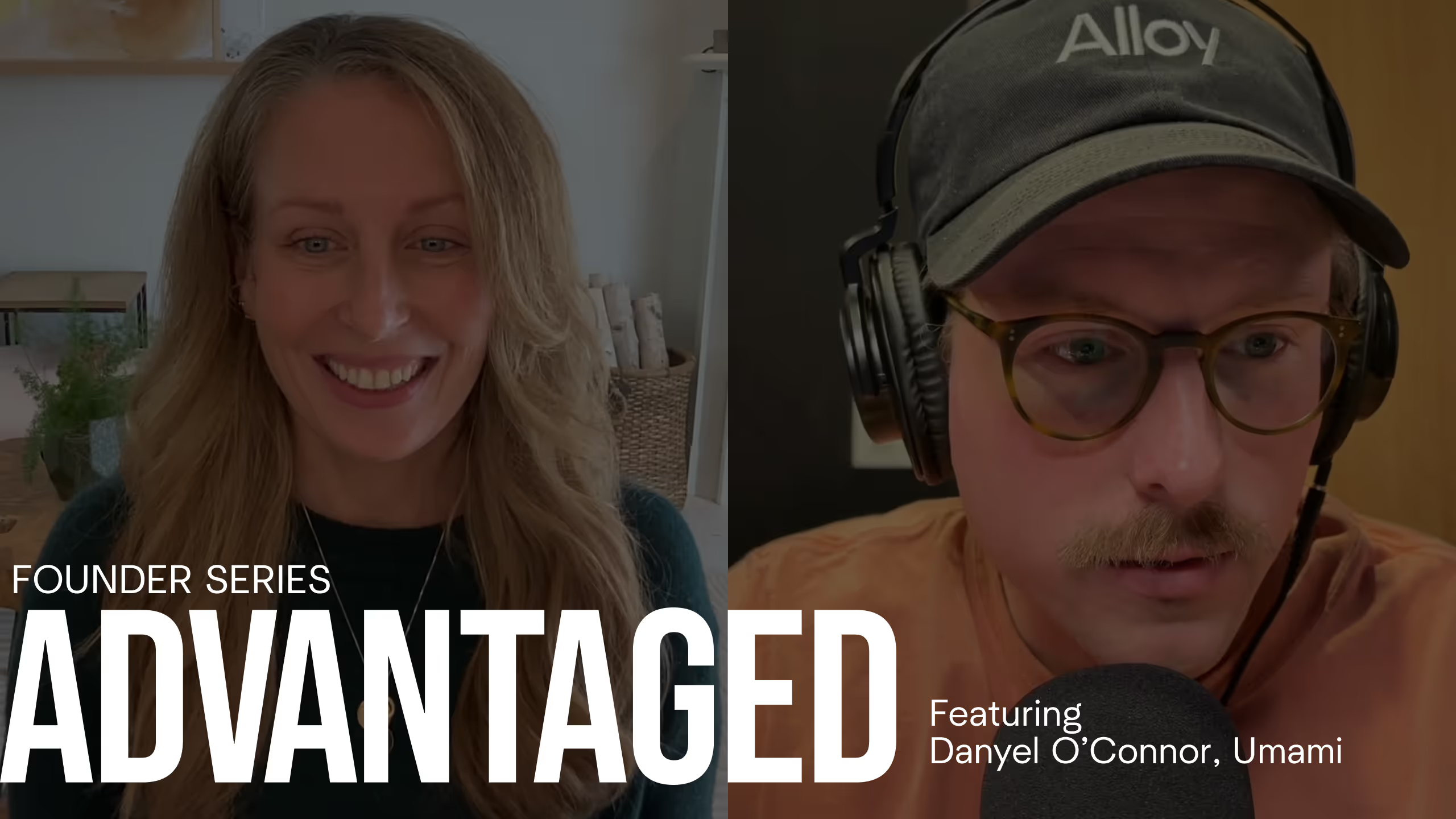
With this episode, we’re officially kicking off a new Founder Series mini-series within the Advantaged podcast feed, focused entirely on the builders behind our advantaged startups. In these conversations, I sit down with founders from across our portfolio to unpack their journeys, how they’re leveraging corporate partners and venture studios, and the specific advantages they’re building into their companies from day one. It’s a closer, more tactical look at what it really takes to co-create new ventures alongside some of the world’s leading organizations.
In this Founder Series episode of the Advantaged Podcast, I sat down with Danyel O’Connor, Entrepreneur-in-Residence of Umami, an AI-powered CPG product development platform launched out of our Fieldbook Studio in Bentonville, Arkansas.
This conversation with Danyel stood out because food and beverage might be one of the hardest places to consistently get product bets right. And yet, in many ways, it is one of the most advantaged environments when you can truly understand the consumer.
Danyel has spent many years in specialty and natural food and beverage, growing early-stage and mid-market brands through new product lines, category expansion, and relentless commercial execution. At Umami, she is taking that experience and pairing it with AI to turn messy consumer review language into clear, stage-gate-ready direction for what to launch next, how to position it, and which attributes actually matter.
We get into why she thinks most teams are flying blind in product development, how Umami structures its “innovation partner” relationships, what they learned from helping launch Muckender, and why she insists partners pay from day one, even at the earliest stages.
Key Takeaways
- Product development feels like “what’s for dinner?” at scale: CPG teams face overlapping constraints — ingredients, manufacturing capabilities, buyer preferences, internal opinions — and high costs of failure with every launch.
- Umami turns review language into product direction: The platform aggregates large volumes of consumer reviews and uses AI plus proprietary logic to generate product positioning statements, attribute recommendations, and market gap sizing.
- Why paying innovation and design partners is paramount: Danyel intentionally structures early relationships as paid “innovation partnerships” to ensure partners feel the problem acutely, prioritize real usage, and provide higher-quality input.
- Founder–market fit is non-negotiable: Great founders are people who were “put on this earth to solve this problem,” and Danye's own commitment to serving the food and beverage community is central to Umami’s trajectory.
Listen to or watch the episode below and be sure to subscribe to Advantaged, the leading corporate innovation and venture building podcast, on Apple Podcasts, Spotify, or YouTube.
Transcript
Below is an unedited transcript from the episode.
Drew Beechler: Welcome everyone. To Advantaged and Alloy Partners podcast. I am Drew Bechler, our head of marketing here at Alloy Partners and your host of Advantaged.
Ally Partners is a venture builder. We partner with leading organizations and entrepreneurs to co-create advantage startups and venture studios. And here on the podcast, we interview corporate innovators, founders and investors all around venture building and startup corporate partnerships, and telling the story of how corporations and startups win together.
But this conversation is a part of a special series that we're doing right now called our Advantaged Founder series. Special episodes where I'm sitting down with startup founders, building advantage startups, and unpacking,
Their journey to what they're doing today And how building their startup
has given them an edge, whether that's a unique go-to-market channel or a corporate partner or platform, or a new venture model. And so today with me, we have Danyel O'Connor, who is the EIR of Umami An Umami is an AI powered CPG product development platform.
Danyel joined us oh, Danyel, it was September,
right?
This feels
like yeah, long, time ago. Longer than
that. But Danyel joined us in September helping
to lead Umami, which was started out of
our Fieldbook studio, which is based
in
Bentonville, Arkansas. And so thank you Danyel for joining me today.
I'm super excited
to get to talk about all things CPG products, all things umami, and your background as well, which is gonna be a ton of fun.
Danyel O'Connor: Same.
Thank you for having me.
Drew Beechler: Danyel, you have a really interesting
background, specifically deep in food and beverage
industry and as a
founder and leader in the past as well. So maybe tell us more about yourself, your background, your
career, and the journey essentially that brought
you to Umami today.
Danyel O'Connor: Happy to. As you mentioned I have a ton of experience in food and. Beverage. I hate saying how many years because it definitely dates me. But I've been in the food and beverage specialty and natural space for the last 24 years of my career. Leaning really into the commercial side of the business progressively up to the role of CEO and senior advisor to private equity firms that are looking for acquisitions in mid-market food and beverage businesses.
I took a very non-traditional path, like I didn't work for a blue chick. Food and beverage company. I worked for early stage and mid-market businesses that were high growth. And that really afforded me the opportunity to lean in both in depth and breadth in the food and beverage space. So I feel like I learned a ton versus being siloed in my roles and always with a strong product focus.
So when you're high growth, you're always looking at optimizing your product assortment or. Moving into adjacent categories or adding new flavors or capabilities through co-manufacturer or licensed agreements. And so really heavy kind of new product focus for all the businesses that I've served.
Drew Beechler: which I think leads.
Very
well into Umami. So tell us more about what is umami, what is the problem that Umami solves for food and beverage brands today at least? Specifically to start with.
Danyel O'Connor: So I think I'm very intimately aware of the problem that the Umami customers are facing in their business every day.
I'm gonna
Back up and give an analogy for what Umami does for people that aren't super detailed in the food and beverage space. And maybe I'm projecting a little bit on the audience, but, there are a lot of decisions in everyday life that feel like they should be super easy, and ultimately they're complex. So let's imagine you get home, it's a Thursday night, you've had an extremely long week, maybe you traveled a little, you've got a ton of meetings you're unpacking your day.
You have to shuttle kids around to sporting events. And maybe you wanted to do laundry tonight or maybe you wanted to watch your favorite show and you walk in the door and your partner looks at you and says what's for dinner? And you just have at least I've had this very visceral response, right?
Where you're just like so frustrated at the question and you're frustrated at the question for a number of reasons. You have, maybe limited things in your pantry. You maybe forgot to thaw an ingredient out that you needed to
thaw. You have. Maybe limited time.
So you've gotta run kids around and you have 30 minutes to figure this out or to cook it.
You maybe don't wanna do a ton of dishes. You just have general decision fatigue and mental load. And so it's such
an easy
question, but it's so frustrating. And there's all these variables and inputs like,
Which
kids are eating and what are their preferences? Do I wanna make them happy?
Do I wanna hear them complain about what
I'm serving them for dinner tonight? And make it a, 20 minute fight.
Instead of a 10 minute eat. And so this is the way it feels to be a product developer in the food and beverage space. Like you've got a lot of inputs coming in, whether it be market trend insights, sales analytics, and then you have constraints and advantages for your business.
Like what ingredients do you currently carry in-house, what are your manufacturing capabilities? And then you have stakeholders like your executive team or your customers. And they could have varying opinions. And so how do you take all of that information and distill it into a direction insight that gives you that aha moment in product development and allows you to get into commercialization faster and to de-risk the products that you're launching because failure's so expensive.
Drew Beechler: Do you think about new product development a lot as like it's art and science? Like how do you think about that? If have you heard that?
Before, I'm sure I've used it at least in like startups as well. Oh, just building a startup is part art, part science, the gut feel and like the data.
But and I think a lot of what umami
Is doing probably is marrying some of that. But like, how do you think
about
that kind of discussion
too, and
is that, does that ring true? And,
Your favorite snack brand is thinking of the new flavor to launch for,
Some food.
Danyel O'Connor: I think there's definitely art in science to it and intuition, but a lot of times intuition is just layers of experience that you don't recognize you're tapping into. And so when it comes to the art part, it's like you could have a great idea, but if you
don't.
it correctly, or the kind of attributes of that product aren't nailed specifically the way the consumer may want them to be nailed or you package it and you're not calling out what's important to the customer effectively in a way that draws their attention on shelf.
You could have the most brilliant idea and it just doesn't land. So there is a ton of art and science to it, but I do think like the one. Common truth, no matter what is the customer and what's important to the customer. And that's why I love what we're doing at Umami because we're always going back to that truth, which is where is the customer's mindset?
What attributes of the product are they interested in? What are they, worried about when they purchase that product that you're not gonna do well? And how do we help? Really lever all of those insights and that feedback, that language that they're sharing in all of their reviews in order to give you that market gap and how to commercialize a product that's going to meet their needs.
Drew Beechler: Could you share?
How does AI play into this too? And or why is now the perfect time for a product like Umami to exist? And I think a lot of that is, is maybe due to, AI and the advancements in AI and where we are today.
But I would love to hear your perspective on
that
as well. In what you're seeing through Umami and with the partners they're already working
with.
Danyel O'Connor: Yeah, I think I dated myself by saying how many years of experience I have. So I will share, I consider myself an analog girl in a digital world, like my generation straddled, really the birth of kind of the technology that we're seeing exploited today. And I. I think that gives me a unique.
Point of view in that I really believe technology has to provide real value to the user. And in this instance, what we're really able to do is, at the core of things, grab language from consumers. That gives us really valuable insight and then we're able to aggregate that in a meaningful way. And when you think of the hundreds of thousands, if not millions of reviews across different product categories and brands trying to really.
Lever that up in a meaningful way before you had the ability of reading that language and synthesizing it is extremely challenging. It would take so many people and so much money and effort. Whereas today, we can with sound logic because I think AI has to be levered with sound logic, with our own unique logic and approach.
We can do that, really quickly and give people actionable insight.
Drew Beechler: Yeah, and I think that's
huge,
but I think it also just plays into
the,
it's a humanized approach still too, that you're taking to it and at the end of the day, there's a lot of human inputs that are still
Being extracted into the product We were talking about this before a little bit, but could you give us an example of this and practice whether.
Muckender is another company that we launched out of Fieldbook Studio that came out of Umami or in practice to what you're seeing with some of your early design partners. And we'll talk more about kind of your philosophy around design partners here in a little bit too. But could you share maybe an example of this, what this looks like in, in practice already?
Even in the first six months here now
Of the life of the
business, we've started to see some things
come out of Umami, which have been
really incredible.
Danyel O'Connor: Yeah Fieldbook, the Venture Studio that we are being incubated through and that the kind of base idea came from also came up with several other really great businesses, one of which is coaxial, which works with content creators. And another, which is Muckender. And so essentially what happened was Coaxial is working with a bunch of people in the home improvement space, and they wanted to develop as one of the businesses out of Fieldbook a product that can lean into that space effectively and support that customer base.
And so what Umami did was they went into the category of kind of this like durable wipe, cleaning product
space and said,
if we wanted to develop a product in there, is there a need that's not being met that we can serve effectively? So is there a market for us to develop a product? And what's really exciting is the way we've developed inputs and outputs for umami is like you get essentially a stage gate submission report, which is a technical way of saying,
A product
positioning statement and it tells you what the opportunity size is and then what the product attributes.
Are
and
that you should develop and what, at what price point and size. And so what Umami came back with was, Hey, if you develop this durable disposable wipe in this size, in this count format with this tensile strength. And
you
do so in a way that is strong enough to cut grease, but delicate enough to be used multiple times a day by human hands.
Without drying them out and creating cracked fingers and things like that you will serve a significant market gap. That market gap value is estimated edX. And that product was developed and Muckender launched a little over a month ago. And in their first month on D2C, they did $90,000 in revenue and they are already experiencing conventional brick and mortar retail placement interest.
So ul ultimately it's not in the food and beverage category. It was to help, one of our sister brands out of the Fieldbook. Studio, but it gave us a proof of concept for Umami and that made me even more excited for what it could do for my food and beverage community.
Drew Beechler: One, one thing, Danyel, I think you are in incredible at as well, is selling the vision and driving early what you've called innovation partners, or what I call design partners earlier is another term that I use often.
I love your term innovation partners as well. A fun
thing to engage with as a brand, but I think you were one of the best founders that, that we've worked with at Alloy and that I've worked with in this arena especially. And so maybe what would you share with the audience is your secret sauce to selling this vision?
Sometimes, maybe even before you have a product and leaning in there to get early
feedback
and early adoption from these people that are really taking a big chance on, you and the company early on in, in your life.
Danyel O'Connor: Okay. I'll pay you for the compliment later. Thank you for that. Appreciate it. I think my intimate knowledge of the problem that we're solving is critical. I speak their language and I really do
have.
Strong conviction that the product we have developed and are continuing to develop solves a problem that is palpable for these brands and businesses.
And I'm really passionate about helping them. Get to innovation that's gonna be successful for their businesses and to experience the growth that they wanna experience. A lot of the partners that we're working with, like we've found, they are backlogged on decision making because they just don't know how to make those decisions as effectively as possible.
And so we're helping them really reestablish. Growth because they get to look forward instead of chasing things that are in their queue or in their hopper. And then the cost of failure is super expensive. And that cost isn't just like a failed launched product. It is the opportunity cost of launching something successful in its place or working on other things that your business requires.
A lot of high growth or innovative businesses, are being pulled just like that dinner conversation we had are being pulled. In a million different directions inside their business, and so how can they make this decision well and quickly and move forward and grow? And I just really understand them and I want to help them solve the problem that they're looking to solve. And I know what we offer can solve that problem. So I think, I guess said much. Simpler conviction and passion for the space that I'm working in.
And we are providing value with our innovation partners.
Drew Beechler: Something you also, I think, have done that's very specific and has served the company really well, is charging, partners pay to be, an innovation partner with umami. And I love this mentality and I think it's so important. Maybe share more about why the decision to do that.
I think myself included and many others have fallen down the trap
Of
getting, signups or lots of verbal commitments and feedback from partners or from early customers. But I think this idea of once you have someone.
signing their name, on the check or on a contract even, small, there's some, there's something really important there.
And maybe share what is your philosophy and why did you,
Do that as well from day one?
Danyel O'Connor: Great question. I think having innovation partners that are willing to pay signals. A few things for me that are really important. One, they're experiencing the problem we're trying to help solve. In a meaningful way. Two, that they are invested in, giving us problems that they want help solving and receiving that feedback and giving us feedback on the output that we've provided them.
Because if you don't have a little bit of skin in the game, you may not be as committed to that process. And then,
I think the other
thing that I find in businesses that are willing to pay is that for me personally, it gives me more conviction that the product we're developing has really significant market viability.
And so maybe that's a little selfish, but it gives me that conviction and confidence.
Drew Beechler: Yeah. there's so
many false positives, I think with
new products and even probably in what you're doing in new products too, and like the feedback to your innovation partners when they're testing out new products. There's so many just false positives you can get from people and from the market.
And I think
The
best, product data you can have is
people
willing to pay with their wallet and, in any industry. And I think that's just, it's such an important
factor and I
think is so valuable. One, one other
thing I just
wanna
Danyel O'Connor: we say shit in, shit out. So if you don't
have good inputs,
the output's not gonna be great. So it's always nice to have good
inputs.
Drew Beechler: Exactly. And, one other thing I'll just note or highlight here is at my time when I was at hi Alpha we would say this oftentimes as well, a nomenclature would use is, when we're looking at, to invest in a company Is the founder, Is the CEO.
Put on this earth to solve this problem.
And you could just tell when someone, they were so in love with solving with the problem too. And I think, I see that in you as well, but I think that just it is so important in a founder and a CEO that. yes, they understand the industry or understand the problem like that, that is that also makes sense.
But I think something that, that maybe you also articulated in a different way is just a love for the problem and for solving the problem. Like you care so deeply about how can we solve this problem. It hurts you to see these brands like not being able to solve this problem. And I,
I.
I can feel it. I think the, your partners obviously can feel that, but I think that goes a long way also in helping these brands believe that you're gonna do anything to make this successful for them and to help them, and that you care so deeply about the problem. And I think that,
Sometimes just founders. Founders don't have that. And I think that there's sometimes a, like a founder market, kind of founder product fit
sometimes that we don't, that we don't always
talk about.
We always talk about, product market fit.
But there also is definitely a founder market fit and
a founder kind of product fit.
And I think
especially in the early days, you see a lot of extra
traction
when you get that right And and it's fun to see. Umami bloom, I think because you definitely have that in, at least in the outside, it looks like you're having a blast,
With umami, which is good. And that's, startups are so hard the very, very high highs and the very low lows.
And
At least if you
wanna have a blast
while you're
working so hard at something that's just very unnatural in many ways.
Danyel O'Connor: Yeah,
I definitely love the problem we're solving. I love the industry that we're serving. Like it's my, I feel like it's my community that I'm serving in a really unique and meaningful way. And that definitely makes me feel more passionate about it. And at the end of the day, all of these brands, food and Beverage and other CPG products, like ultimately either they started or they are continuing to exist because they
solve.
A need for a consumer. And so I think when you can help them understand that need state better you are doing them a huge service and you're also serving the broader community or the consumer base that's receiving that product because they're gonna be much happier with the product that, that they're receiving.
And as somebody who's run brands and businesses. In the past, there's nothing better than a satisfied customer and like seeing them enjoy your product because that's why they're sweating and putting in all that time and effort and work into building their business and doing all the things they're doing day in and day out.
And so if we can help that experience be even more enjoyable for their end consumer, we help everybody else along the way.
Drew Beechler: since we're a little bit on this topic and is what.
You
and Umami do what? Could you share some intel, what this may be like? What are you seeing in the food and beverage industry that is hot right now? What are some the, what's, what's trendy whether you're seeing at conferences or just in the umami data would love to hear
What's trending right now? What's hot what are we gonna see on the next 12 months on the shelves, maybe.
Danyel O'Connor: Functional beverage
Is hot. I think everybody is into function. It brings me back to childhood when I used to watch the Jetsons and they would eat like pills for food,
like space food. But I think people are looking for nutrients
in interesting ways and
having their food function for them.
Food is medicine. And getting back a little bit to what kind of value does food provide to you other than just base enjoyment? You're seeing a lot of kind of, heavy protein. You're seeing, protein in fiber mix. So not just protein, but how do you digest it? How does your body use it effectively?
I don't know, I
mentioned Midwest before. I have a little bit of a Midwest mentality when it comes to innovation, and I think it serves umami well because really what we're doing is we're scraping review data, which means you are voting with your dollars and you have a strong opinion, one way or another about a product positive or negative.
And you're giving detail as to why, but. That means that what we are collecting isn't just pomp and circumstance. And I think a lot of social listening is great and exciting, and you can develop products because you want a pr moment. What we help people do is develop products with staying power because it's answering that consumer need long term.
And I like to think of product innovation that way. And I
know.
It's nice to have a PR moment. Most brands wanna see that they're developing a product that has staying power and that's gonna grow in market share over time. And so I'm a little bit, like not to get down on the analog meat world, but like with analog meat, it's
Really interesting because sure, there's environmental issues with beef, right? And, just to maybe dumb, dumb it down, and somebody's gonna yell at me for this, but because cows fart too much, right? So
because cows fart too much and because the population is growing,
beef is bad.
And so analog meat exists to give you a meat experience without meat. But at the end of the day, many analog meats launched without nutritional benefit. And if you know only 6% of the population is vegetarian, do those vegetarians want a meat like experience? Maybe not. Maybe they don't miss meat.
And then if you've got flexitarians,
when you are just eating less meat, more days of the week, are you having a salad or a portobella sandwich? And
I think the challenge is it was exciting and it may serve a future need longer term. 20, 50, a hundred years out when meat becomes, a scarcity or there's disease or famine.
But
when
you think of
the consumer today
and how they adopt new products over time, what need does it serve today? And I think that's a question oftentimes when we get excited about trends we don't ask ourselves. And then, generally a case study in product development that I think is fascinating is C Chobani.
So Greek yogurt was not big in the United States, and when c Chobani was founded,
like they knew the US consumer was used
to over sweetened yogurt. And so they launched fruit flavors as the way to get consumer adoption and then they went to the base. Greek yogurt because people got used to a little bit of that tang mixed with the fruit.
And now of course, you know the 0% or 2% Greek yogurts are the highest selling flavors. So I just think consumer journey when you're innovating is super important and serving existing needs and making sure to speak to that consumer both near term and long term. And I know that got a little off of existing trends, but just to. High level on how I view food trends.
Drew Beechler: Yeah. I love that
the
customer journey component. I had never really thought about that, of like, how do you introduce, a longer term, product line and kind of move the consumer toward the end goal is really interesting. One other thing I wanted to talk about with you and get your advice and opinion on, you have a background leading brands and companies building products, but this is your first software business that you have run.
And so what have you learned so far in this transition into B2B software? Really.
Danyel O'Connor: if you would've asked me. 25 years ago, if I would see myself running a software business, I would've said no. I would've said no. And it's really interesting. I think, what serves me well is I'm extremely curious by nature and so I ask a lot of questions, but I also listen and I. Know myself well, like my strengths and weaknesses, and I am not, the strongest technical person.
I am not developing code. What I do understand is what our core capabilities are and what logic we can apply, to the information we're collecting. That gives an output that's extremely valuable, and I understand the customer's. Problem that we're solving. And so I lean into the areas that I'm strongest and I surround myself with amazing technical team, that can bolster my weaknesses.
And that's served us really so far. TBDI think it'll serve us really long-term as well. But I won't get ahead of myself and I just, I think because we're dealing with physical product development. Even though it exists in this SaaS environment in this digital environment, which is different for me I feel comfortable.
I feel like I'm, relatively fluent and I'm speaking the right language, to help make this business successful. And I have a wonderful team that, helps me fill in the gaps.
Drew Beechler: I totally agree, and I was hoping you would say a lot of those sentiments that
it's just,
The same building blocks, the same problems, the same. Activities really to, to any business. And it's just put into a different context, still building a product, still solving a need for a customer, still serving that customer and making them happy.
Making them the hero still and building a great team, surrounding yourself with people that are much smarter than you, that can do the things that you know, and understanding and having the self-awareness of what you're. Of where you need to fill in those gaps. It's all a, it's a lot of the same playbook.
And I think sometimes maybe people overthink how different, between B2C or B2B and those kind of lines or software versus analog are, and I think it's refreshing hopefully to, to some other founders too, just that there's so many parallels in, in many ways. And I
think you
can do both very
successfully.
Danyel O'Connor: Yeah. Example, I'm not a food scientist, but I help lead businesses that developed food products and so I feel similarly. And so instead of, maybe an ingredient, it's a code that's being applied. Yeah. So I feel comfortable, I feel great about it.
Drew Beechler: It's a great, it's a great analogy. One, one other topic I also wanted to let you share more about is, I know you have a strong connection with the females in food community. What can you tell us about that movement and its impact on you and other founders that you've supported as a mentor?
You joined their podcast recently too. I listened to that episode. It was wonderful. But just to get to hear you. Talk about, your journey, but then also working with others in that space too. But maybe share more on that and how you've paid
it forward in that arena as well, I think has been really incredible.
Danyel O'Connor: Yeah. Yeah. I would say not to detract from the male experience, everybody has their own lived experience, but when I started in the food and beverage space, I was one of very few women and one of very few young women. And a lot of what I experienced was, oh, you're the president's daughter.
Or, maybe your intellect isn't what got you in the room. Something else got you in the room. And it's really interesting to be put in that position throughout your career. And then I find maybe it's becoming
a mom or getting older.
I feel like I wanna give back and I wanna protect other people, or at least give them support in their experiences.
And I think. The world's changed a lot since when I started in this industry, but there still is a lot of unintentional bias directed towards women in the professional world like world. And so I just, I started actually mentoring a woman Lori Taylor, who is leading produce moms and because I love what she does when it comes to kind of food as medicine and eating well, and I'm a.
I like indulgence too, don't get me wrong, but I really appreciate, what she does and that really, I think, fed something inside of me and taught me that I wanted to build community and I wanted to be a part of community in the food and beverage space and. Oftentimes early, mid-career week, our heads down, work hard and really focused on the goals and objectives in front of us for our immediate business.
And we lose that network or we don't build that network effectively. And I get a lot more than I give to the females in food community, but I'm. Really grateful to Angela Dodd for developing that community and for allowing me to be part of, mentorship programs and the executive circle.
So yeah, I, I get way more than I give to that community, but it's a blessing.
Drew Beechler: Where can people learn more If people are interested in
getting involved in that community as well?
Danyel O'Connor: Yeah. Females in food has. LinkedIn page. It also has a website. If people are going to Expo West, there's an event at Expo West that the female and food group is hosting and you can get a ticket to that and learn more and network and meet wonderful people. And I think what's great is, in my experience in the female and food community, is everybody wants to learn from each other and lift each other up and celebrate each other's wins and help them through their challenges in. with females, and I'm sure men feel this too, like there tends to be a lot of competition between women and I
think it's because you've,
Again, it's getting better, but there's this kind of idea that there's a token female, or there's only very few females in any given room especially when you get higher up within an organization.
And so you end up being pinned against each other in an odd way. Where this community just dissolves that sense of competition. So I recommend it highly. And we
do have some male members
that celebrate the female professional community within the food and beverage space as well.
Drew Beechler: That's awesome.
as we close out here, what's next for Umami as well? I know you mentioned Expo West. Is Umami gonna be Expo West and what are you excited about coming up here as we enter 2026?
Danyel O'Connor: Yeah. Gosh, what am I not excited about? Is probably an easier question to answer. Yes, we will be at Expo West. We're also gonna be at Food Innovate Summit in February in Atlanta, which is a little bit, typically larger and more. Focused on innovation and will be at future food tech end of March.
I am super excited right now for the value we're providing our innovation partners. It's been just. Thrilling to see the output that we're creating for them, the decisions we're helping them make some new product placements and awards that they're getting with major retailers. So I'm celebrating that, which oftentimes when we're busy and in startup world, we don't get to celebrate our wins.
So trying to celebrate that. We launch our full MVP at Expo West, so for food and beverage innovators. That are out there looking to help bolster their talent and their data and insights in a way that gives them direction. Innovation concepts. Love to talk to you, reach out.
you can find me on LinkedIn. You can find Umami on LinkedIn. You can also go to our website and fill out a submission form and we'll reach back out to you. And that's. Made by umami UMAM i.com and I'm also excited, we will be
looking to raise our first kind of institutional capital.
Likely right around Expo West excited to start conversations or continue conversations with investors that we've been talking to. And I think what most excites me about that is having, really intelligent, brilliant partners in the room that are passionate about our growth and having the capital to lean into market expansion and talent development within the organization that will really expedite our growth.
Drew Beechler: I am hopeful, hopefully some of our listeners can reach out and meet you all at
Expo West, which would be wonderful. And go to MadeByUmami.com
to learn more. That's
Danyel O'Connor: Yeah.
Drew Beechler: this has an amazing conversation. I really appreciate the time.
Thanks
for spending some time with me today. As a last kind of bit of parting advice what advice would you have for other entrepreneurs and startup founders embarking on this journey as well?
Danyel O'Connor: I'm open to taking advice if anybody has advice for me too, but I'll just share sample size of one my advice, which is, spend time living in the problem you're solving and make sure that it really warrants a solution.
Because I think.
When you're asking somebody to pay either with their money or their time and energy for a product, whether it be a physical product or a SaaS platform, you really have to be confident in the value you're providing that
customer
and understand it well.
And then I think prioritize solving the biggest, most common problem first, that pain point first. Don't go too broad, too soon. Make sure that you really do one thing really well, and you can always go broader. And then, ask great questions. Listen to the answers with an open mind both in your internal team and to your external customers and stakeholders, and make sure that you always filter that through.
The broader lens of your product risk opportunity matrix. I think it's really easy as an early day founder to hear a bunch of, and I'm gonna call it noise. It's not noise. It's valuable feedback from everybody everywhere, and all of a sudden you just start casting a broader net. And it's really important that you have a strong POV of.
Where you wanna start and what that looks like, and do that well,
and then learn from your customer, but create that list of what those next things might be through that feedback, and then validate it and then lean into it. And so I guess that would be, my general advice.
Drew Beechler: That's so important. I think that's so valuable the simpler, more narrow. Solution and problem you
can solve
the better. And it is very hard in the early days. Yeah. You have
lots of
feedback, lots of ideas, lots of noise. Especially
when you're still
Yeah.
And it is all valuable, but it is it can be that.
That's one of the superpowers I think of
great
founders too, is the.
Finding
the signal in the noise. And I think that hopefully we're onto something really special with Umami, and I am very excited to see what 2026 has in store for umami and for you. And it's gonna be a ton of fun getting
to, to cheer you on and working together on
this.
So thank you for joining us to do this with Umami, but also
thanks for joining me here today. This has been an awesome conversation. I appreciate it.
Danyel O'Connor: Yeah. Thank you for your confidence and support and time today. I appreciate it too.





































.avif)