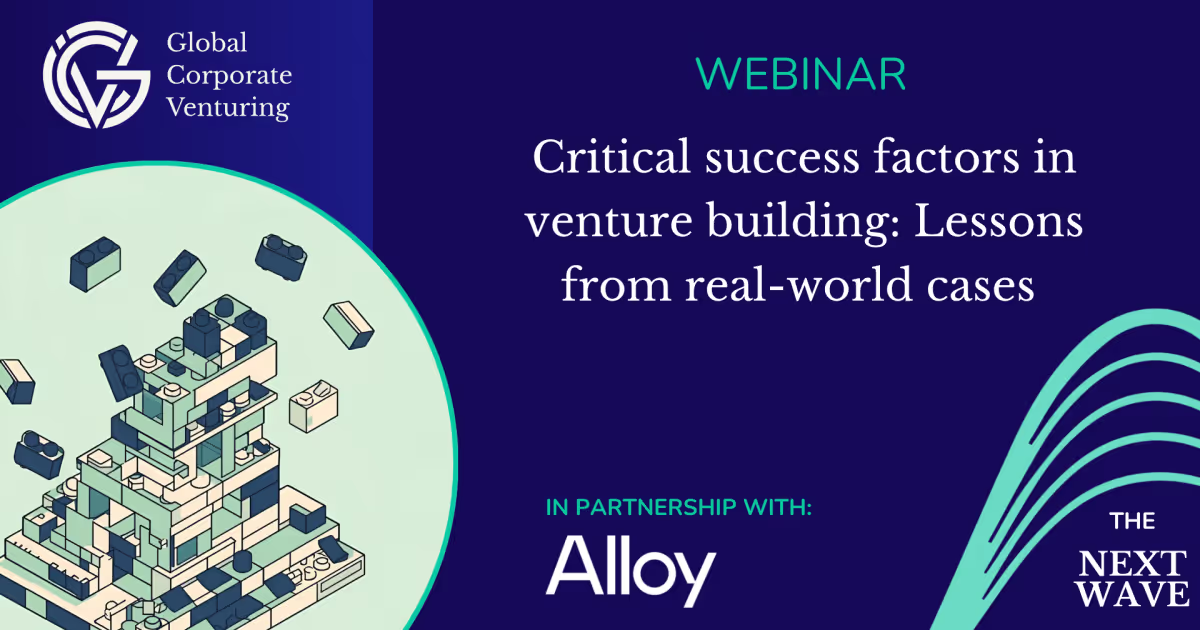
Alloy Partners recently hosted a webinar with GCV all around venture building as part of their “Next Wave” webinar series. Our CEO, Elliott Parker joined Paul Myer (CEO of Alloy Partners’ portfolio company Athian), Tom Schneider (DSV), and Maija Palmer (GCV) to discuss the four main failure points that commonly derail corporate venture-building efforts and shared practical strategies to overcome them.
Throughout the webinar, we discussed critical success factors when building ventures inside large corporations. Four distinct areas where breakdown usually takes place rose to the top during the conversation.
1. Learning vs. Execution: The Fundamental Decision
A central message from the conversation is that a corporation’s venture strategy hinges on recognizing if the challenge is about execution or learning. Most corporate venture building focuses on projects that will stay within the organization, but Alloy Partners specializes in ventures that should eventually be spun out. Elliott argues that corporations excel at execution—solving known problems in established ways—but are ill-suited for ambiguous, experimental “learning” ventures that benefit more from the startup approach. Learning ventures demand trial, error, and risk-taking—traits usually stifled by corporate structures. New category creation and true innovation often require stepping outside the corporate comfort zone.
2. The Importance of External Talent
Success in venture building depends overwhelmingly on bringing in the right people from outside. Internal corporate staff may have deep subject matter expertise, but lack the risk appetite and startup mindset required to push through the tough early stages. Paul credits Athian’s growth to finding fintech expertise not available in-house. Tom notes that while training programs can be a source of hungry, entrepreneurial talent, established employees frequently resist uncertain compensation and high-risk roles. He describes how traditional corporate incentive structures can trap talent in a “golden cage,” hindering fast, flexible action.
3. Controlling Corporate Ownership to Attract Investors
For external ventures, maintaining corporate ownership below 20% is critical for attracting co-investors willing to invest at scale. If the corporation insists on retaining a majority share, it effectively blocks additional investors and suffocates the venture. Greed often exceeds commitment: corporations want large stakes when things look promising, but balk at the long-term financial commitment. Having a neutral third party like Alloy Partners mediating the legal and governance structure can also be the key to creating a venture attractive enough for further capital raises down the line.
4. Ensuring a True Corporate Advantage
Launching a venture only makes sense if the corporate parent provides a genuine head-start. We say often at Alloy Partners that we will not launch a venture unless there is a tangible advantage, such as a guaranteed first customer or strategic agreement. This materially reduces startup risk and accelerates early growth. The real value lies in these indirect returns: new markets, revenue streams, and ecosystem expansion, rather than just the direct profits.
Key Takeaways
- Action over analysis: New ventures demand action. Only by executing do founders truly learn and generate meaningful data.
- Mindset shifts: Building a culture that embraces learning, allows for mistakes, and moves quickly toward first revenue is vital for overcoming internal resistance.
- Incentive structures: Strong incentives (without safety nets) motivate entrepreneurial behavior, but also demand that failure is an accepted, and sometimes necessary, outcome.
- Sector trends: Venture-building is seeing significant traction in energy, healthcare, and industrials.
- Portfolio thinking: Building a diversified portfolio of ventures (rather than betting on just one or two) is the best way to achieve meaningful innovation and returns, but few corporations are willing to fully commit to such scale.
For venture building to succeed, corporations must honestly assess their goals, build the right structures, unlock outside talent, and be disciplined about incentives and governance. With those ingredients, startups can break out of the constraints of their parent organizations and become significant businesses in their own right. Watch the full recording from the webinar below:










































































.avif)