Most corporate venture capital arms and venture studios get pitched to a board as a returns story, because that is the story boards know how to evaluate. SAP had already started a corporate venture capital arm that had spun out to become Sapphire Ventures, and its mission had moved from strategic bets to generating capital returns. So when Ram Jambunathan went to SAP's board in 2015, he was not pitching another fund. He was pitching a strategic innovation arm, SAP.iO, whose primary return was learning, and it ran for a decade.
Ram spent 15 years at SAP and finished as the SVP and general manager running SAP.iO, after a career that went semiconductor PhD, fiber optics co-founder, McKinsey, and then enterprise software. SAP.iO grew into one of the original and largest corporate venture studios: a $35 million fund making seed and Series A co-investments, a network of equity-free accelerators across eight cities, and an internal venture studio that funded SAP employees to leave their jobs and build inside the company. He is now VP of strategy and planning at Intapp, a vertical SaaS company serving professional services firms.
Ram argues an internal startup only has half the job. SAP had already solved distribution, which is where most venture money goes after Series A, so the studio teams had exactly one thing to prove. We also got into the three conditions Ram says any program like this needs, how the fund and the foundries and the studio each did a different job, and why he puts disproving a hypothesis in the return column rather than the loss column.
Featured Guest
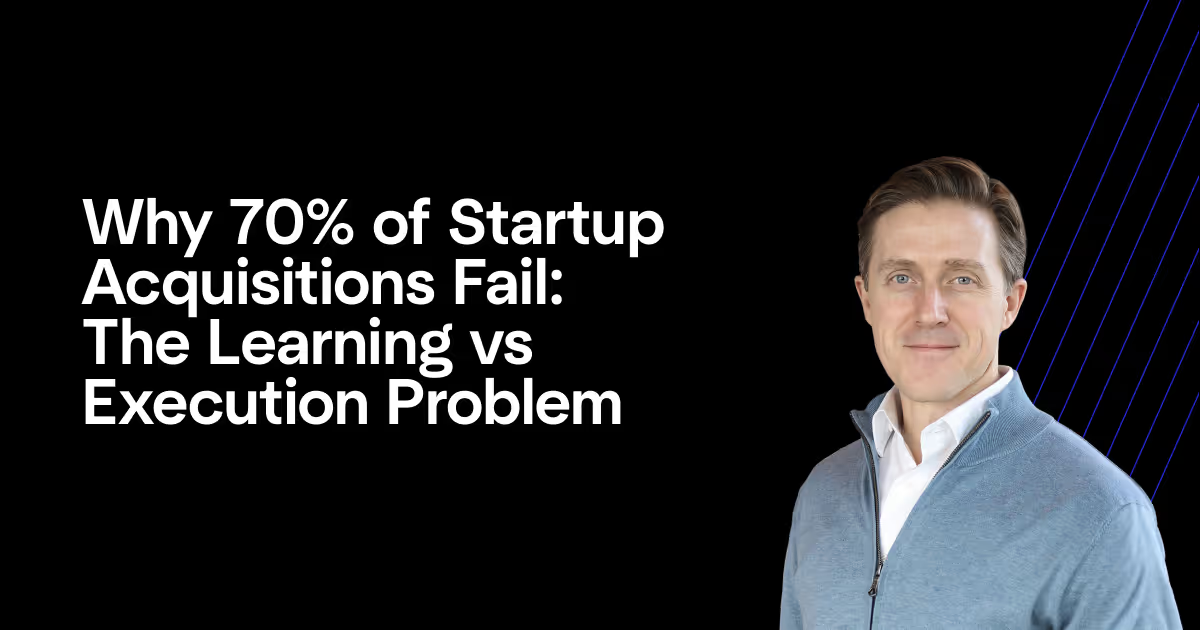
Ram Jambunathan is VP of strategy and planning at Intapp, a leading vertical agentic AI company serving professional services and financial services firms. Before that he spent 14 years at SAP, the last stretch as SVP and general manager of SAP.iO, the investment and incubation arm he helped pitch to the board and then led.
Key Takeaways
- A corporate venture program needs three things: Executive mandate, creative structure, and patient capital. Ram treats these as preconditions rather than goals: without a board-level mandate nobody inside takes it seriously, without a genuinely different structure you end up building the same things the same way, and without capital that is walled off from the budget cycle you cannot recruit anyone good to leave their job for it.
- An internal startup only has to solve half the problem. SAP already had the distribution, which is what most venture funding actually buys after Series A. That left the studio teams to prove product-market fit and nothing else, which is the whole idea behind an advantaged startup.
- Three engines with three different jobs. The $35 million fund wrote seed and Series A checks and deliberately never led a round, co-investing alongside top-tier VCs to earn a seat at the table while theses were still being formed. The foundries were equity-free accelerators across eight cities, built for reach into ecosystems the fund was never going to invest in directly. The venture studio worked the inside, running a global call for pitches that went from roughly 500 teams to 100, then 20, then eight, then one to three funded ventures a year.
- Disproving a hypothesis is a return. One studio company, Spotlight, worked well enough in process mining that it helped build the case for SAP acquiring Signavio. Others proved there was no market worth chasing. Ram counts those in the win column, because the alternative was the company finding out the same thing later after spending far more to learn it.
- The program lives exactly as long as you keep selling it. Quarterly updates to SAP's top 400 to 500 executives. Startups presenting to the supervisory board. Regional leaders in Tel Aviv, Paris, Munich, and Singapore funding foundries out of their own budgets because Ram's team went and made the case to them directly. He is blunt that this never stops being the job, and that programs which quietly stop communicating value are the ones that die on the vine.
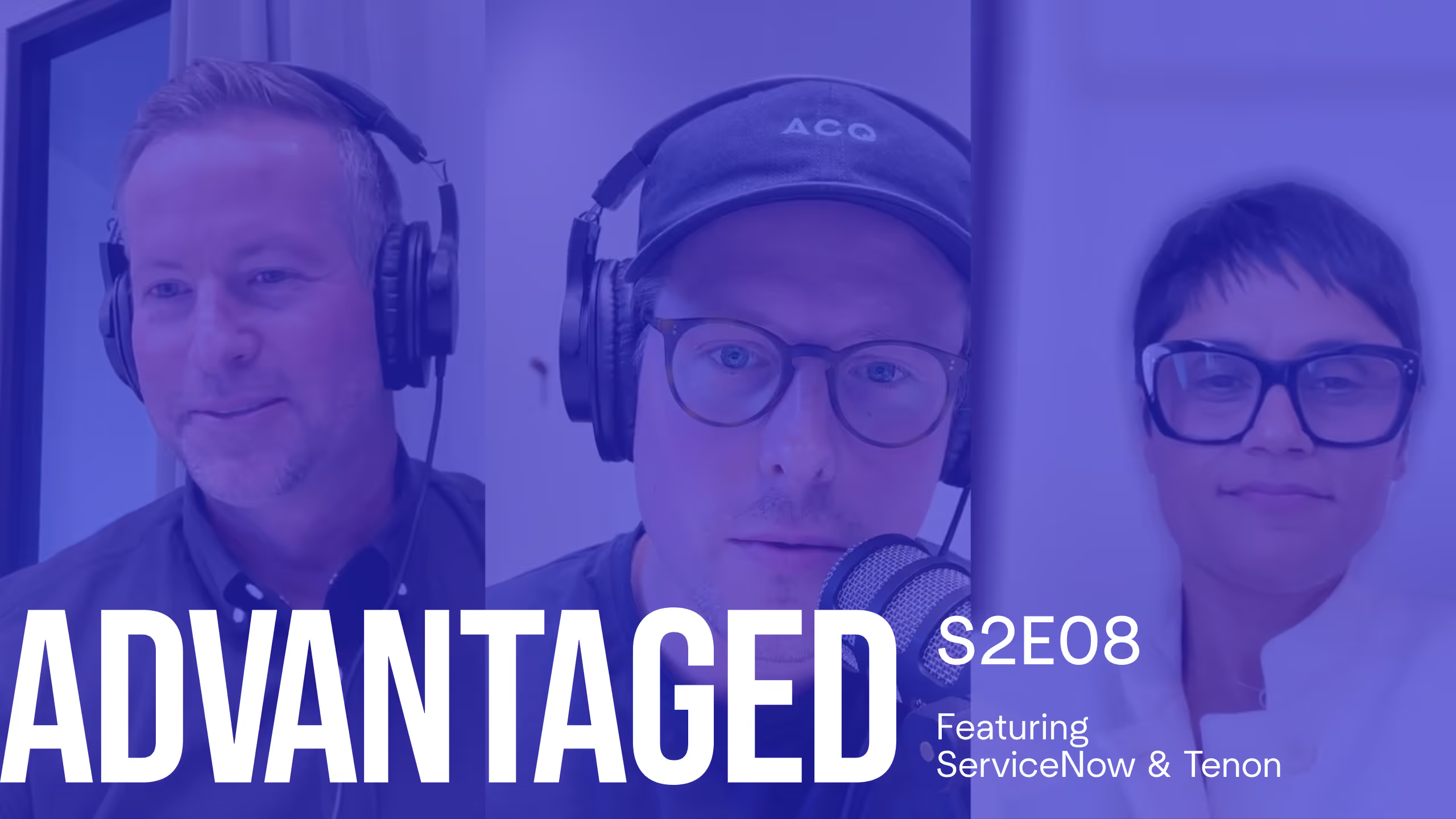
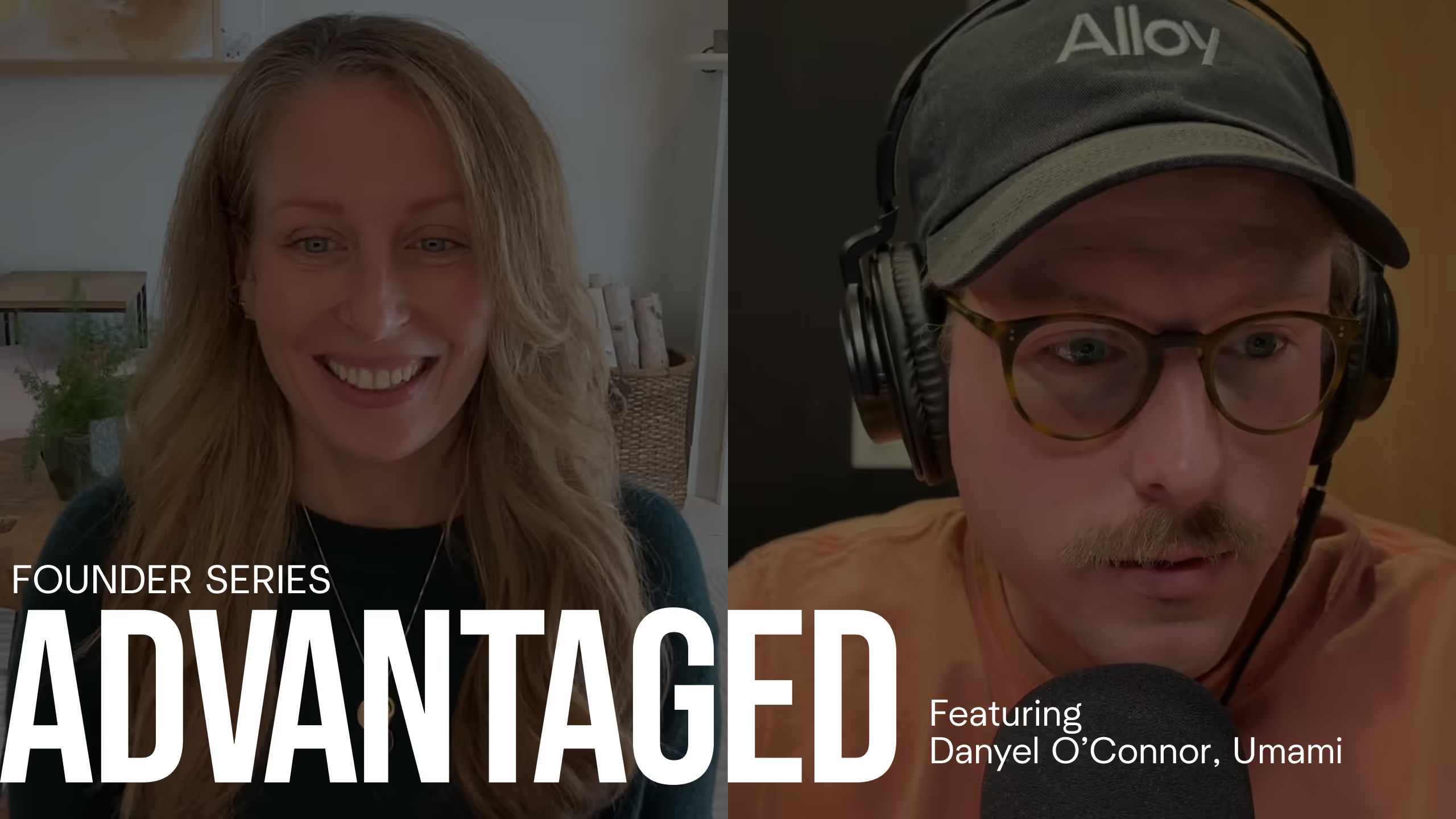
Listen to or watch the episode below and be sure to subscribe to Advantaged, the leading corporate innovation and venture building podcast, on Apple Podcasts, Spotify, or YouTube.
Referenced in the Show
- Sapphire Ventures: SAP Ventures before it spun out, and where the SAP.iO Fund sits today
- Signavio: the acquisition that grew partly out of Spotlight, an internal venture studio company
- Intapp Celeste: Intapp's agentic AI platform for professional firms
Episode Transcript
Below is a raw transcript from the episdoe.
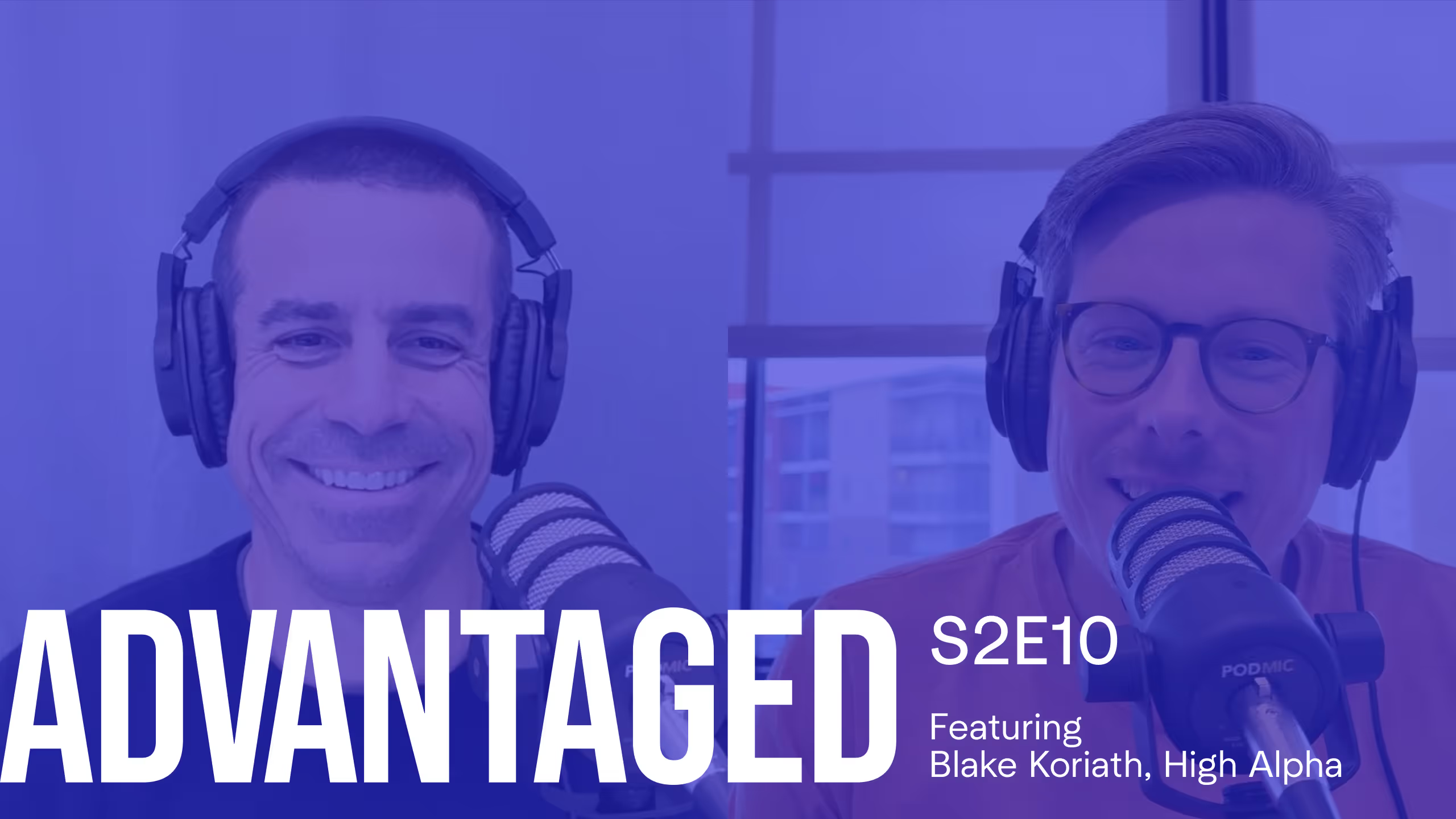
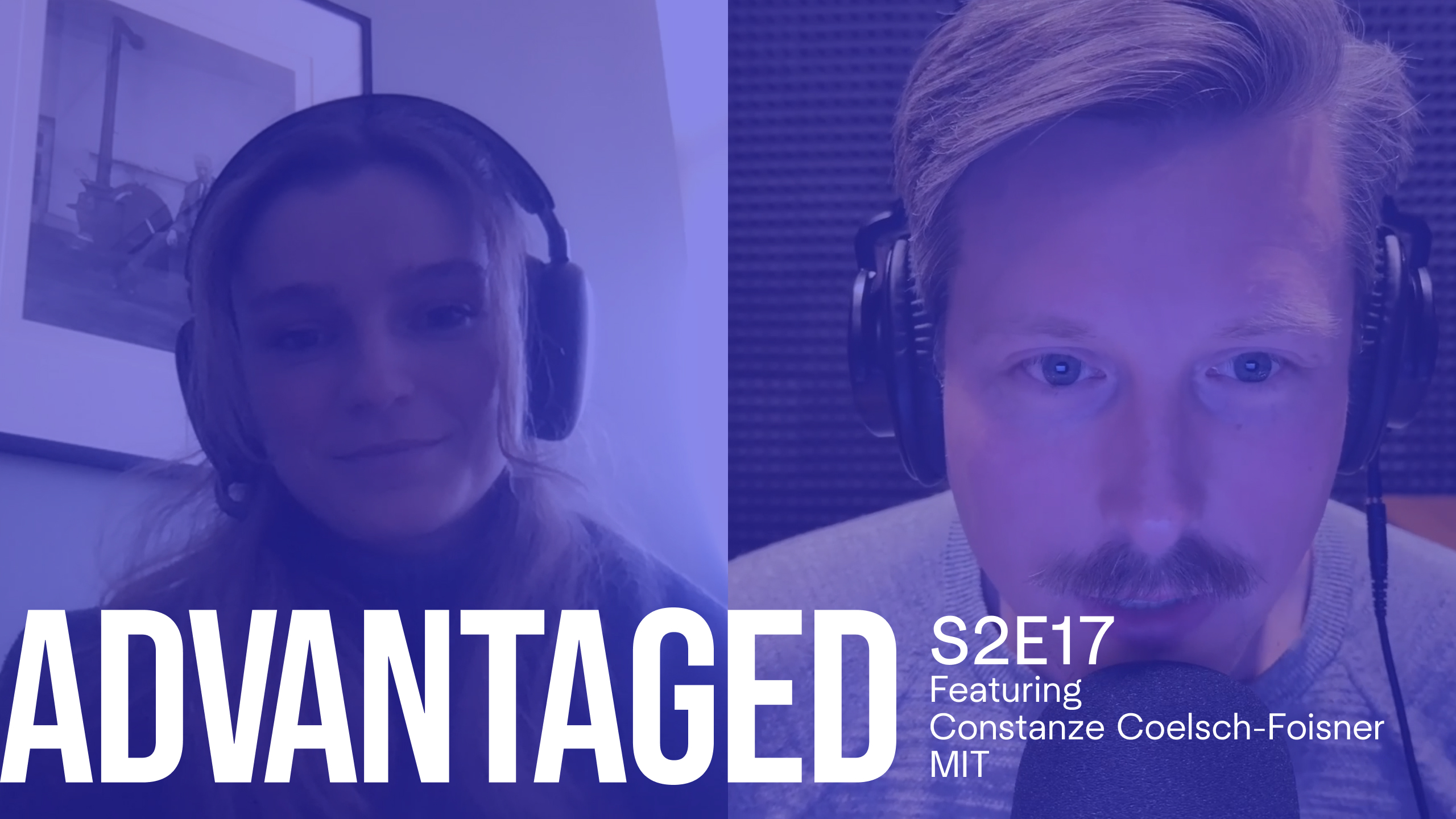
[00:00:00] Drew Beechler: Welcome everyone to Advantaged, an Alloy Partners podcast. I am Drew Beechler, our VP of Marketing here at Alloy Partners and your host of Advantaged. Alloy Partners is a venture builder who partners with leading organizations and entrepreneurs to co-create advantaged startups and venture studios to help unlock growth and transformation. On the podcast, we interview corporate innovators, founders, and investors all around venture building and startup corporate partnerships, telling the stories of how corporates and startups win together. And here today, we have with me Ram Jambunathan, VP of Strategy and Planning at Intapp. Ram spent 15 years at SAP, ultimately as SVP and General Manager running SAP.iO, which was SAP's investment and incubation arm to help launch-- that he helped launch in 2015. SAP.iO grew into one of the original and largest corporate venture studios spanning an internal venture studio, direct investment fund, and a global network of startup foundries. Today, he leads corporate strategy at Intapp, which is a vertical SaaS company serving the world's professional services firms. So thanks so much for joining me today. I'm excited to, to jump into your background and learnings over the years in running strategy and innovation.
[00:01:10] Ram Jambunathan: great to be on. Thanks for the time for the discussion. I really appreciate sharing my insights and hopefully anything, any learnings folks can get,
[00:01:18] Drew Beechler: it'll be a ton of fun. let's start with your background. You have one, I think, of a more complete views of corporate venture that I've come across, and I think it starts in a little bit of an unusual place maybe. But you begin as an engineer in semiconductors. You're a co-founder of a fiber optics company. You went through McKinsey consulting background, and then you spent 15 years at SAP now leading corporate strategy at Intapp. So walk us through that arc of your career, how engineer turned founder, turned consultant, ended up building a venture studio inside one of the largest software companies in the world, really.
[00:01:56] Ram Jambunathan: Sure. I started my career, even before entering the corporate world as doing a PhD in semiconductors, an area called optoelectronics at the University of Michigan. And at that time, I didn't really know what I w- wanted to do, but I know I liked learning about things and especially learning about small things like physics that would actually could have... That were just very unique and interesting to me. And one area that caught my eye when I was an undergrad was an area called optoelectronics and this idea of optical computing. We do computing and storage and everything with electrons. Today, what does it look like in the future? How do we, can we do this optically? Of course, only now, 20 odd years later, are we starting to see this movement to, actually doing, optical circuits on chips at scale and so on like that. So we're starting to move in this direction of especially when you need high-speed interconnects with data centers. So a lot of that. We, all of these things take time. Some are on longer timescales than others, but now you're seeing like the wave of, the pressure points in like AI, especially in, in generative AI really- the valuations of those areas coming up. So now you're seeing like companies like Coherent or Lumentum or the ones that are making these devices for the high-speed optical internets that are gonna enable very low latency and data centers really take off. So it's fun to see many years later where this goes. At the time when, I started my career at Bell Labs as a member of te- technical research and development at Lucent Technologies, it was really around kind of high-speed telecommunications. So for whether it was under sea transmission networks or long-distance optical communications, how we were gonna, at the when the internet was really just taking off in say '99, 2000, 2001, it was, how are we gonna get more bandwidth, bandwidth being the limiting factor at the time until, we had the big dot-com bust, which then left a lot of bandwidth glut that was then consumed with then the rise of the, the web companies, right? And so that's where I started my career, right? So working on these at the, 10 gigabit, 40 gigabit as they're called, like high-speed transmitters, receivers in kind of a corporate industrial lab really thinking about how do we take like these concept, proof of concepts and actually industrialize and put them into large scale manufacturing environments, which is a, you're thinking about how do I re-engineer this product to have high yield, low cost type of characteristics. And then so started there, was there for a few years, then left with a few of my colleagues to do the thing that engineers, some engineers dream about doing and starting a, a company which of course many... That was k- you were-- That was at the time in 2000 was flowing around everyone. Let's go start a, let's go start a company. Let's go get venture capital money. And that, that was, this whole process was very new to me. Especially, when giving, four engineers, a, at that time, a substantial sum of money, right? For a Series A. We agreed to, we raised 16 million in our Series A. We, there was no seed. We just raised an A. So we were backed by Sequoia, Greylock, US Venture Partners, and we effectively built a semiconductor fab and packaging line from scratch, right? In, up in Allentown, Pennsylvania. And we co- we had all living in the Allentown area at the time. Allentown was very familiar with what it took to the requirements of building a fab given Lucent's presence there. So the, the groundwork was laid from a permitting perspective for us to go do it, which, in retrospect, building a fab in in a residential area or near residential area is stunning, right? And we were competing with companies probably with 100 times our capital. The Fujitsu's or the Sumitomo's of the world at that time. Also Lucent, Nortel and a whole host of other European companies like and Ericsson or Alcatel, and s- and so on. No- Nokia. But then, but we, and then we had to survive the dot-com crash or the po- post dot-com crash, the time, which we were able to keep raising money through 'cause we were actually getting a lot of traction as our competitors started to retrench these larger companies and we were actually demonstrating better quality product, right? And so we ultimately were acquired and the technology is now part of Broadcom, so it continues to live on a- as a actually the products themselves or embedded in other products. So that's exciting to see. So things that we've, developed like 20 year, 20 plus years ago are actually still in existence that didn't just get obsoleted. It kinda lived that, that whole startup arc, what it was like to take something from conception, ideation, actually build a whole factory for, and then take that to, to exit, right? So going through that whole startup journey was exciting to me. we were still at the end of the day a little bit about the tail that was being wagged by the dog when you're at the end of that value chain. So I wanted a different experience, and so I sought opinions for others. What should I do next? So I would like to be maybe understanding what happens at the end of, at the end of the value chain. In this case, it was like the telcos of the world who are making these decisions. And so I said, "I say, maybe you should go into management consulting, and if you wanna do, c-consulting, you should go to McKinsey." And so I, to be honest, had very little knowledge of what management consulting was or even less about McKinsey. It-- the whole thing seemed very, abstract to me around what management consulting did. I was familiar with what engineering consulting was. You give a set of specs and then comes back a referenced architecture or a prototype. That's what I was familiar with consulting-wise. But it gave me the opportunity to understand the other half of the picture, the strategy and the capital allocation lens that you might use that you never obviously see inside of a, a start, a single startup, right? I did... I had a broad set of roles at a startup, whether it was from like lead device designer to running product marketing, but obviously that's at a much different scale than you're, than you do at a large firm. So I had the opportunity to work with some of the largest, high tech manufacturers and telcos a-and chip manufacturers in the world. And under-- as well as kind of work on some unique projects in the areas of packaging, in pharma, ca- specialty chemicals that I never would've otherwise gotten. So I got a kind of a broad landscape of seeing how different industries, of work and think about and ha- and work through growth challenges, right? And I think the big takeaway for me there was, especially in high tech, at the end of the day, this is something that Peter Thiel often refers to, but, I, real- dawned on me that it-- at the end, the, when you reach a certain scale, it's all about kind of marketing and distribution. I'd... And especially distribute, having that, those channels, having those end routes to customers. This is what those big companies you become is like, how do I maximize the potential of the channel I have, right? And so at the-- Also at that time, I was becoming especially interested in enterprise software. I had opportunities to go back into hardware. I had the, I was asked by a venture capitalist if I might wanna start another company, and I was... That, the thing about hardware is that it's very hard . And so-- And I saw the opportunities, especially with the scaling opportunities with software to actually move into an area like enterprise software, where I was getting more exposure from like client software, virtualization, these type of topics. And so in between like SAP and McKinsey, I actually had the opportunity to work with or s- try to start another company in the drone analytics space, which was... The idea was that drones were starting to take off at that time. We was ahead of the prosumer area at the time. There were all of these-- There was like these big drones of like the Boeings of the world and so on that were collecting lots of data. A friend of mine who had just come back from flying in Afghanistan said: "Hey, there's a big opportunity in drones here." We started to-- We tried to start a company there. After six months realized it wasn't-- We weren't gonna be able to get access to the, like the API layer 'cause we were interested in the s- the software layer, but that was a heavily guarded asset for these folks in that they also saw value there, and we were like: "We can actually build the analytics layer out here." They didn't wanna give us access to that, so they were like: we don't wanna really go into the heavy professional services part of the drone space." So then he ended up becoming a very successful cybersecurity investor. It was so good for him . And then I ended up going to SAP. I was based in Philadel- and I continue to be based in Philadelphia. SAP's global customer operations and North America headquarters were at the time in Philadelphia, so it's a great opportunity for me to go and join SAP, where I then, as you mentioned, I spent the next 15 years in different layers of either working with SAP's largest customers to help them identify, quantify, and prioritize the areas of value that they could receive from SAP software, which helped me really learn the portfolio, to then running different swaths of strategy, whether it was at a regional level or at a global level different parts of the strategy, and then ultimately SAP.iO. So that's kinda my, my corporate journey. So I was kind of-- I would like to-- There was that... There's a song by, By, by Jay-Z where he says, "Allow me to introduce myself." I think it's called Public Service Announcement, right? And so I always think about that 'cause I just ca- had to... My career was a series of I kept reintroducing myself, right? A series of reinvention. But that's what keeps things interesting. And then, now a- another pivot in my career path to leaving SAP and then joining Intapp which is more focused on vertical SaaS, and we can talk about that more,
[00:11:34] Drew Beechler: it's incredible, I think, too, like having just such a breadth of experience and knowledge, both across industries, from semiconductors and drones and enterprise software, but also as a multi-time founder. Usually I would say people, especially leaders within corporate context, don't have all of that experience and background. And so I think probably a lot of that led to where you were going with SAP.iO. And as we were talking before this recording, it was around 2015 that you co-wrote this proposal to the board, SAP's board, arguing and, and I don't know how you would describe this, but arguing essentially the company had lost its finger on the pulse of innovation. They had missed some technology kind of waves potentially, and you had come up with this proposal to launch what became SAP.iO. Tell me, what was the core insight and how did you sell this idea on funding something the primary return was learning and innovation rather than a traditional CVC fund where we're looking to drive returns on capital and, ROIC essentially?
[00:12:39] Ram Jambunathan: Yeah. I think it ultimately comes down to the, the i- the innovator's dilemma, and what SAP was doing was really listening to its largest, most profitable customers and really following the roadmaps that they wanted us in SAP to follow versus maybe SAP also having, a lens and maybe taking some opportunity to take some bets in terms of understanding where the next wave of technology was heading. Yeah. SAP had had taken a few runs at this before, and I can talk about like some of the ways that we used to solve some of the, the challenges. SAP had, launched SAP Ventures, which then spun out and became Sapphire Ventures,
[00:13:17] Drew Beechler: Mm-hmm. Very successful venture fund, yeah
[00:13:21] Ram Jambunathan: Yeah, very successful venture fund that still SAP is its primary source of funding. But over time, when it was more formally part of SAP, it, invested in areas that were probably more strategic to SAP. When it, left SAP, it had the opportunity to invest in areas that may be non-strategic to SAP and maybe even competitive with SAP, right? And but their mission went from investing in strategic areas to generating capital returns, right? So what is IRR ROIC? SAP had also tried, i- internal incubation in the past, but was not necessarily successful at bringing those to market, right? So over time, SAP had, had- Was become-- as, as you mentioned, we had missed some of the shifts. We prob-- we're late to cloud and the only way to get back into cloud was to acquire our way, which, if we're late to a market, you have to buy your way in, and that's becomes very expensive. We were, late to, to mobile, late to other technology areas, and we saw machine learning coming, and we didn't wanna be necessarily late to that. So one. Two, we saw what-- And we had also launched a platform called, HANA, but there was no real ecosystem around HANA. This was SAP's in-memory database. So we wanted to be able to... how do we think about stimulating that, and maybe not forcing that, but stimulating an ecosystem and maybe startup innovation on that. And then we also saw what competitors or peers and competitors were doing. If you were s- Salesforce, right? Classically, they had Salesforce Ventures, which is a, corporate venture arm for Salesforce. You had Google, which had started multiple, ventures. You had AWS, which had started its own internal lab and was also making innovations, all focused on driving innovation around, around their platforms and building their ecosystems, right? So we saw this and then we thought, this is an interesting opportunity for us to to actually think about how do we in a thoughtful, capital-efficient way, how do we give ourselves a sensing mechanism to the next wave of innovation? How do we create a, a new bridge to the startup ecosystem, which is where, especially the early stage ecosystem. We had done a lot of, analysis here. I'll give credit to one of my colleagues here, Max Wessel, for right at the time for driving this. He's now, chief product officer at Workday. He, led us through an exercise of of of looking, doing analysis at the time of like where the trends that we're seeing Series A, Series B investments that VCs were happening through looking at a broad list of venture investments. And then this was a very hand-d- driven exercise by the team 'cause there wasn't a lot of clean data. So they basically go to every s- startup website and actually see what they're doing, 'cause Crunchbase and other databases weren't as accurate as they are now. And really seeing where... what the trends were, where VCs were predicting what the future was gonna be, where the disruptive innovations were gonna be, whether it was around blockchain or whether it was around analytics, or whether it was around, it could be robotics and so on and so forth, right? And so we started saying, this is interesting, but still, if you're looking at where VCs invested a couple years ago, you're still lagging. We need to be on the front foot there, right? So these, these datasets only give you information, but we needed to be on... have a more of a leading sense of innovation. So that's why we ultimately started SAP.iO. And the name SAP.iO, if you look at the logo, was kind of harks back, harkens back to this. It was a... It's SAP dot little I, big O. So it was this idea that a small input can give a big output, and that's what startups really are. They're small teams that, ultimately can generate enormous returns, whether it's in the form of financial returns or learnings, right? So that's the... That's, that was even the, the knowledge that we went in, the kind of the ethos that we went into. And so we, we pitched it to the board. We had, strong executive sponsors at the time, the chief strategy transformation officer, Deepak Krishnamurthy, who was my boss at the time, and then Quentin Clark, who is now J- Deepak now runs his own fund, Gaia Ventures, which is for the early-stage ventures, and then Quentin Clark at the time, our chief business officer, who is now a GP at General Catalyst were the, the, the sponsors to the board. And then the board in particular our chief financial officer, a guy named Luka Mucic, who's now CEO in Germany, and then Bill McDermott, who's now the CEO of ServiceNow. They kind of-- They saw the value in doing this and became the executive sponsors, right? The thing that we really stressed was that if you're going to make this work, if you're... And this is true, it's an... one of the key findings I'll just share now, was that you need to have three things. You need to have an executive mandate, you need to have a creative structure, and you need to have patient capital, right? So the executive mandate you wanna have at the end, this kind of this is being a, a board level, a CEO level initiative so that people will take it seriously, people will react, the right resources are appropriated, the right help is given when you need it, right? It needs to be seen as important. The second is the creative structure. You need to create an avenue to think differently, right? And that's not just from a process standpoint. I can take through some of the process changes that we made working internally to make this happen, but also even the physical space, even the construct of teams is different. So for example, what we did was we set up a, a new office in San Francisco on Brannan Street close to the ballpark, which, Like we had two floors of this, former warehouse, which became a very cool space. People would come in and say, "Wow, this does not look like SAP," right? And so then all of a sudden it became this this space where our ex- account executives would wanna host some of the biggest clients of theirs for off-sites that they would have. They would reach out and say, "Hey, can we... Our client, the C-suite of this executive team would like to meet, would like to ho- host an off-site th- in San Francisco. Could your space be used?" We'd be like, "Yeah, sure." Or we would want-- We'd have the startups who we would, in our incubations or the, our internal ones come and work out of those spaces as well, because it was just a different space and it was an e- easy kind of landing spot if they were coming to San Francisco. Or we'd have... It was a great way to kinda have your demo days and stuff. But it just gave this ethos that, hey, SAP.iO is doing something different and cool and has a different view of SAP. And then the third thing is patient capital, right? And the patient ca- and patient capital is extremely critical because you need to be able to set up a construct which takes the, protects the funding because you don't want it to be subject to the ebbs and flows of the business because, as folks know, these are not, these are, multi-year bets, right? And you don't know the startup journey, what it's gonna look like. It could be, a few years where you're proving, doing your learnings, proving out product market fit, and then all of a sudden you have this hockey stick. And so whether it's something that you're nurturing externally or investing in externally or building internally, it takes time. And there is a desire to measure return on capital much faster than what those type of rhythms indicate. Corporates are, look governing at quarterly basis. We really stress that we need the patient capital to do this right. and the board was, receptive to it, right? So it's this idea that you have the executive mandate, the creative structure, and the patient capital, right? So that that was the, the m- the impetus for why we started it. So again, coming back to we need... We created the sensing mechanism, so the why, and then a little... And then the high level on the how and what we said, "Hey," at the outset when we pitched the board, "We need this. If you, if we can't get this, it doesn't make sense to do," right? And then the third thing is that, hey, this is gonna be a win-win-win, right? So We are going to create value for customers, so everything starts with the customer. So number one, We are gonna ultimately create value for customers with this, right? Two, we are going to create benefit for startups and employees. So whether it was the external startups that we worked with, we were gonna create, some benefits for them, some value for them. Of course, is if they could, either prove through access to SAP APIs or SAP data, or access to customers. And then, or, and then as well as internally, a lot of learnings were shared. on, on an individual leader basis and also at broad scale to thousands of employees at a time. And then thirdly, strategic benefit to SAP that could help influence our roadmaps, help create a different view of SAP than what our customers had, because they were not thinking of us as like this innovative f- fountain. They were coming to us and saying, "Hey, where are the APIs you promised us 18 months ago?" Or the data model harmonization to, what's happening in, moving, becoming a, an advisor in areas like ML, for example, right? To, to them, where they hadn't thought about us as an innovation partner to even are there companies we can go and acquire? What is it to influencing the M&A roadmap? So providing that kind of vehicle. And so they got it, right? It wasn't like you, when you structure it in this manner and say, "Hey here's why we need to do it, here's how we'll do it, and here's what we need to be successful." And by the way, it's not, for a company the size of SAP, it's We're not looking, we're not gonna instantiate this huge sum of funding. we set up a $35 million fund to invest in external startups, and then there were some opex to drive our internal activities, whether it was our f- our foundries or our venture studio. But it was meant to be testab- testable, testing hypothesis and then reacting accordingly. So- Yeah.
[00:23:29] Drew Beechler: Yeah. But it's such a good framework. How... I wanna talk a little more around the patient capital side as well. How did you structure that around governance? You said there's 35 million set aside in a separate fund, but how from a governance perspective can you get everyone on board even around patient capital and ensuring that... 'Cause sometimes everyone is on board with, "Yes, that's the plan. It's gonna be a 10-year journey." Then four years in, it's hard to keep everyone still in the same boat around patient capital.
[00:23:55] Ram Jambunathan: Yeah, I think part of it is, comes from the executive mandate, so getting kind of the CEO blessing to start with and getting the executive blessings to start with. And then part of it comes from you need to keep selling. You need to keep selling the value, right? So every quarter we give updates to the, top executives at the company, what we call the executive team at SAP, which was, your top 4 or 500 executives. They all got a, an a quarterly update on what was happening and ensuring that there was value there. There's a lot of communication as well beyond that. So you ultimately learn that, the, there's a lot of branding that goes on, but you wanna also you know... you wanna have facts and content behind your communication so that people are like, "I get it, and then I wanna be a part of it." So you wanna also engender support there as well for start to get a groundswell of activity, not only just from the senior execs, but also from the m- mid-management to also your employees who are in the individual contributor level, but who are excited to step in and say, "Hey, I wanna be an advisor. I wanna get more involved. I would like to actually... How do I build my own venture within the venture studio?" That type of thing, and really get an understanding of, to create a lot of enthusiasm and to keep that enthusiasm main- and maintain it. And that's a lot of work, right? We basically had, folks on our team, an internal marketing initiative who were focused on ensuring that we were able to communicate on a quarterly basis. We also made sure the SAP exec executive board and the supervisory board was abreast of the value we were delivering. We even, at some of the supervisory board meetings, presented, had some of our inter- internal and external startups and investments come and present on what they were doing a- and the value that they could, they were bringing to customers. And so you're al- you're always in always be selling mode. You're never really in a, a resting mode. But that's, true of any corporate initiative- And especially as one which is a lot of external external awareness, right? So as we were, s- building a br- we, and we had our own website. we're sap.io. You, we weren't buried in under sap.com, things like this, which then you know, when you break these rules, you get one chance, and then, but then you have to justify the trust that's been put in you, right? So-
[00:26:17] Drew Beechler: Yeah, exactly. You talk about, there are, I would say, three engines of innovation, or ideation within SAP.iO. Talk a little bit more around why those three, whether it's the direct investments, the sourcing ideas, and the venture studio component, and this, the network of foundries as well. Why the three engines, and how did those work together?
[00:26:41] Ram Jambunathan: Yeah. Let me start with... I'll start with the int- the external side, and then I'll go with the the internal side, right? So on the external side, we had the f- the fund and the foundries, and then on the internal side, we had, we call it the venture studio. So the fund was, w- outward facing, it was about signal and reach, right? And so we were writing seed and Series A checks as a first check into companies so we could follow on as those companies did well. And the idea was that we co-invest, we don't lead investments. We've, took the position that, hey, what we rely on if we're co-investing alongside a top-tier investor is that they are, they have done the homework in doing the diligence in understanding the team and the value of the team. We would do our own diligence in terms of, writing, in terms of writing our own investment document, in terms of looking at the technology, understanding the value, looking at the applica- applicability and the value to our customers, and then the help that we could provide. But ultimately, it was about ensuring that we could have a seat at the table because the investors, right? They are thinking about the future, and we wanna... And as I mentioned earlier even if we're looking at where they've invested, these are, this is looking and doing this analysis in terms of, like, where a seed and Series A, Series B investments have been made over the last few years. Those are theses that were constructed even before then. We're still two years late, and we wanted to get in on the ground floor and understand where the next investment was gonna come from and how could we become part of that thesis development, and could we influence it, and so on. So we had to come up with our own point of view and share what our thesis was in understanding. And there's a b- lot of information asymmetry, and we were real willing to realize that we were gonna open our kimonos a little bit more, share a little bit more of our thought leadership because we were looking to get something back from the VCs and We were always gonna have to trade a little bit more from that angle, right? And it, a bit of that started as well is we, after we launched the fund, I was meeting, like, venture capitalists in different areas, and even in SAP's backyard in Berlin. sat, had lunch with a partner and he said, "Look-" My startups don't build on your platform. you're very difficult to partner with. and you don't buy our investments our portfolio companies. So why should we work with you, right? And so then it become, we we're gonna have to prove it through value, right? And so this was our opportunity to create a- and a, a view in terms from, L-leading early stage investors who were making their first bets on the future that they should want to know what S- how SAP is thinking, right? We should know, wanna know what SAP is thinking because we have a point of view on where the future is going a-as well, and we believe that we're actively shaping or steering where the world's largest companies are going on their technology journey too, so it's good to know what we're thinking, right? And so that was an opportunity to have to start to have those conversations, So it was, again, about learning. Now we were investing in companies that we thought we could help and companies that we thought and that we thought we would be successful over the long term because the one... The companies that you learn the most from are the ones that live. And so it wasn't about just taking random flyers, It was about investing in companies that where they'd already been done some pre-screening on the team, but we would do our own diligence on the tech. Sometimes that didn't allow us to be in a deal because they were like, "Are you in or you are out? We're not gonna allow any more diligence." I would just say, "Look, we're, we have to do our diligence. We have to present our own... We have our own internal investment committee and we wanna make sure that we do things properly, right? That we can own an investment, and that we can sell an investment." So that was the purpose of the fund. The foundries was our network of equity-free accelerators at across eight cities, and that was more about ecosystem and distribution. It was about global reach. So a, again, we had a small fund. We saw SAP being a global company. We felt we had the opportunity to work with probably more companies we would've been able to invest in. Some of it weren't probably not appropriate for us to invest in because either they didn't fit our thesis of either being in the right stage for receiving an investment, or maybe they didn't secure the, have the, at the time the level of investment from a, a backer that we might consider as a signal, but we thought they were, what they were doing was interesting enough to working with, working in. They may not have been totally strategic what we were doing, but we again, thought they, that they could be adding some value. Depends on the journey they were gonna go. But it allowed us to have global reach, right? And we started in San Francisco, and then in Berlin we worked, and then and we also sponsored a Techstars accelerator in New York. We did two of those in Berlin. And then we thought, hey, with SAP's s- skies and scale and reach, we can actually start our own network of accelerators. What we had to do though, again, being a, this comes to like delivering value and showing value. If we were gonna expand, we were basically told, " You're not gonna get all the money to fund these foundries on your own. We can give partial funding. You're gonna have to figure out how you're gonna get the rest." So basically, I had to work with the country leaders, or my team did, in different geographies. So whether it was in Tel Aviv or in Paris or in Munich or in Singapore, to ask those regional managers, regional leaders, presidents of those regions to actually give us funding, give us headcount, give us space And so we had to sell the value in terms of what is this going to do for you if you allow us to basically run these foundries in your region, and you're gonna help provide assets, transfer assets to my team, right? And but so that w- also made an impetus in that we are going to have to show value and continue to show value and sell the value. And we were, again, we were able to do that, especially with our first cohorts who really invested in the success of those first startups we were, we're working with In that we were, idea was to help connect them with customers, help them connect them with SAP, technologies. With all of these, we were looking to invest in companies or work with companies that could enhance or leverage the value of SAP's core applications, enhance the value or of our the the capability of our core platform, or enhance or leverage the value of the data in our assets, right? It would... 'cause we were looking at this, how do we build... And ultimately it influenced some of our technology roadmaps, like around machine learning. But how do we bring this all to scale, and how do we continue to show the value that we are moving in this direction, and that our customers are seeing benefit, we are internally seeing benefit a- and so on. So it's, there's a bit of a brand halo that comes, but it's gotta be followed with the meat, the data behind it. So that's what we did on the fund and the foundries. The fund was making direct investments to help build kind of very s- strategic VC relationships, especially in the early stage ecosystem. The foundries was about operating a little bit more at scale, helping us get reach, helping us get reach, especially in areas where we may not want, in geographies we may not be necessarily exci- have the, keep the depth of knowledge to invest in. But from a fund standpoint, but, there's def- obviously startup excitement all over the world. There's the startup innovation all over the world, and SAP being a global company felt had a mandate to help champion some of those ecosystems on behalf of our customers in those different areas. So that's the fund and the and the foundries. And with the Venture Studio, we said, obviously there's a lot of times spent on thinking about the expertise happening outside of SAP. But what about the thousands of experts that we have inside of SAP who may also be, who may also have an entrepreneurial bent? Who may actually, have an idea around a startup that may be Co-collinear with SAP. Is there a way that we can help get some of that e-entrepreneurial DNA exposed? So that's why we started, the Venture Studio. So we said that especially w- in enterprise, you w- d- generally want enterprise expertise to solve those problems, and here we had people who had, decades of expertise of enterprise systems in deep area, like whether it was in finance or supply chain or manufacturing, that is just not... You just don't hack your way to understanding those workflows or those business processes, and we already had the business process experts. Understood the way our customers were going, So we could take that latent employee insight and turn it into real internal ventures. And what... And we had small teams, we had real funding, we would announce internally, and actually we'd, externally as well, we've announced like a, a seed round of funding into a certain team, right? And so again, we looked at this in a manner which was very like, take- We took a VC style approach to incubating and scaling internal startups where we'd have an ideate and accelerate phase, and I'll explain that in a second, an incubate phase, and a scale phase, right? So we would ideate and accelerate, meaning that we would start a global like call for like teams to provide prospectuses or, along a certain set of topics, right? That we thought were interesting to SAP in the coming year or years. Could be in areas of supply chain, could be in areas of, payments, what have you. And ask like small teams of two to four people, or whatever that construct would be to... They had the opportunity to invite we invited them to write a brief on what their i- startup idea would be. And then we would look at, evaluate those ideas, do a, a first level of down selection, ask them to then, the ones who were down selected then, so maybe you would start with 500 teams then go to 100 teams, and then ask for more feedback. Put them through a, another kind of virtual accelerator, and then have those teams, and these folks were working on, nights and weekends, k- kinda g- give a double click on what their idea was. Take those teams down to 20, put them to a, through like a two-week boot camp, and then Ask, and then again, we had a team of folks to help them through all this process, and then go through kind of a final the... Take the top eight, put them through a, a VC style kind of... I don't wanna call it Shark Tank, 'cause they would go through having like formal investment committee type of presentations. And then they would, And then we would select, o- one to three teams, and we would say we've selected you if you... to join the, the venture studio," right? And you would basically, you're like in a team of two to three, you'd have somebody who would basically effectively be the GM, who would also be the product manager. You'd have a technical lead, and you may have a, a design lead, say, or a customer lead. And so we sa- we, we'd say, "Hey, we're giving you like a million dollars of funding for a year, say, for you to prove out your idea, to get some initial customer feedback." and at the end of a year, or could be shorter, could be longer, we might give them additional kind of seed extension or Series A funding, depending on their progress, how they're proving out against the initial hypothesis that we had invested in, right? And so we the idea was that they would leave their previous jobs, they would come join the venture studio and build this. ultimately, the destination could be as the, the birth of a new kind of business unit or being acquired into a business unit, or in some cases, maybe if there wasn't an exact fit with SAP as we decided, but the idea had legs, and maybe could secure out external funding, we may spin them out, right? So the idea wasn't to spin it out 'cause we wanted to k- obviously keep the insights and the learning and the value, but that was the appropriate avenue in some cases. And so with this, we were able to build this groundswell of entrepreneurial activity at an early stage within SAP, right? Not, again, a small positive teams got funding. But the reality is that, the... I would say this was-- there were some very, very strong ideas that ultimately now are part of the SAP portfolio. Some helped pro- pave the way to bigger acquisitions and then others that we proved out there is an area of interest for SAP customers here. We are seeing the signals. There's a, a company over there that's already at scale that's doing this, so then you have this build versus buy decision to make. And if we bought, then hey, it's great i- it's great. We proved this out, and we proved it out in a, a-- we de-risked this in a low-cost manner. In other areas, we would prove out that there might not be an interest in this, so we would actually save the company spending a significant more amount of mo- significant more capital in actually going and pursuing an idea that we would show there's probably not legs for at this time. And again, that's a win. De-risking the business and saving it from like pursuing low expectation value returns is actually a good thing, right? So that was the purpose ultimately of the venture studio, was to help, again, seed, seed this entrepreneurial activity, be able to surface like high potential entrepreneurs and future leaders within the company, give them kinda executive exposure, and then also be able to to be able to build things that matter, as we would say to, for customers, right? And so I can talk more about the, the construct of that, the venture studio as well, it's obviously not one person. It's a team of people that c- make it come to life, 'cause it did require its own separate structure,
[00:39:29] Drew Beechler: Were those the companies out of the venture studio incorporated as separate entities or as different business units
[00:39:36] Ram Jambunathan: They had their own brands within SAP and SAP.iO, but they were not like subsidiaries that were incorporated separately from SAP. But if we did spin them out, then we would go through that process of cr- basically setting them up as a separate entity so that they could be invested in. We did this with one company called OwnID that was recently acquired, that was in a, it was in a space that ultimately was in, the passwordless space, which because they were early, early to, to passwordless and pass keys. It was former folks from Gigya, which was in the consent management space that SAP acquired. And with it, we thought, "Hey, this is a great idea. It doesn't really line up with SAP internally in terms of what we can do to help. But you think you can go faster outside of SAP." So therefore, and we g- you know we, retained a share and Mayfield Ventures led their funding round, right? So as an example of spinning something out and creating its own subsidiary. But otherwise it was, everything was internal to SAP, but, didn't... It wouldn't become its own business unit until it would justify becoming its own. And business units at SAP are very big. But the idea was that, hey, how do we ultimately get these businesses to be like billion-dollar businesses? At the time, S- so we'd say it was, "You just need to become 1% of SAP's valuation." SAP had a market cap at the time of $100 billion. So you're looking at how do we get a billion-dollar exit from this? But you need a big goal, and that was what the billion-dollar exits are what VCs were looking at, and we were like, "Why should we set our own- ambition any differently. 'Cause if you don't think big, you're not gonna get a big return. A billion-dollar outcome might mean 100 million revenue. W- and we would just do the math and say we..." With given SAPs, SAP has solved the challenge for these internal startups of how do you get to market quickly? 'Cause we already have, that distribution arm, and as, as I mentioned earlier, distribution being the moats of these tech businesses. We've created that, and that's where most of the venture money goes after Series A anyway, is building go-to-market once you've found product-market fit. So let's solve the product-market fit challenge. We've already solved the go-to-market challenge. Therefore, if we can get this business to two, to 10 million quickly, right? Get it to zero to one and then one to 10 or on a path to one to 10 rapidly, then we know we are finding... we've got something which can be the foundation of a business unit. And, an example of that is that we had... There was a company called Spotlight in the venture studio, which was in the process mining space, and that took off like wildfire. And that ultimately became the instanciat- the, the, the some of the rationale for why we should go acquire Signavio as SAP, right? Because Spotlight... And I believe now the GM for Signavio was the gentleman Andre Wentz, who in, who started Spotlight. So it's it's exciting to see that kind of that, that how that ultimately played out, an example of where corporate ventures, internal ventures can go. It's There are multiple ways to create return. It can be, ultimately build a big new business from that. It can be creating the learning, the foundations of a new business that you then acquire into. It can be, just proving or disproving a hypothesis, right? Or it could be, like, building a product that ends up as part of the portfolio, right? It's all of those things, but we would just say, "Hey, look, there's no..." W- there, there's this idea that, oh, you failed, right? But again, disproving a hypothesis that the company might have otherwise sig- sunk significant capital into is a huge win. So I think that's the the r- rubric that we took, and I think it was successful.
[00:43:04] Drew Beechler: I know we're running close on time here, over on time, so I wanna shift just briefly into Intapp as well, and maybe the best way to
[00:43:11] Ram Jambunathan: to
[00:43:11] Drew Beechler: Showcase this is what is Intapp today and what are some of the lessons that you learned at SAP that you're bringing into Intapp and kinda moving into where vertical SaaS is moving in the future?
[00:43:24] Ram Jambunathan: Yeah. When I was at SAP, I had the opportunity to also be-- to work on machine learning and then AI a couple times. First was I was part of a core team that that like in 2014, 2015 was working on SAP's machine learning strategy, right? 'Cause we saw that, hey, wait, now there's the compute available, there's the da- the new, the... So there was availability of compute, availability of data, and a- availability and the new models were gonna make machine learning at the time kind of really start to come to life, so we needed to get ahead of it. And then in 2022, of course, came the rise of generative AI. And then so you s- you started thinking, what's gonna be a differentiator? And I saw the-- and then it was clear that if that data was gonna become the differentiator, right? If you forecast in the future and said if everybody's training on the same data, then the models become a little bit every c-converge to a mean. What's going to differentiate those models to applications of eventually, whether it's ML or AI, is going to be the data. And who, and I think who's most insulated from that is gonna be your vertical companies, right? SAP is a horizontal software company, right? It's it does have some, templates and stuff to be able to, for, to specify for a specific in-industry, but ultimately you are relying on professional services to get things implemented and going and maybe customized for a specific type of vertical or industry. While a verticalized company, verticalized SaaS really focuses on, having the workflows tailored for that industry out of the box, right? And then maintaining those workflows. And deep... That requires a deep understanding of the business process, which I always re-ad-admired from SAP and what it understand in like areas like finance or supply chain or manufacturing. But vertical SaaS companies understand it very specifically for their industries, right? And so that's what allows them to always stay ahead of the game and me- know what's happening in their cl-clients' industries and be able to be great advisors. Intapp as well, what's interesting to me, having a startup background Intapp just celebrated its tw- 25th anniversary. They started, so they started after the dot-com bust, right? And so it was a tough market to begin with to raise new funding generally after dot-com. And then also who was gonna give it as we, to a company that was foc- that was starting to do solutions at the time, hardware solutions for like back office server solutions for law firms, right? So we t-take a dot-com and then you take this very, as we established, a very unloved market being legal. You put those two together and then there's like this, these guys were gonna have to build a business from scratch, and so they did. And so they took a business and they built it on their own cash flows from startup to IPO in 2021. So then I look and say, "Oh, This happens to be a disciplined group of entrepreneurs and operators, who have gone through many transitions, whether it was mobile or cloud or client server, and have successfully made the leaps, right? And haven't had to rely on external funding really to do it. And they've also made-- been very disciplined in how they acquire it. And the third thing was they were a mid-market company, SAP being a large cap company, different environments, and I wanted to have the opportunity to be more in work at a company which was, at the time, 1% the size of SAP from revenue, right? W- at the time when I joined, it was what, three hundred million in revenue, SAP being thirty billion. So it was a different dynamic altogether, and I saw an opportunity how to apply my knowledge of what happens at scale to help them cross the chasms, because they realized that turning the crank faster and faster wasn't gonna get them there. But ultimately, it was this idea that, hey, this is a company that works in a regulated industry that's one moat that has differentiated data, another moat that has a broad set of clients and so d- distribution channels, another moat that had all of these really interesting capabilities that I thought, hey, this is-- this would be an interesting company for me to be able to, hopefully bring my learnings to and help them grow, especially in an area which I saw was likely going to go through a little bit of disruption with AI. Not of course, I don't think anybody could have expected or foreseen the SaaSpocalypse or SaaSacre or whatever you wanna call it. but the company is in, in, in an excellent position to be able to navigate it, and we just, announced our own agentic AI platform called Celeste, tailored for the needs of professionals in our industries focused on compliant growth. So that's why I came to Intapp. Again, is they have this entrepreneurial spirit. starting with the founders and the early employees, because, one of the, the challenges that you wanna be ul- ultimately be able to say as a, in... One of the challenges we face as well is how do you say no to something? 'Cause too many times in their journey there, there was a, they made of a product or an opportunity that said, "Let's get-- let's let it go a little bit longer, let's let it go a little bit longer, let's let it go a little bit longer," when other bigger companies would've just said let's just cut it. Let's just end it." And then all of a sudden it took off, right? So The company understands very well how to do pr-product marketing, product market development. So you realize you have something which has product market fit, but the market isn't maybe ready for it yet, but you believe it's going to have product market fit, so therefore you invest in actually developing and building out that market, so when the market really does say, 'Yes, we need this,' you are there, right? And so Being able to continue to build that muscle and grow that muscle, especially as we start to broaden our scope, It's a luxury on one hand and a challenge on the other. So especially in an er- in a, in an era where transformation is happening so fast. But it's exciting,
[00:48:48] Drew Beechler: It's so exciting. Any parting words or wisdom that you would give to other, innovation strategy leaders within large corporates looking to drive transformation and growth within these areas?
[00:49:00] Ram Jambunathan: these areas? Yeah. I think three things, right? So I think, one, you need... One is about really how do you create the win-win-win, starting with the customers. What is this gonna do with, for the customers? Then second, What is the strategic value? What i- what is the benefit for the ecosystem if this is gonna be externally focused? If it's internally focused, how do I surface and create value for my employees? And then third, what is the strategic value ultimately to the company, right? So that's one. I think two is how do I create, how do I ensure that I have this, this three vectors of executive mandate, patient capital, and the creative structure? You need to be able to ensure that you have that, the executive cover to be able to do things differently. You need to have a creative structure, as I mentioned before. We, I gave one example, we had a different office space and so on. We set up this different feeling network of offices. But we also created different avenues for building, right? At the time we said, "You don't have to build on SAP HANA. It's not, probably not the opport... right platform for start..." This is, again, back in 2016, 2017. AWS is what every startup builds on. We should have the opportunity to go build there. So go build on AWS, and maybe at the right time it's appropriate to refactor on HANA. But you don't have to do that right now. We we've gotta build fast, right? And HANA is appropriate for our customers, ap-appropriate for building SAP applications, not, maybe not appropriate for building startup applications. We also, said we need different contracts. We need trial contracts. It can't just be three-year contracts. We need to have something where cl-clients, customers can sign a one-year contract, and then we can renew it like that. And we need to have different pricing models that's not just based on here's the floor price and here's what comes above it." So we in a bunch of different ways had to really think about the creative structure. And then establishing patient capital, 'cause it's not gonna be interesting to people if they always think their funding is at risk. You're not gonna be able to get the right people to either work on the external side, to work as an investor, or on the internal side who are gonna change their careers if they don't believe that the funding is there, even if they do everything right. 'Cause as I mentioned internally, it was like having people leave their jobs and then just commit themselves to this. Usually it was a career accelerant in that they would find themselves through this experience that they would be able to take a step up in their career journey. But you still need to be able to ensure people that the money is going to be there. This isn't just always gonna be at the whims of a budgeting cycle. And then thirdly, you need to be able to communicate the value, right? So you need to be able... You always need to be selling the value to the different stakeholders again. You need to be able to tell customers what's happening. you need to be able to sell your ex- your ecosystem, whether it's the in-internal, external startups on what you're doing. And then you need to be able to sell the value relentlessly to your executives. You need to have the data to do it. But then if you do that successfully, like I think we did, you are able to expand your remit, right? Again, I gave the example of hey, we were able to convince other regional leaders to actually give us capital, give us people out of their budgets to help drive our initiatives more g-globally, which is an example of this, right? If you don't do that, then these things die on the vine. If you do that, you're able to, maybe survive one CEO transition, survive two. I can't surmise ultimately why SAP.iO was sunset after a decade I think about a, a year ago. There are probably various reasons, strategic and political, for that. SAP.iO Fund continues as part of, a dedicated external startup fund for Sapphire Ventures. But it's like you need to keep selling the value. You need to keep communicating what's, what is, what the benefit is for the business, and make it important to people. People wanna get involved initially. You need to be able to sustain that enthusiasm and then ultimately the, the capital and the other goodness that flows fr-with it. So that's would be my my, my takeaways, right? I know it took a long time to get to that. I apologize. But
[00:52:43] Drew Beechler: No, i-i-it's incredible. I think the journey, the, the learnings, h-how to structure a lot of this and building momentum, yeah it's so critical and you oftentimes it's undersold, what, value that provides. And this was, a masterclass on thinking through a lot of that and how to structure something that can be, a decade-long, program really at a corporate the size of SAP is quite remarkable
[00:53:07] Ram Jambunathan: And a- as I mentioned, you also have, have great teammates and great partners, collaborators to work. I mentioned a few of them of them earlier. There are many more who I unfortunately didn't mention, and I could have, name-dropped, but, I apologize to those people I didn't name explicitly. But there were a lot of people who participated in the journey, and so it was a very exciting, privileged part of my career, a- and again, it all fed back into what we did in from a corporate strategy side as well. So
[00:53:37] Drew Beechler: Yeah. Yeah. Thank you so much for joining me. This was just a, a lot of fun for me personally to have this conversation, so I appreciate the time, and looking forward to sharing this with everyone else
[00:53:49] Ram Jambunathan: this with everyone. Thank you, Drew. I really appreciate the opportunity to share some experiential wisdom,


































.avif)