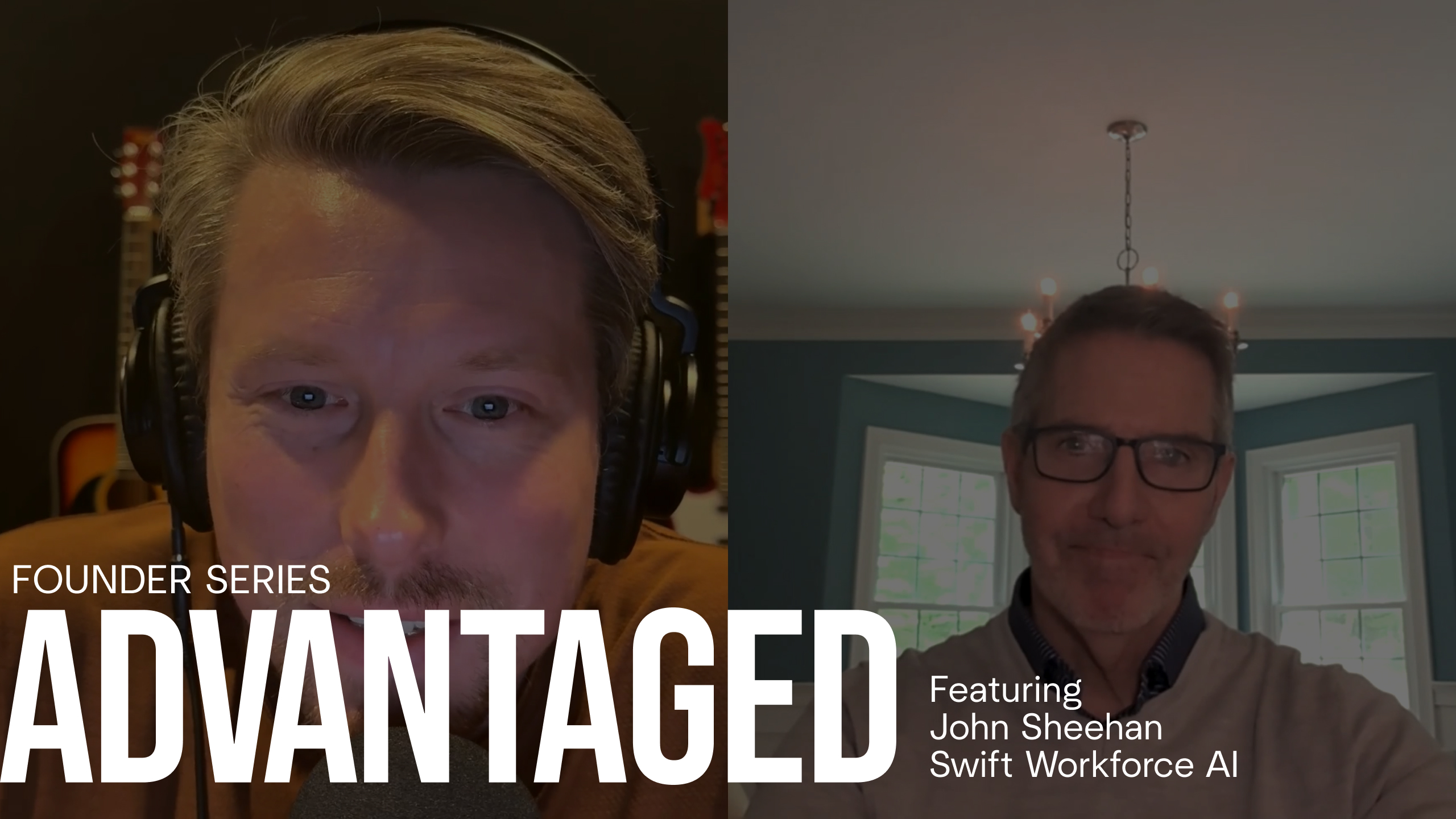
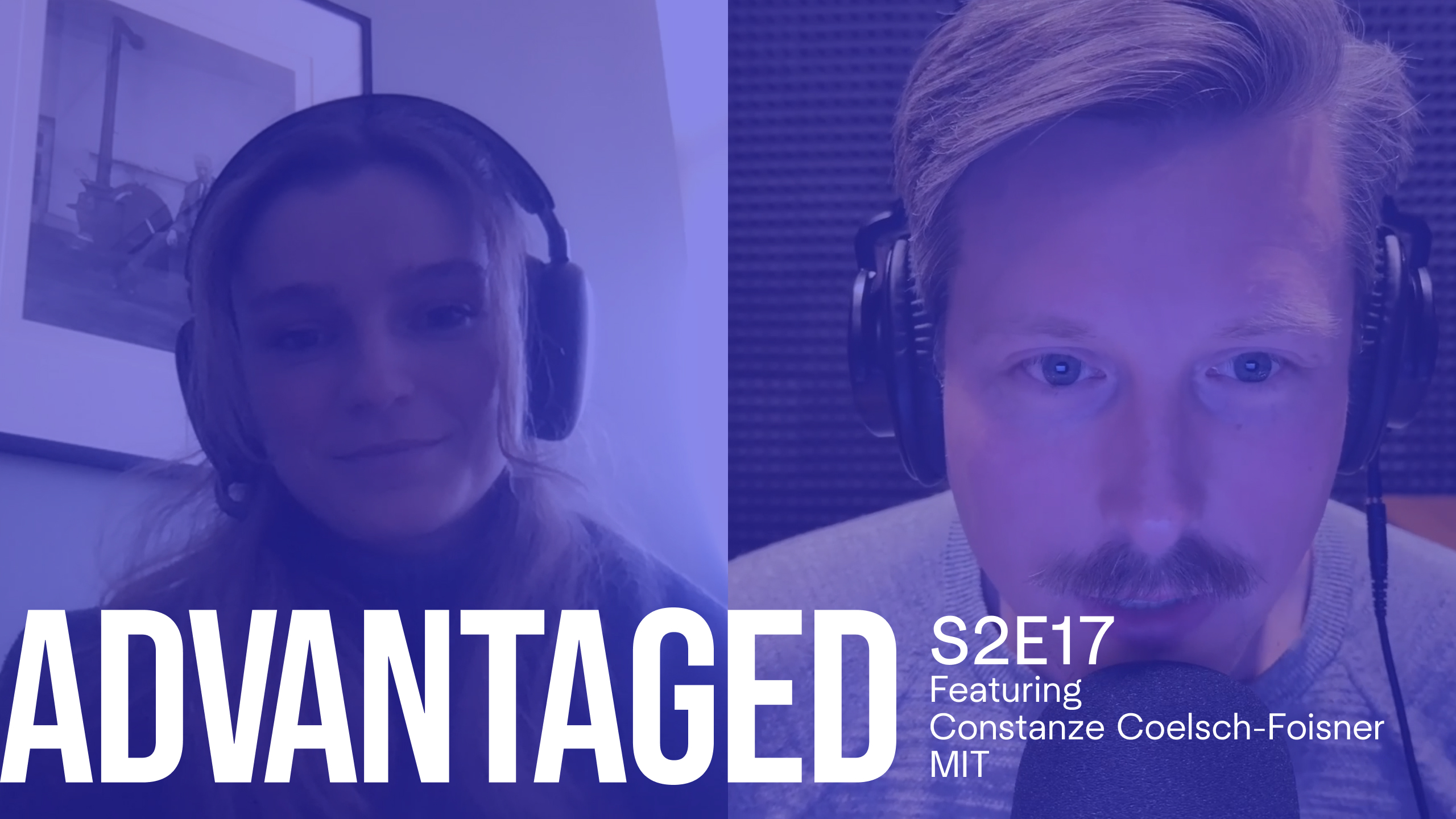
Most startups get one of the three things they need at the start. Capital, or a design partner, or real access to the people who live inside the problem. Almost never all three. On our latest Founder Series podcast episode, I sat down with John Sheehan, CEO and co-founder of our portfolio company, Swift Workforce AI, who got all three from day zero.
Swift is an AI scheduling agent for hospital nursing teams, and it exists because Alloy and our partner, Wellstar Health Systems, found a problem inside their own system and decided to build a company around it rather than wait for one to show up. Building a startup inside a corporate partner gives founders three things at once that are almost impossible to assemble separately: proprietary data to validate the problem, access to the leaders who buy, and real users to pilot with, which is how Swift compressed years of discovery into a handful of months.
Nursing is the single largest slice of the workforce at every health system in the country. The enterprise systems that manage those people were built as data repositories, not for the humans using them, and the cost of that design choice shows up as churn, legal exposure, and lost reimbursement. We also talked about what it takes to get an AI product through a health system's governance process right now, and about the conversation most AI vendors are still tiptoeing around.
Featured Guest
John Sheehan is CEO and co-founder of Swift Workforce AI, an AI scheduling agent built for hospital nursing teams and the managers who run them. Swift was co-created by Alloy Partners and Catalyst by Wellstar, Wellstar Health System's venture and innovation arm, and John has led it from the first pilot on a single unit through full commercial rollout.
Key Takeaways
- A corporate partner's real value is access to data, stakeholders, and users. We dive into the specific mechanic behind what we call advantaged startups, and it is why corporate venture building can compress years of discovery into months.
- The nursing workforce problem is a financial problem wearing a wellbeing costume. Nursing runs roughly 30% of a health system's workforce, and average RN turnover is around 16%. When you do the math, investing in the daily experience of that workforce stops being a soft initiative and starts being a balance sheet decision.
- Cognitive burden is the actual product problem, not scheduling. A nurse manager is responsible for every person and every dollar on a hospital floor, and John argues it is the most demanding role in the building. Doing that job today means three to five applications open across two or three screens in a shared office, toggling all day between the scheduling system, the workforce system, and the clinical record. Every minute spent there is a minute not spent on patient care or on mentoring early-career nurses, who leave at a disproportionately high rate in their first three years. Swift reports cutting roughly 90% of that workflow time, closer to 95% for nurse managers and just under 90% for bedside and non-clinical staff.
- AI governance is now the gate, and it favors the systems that need it least. John's read of the market is that fewer than 10% of health systems have deployed AI at the enterprise level, while far more are running pilots. What has emerged in the gap is a layer of AI centers of excellence and business transformation offices that score vendors on risk. Swift scores among the lowest because it is non-clinical, so the blast radius of a failure is contained. The uncomfortable pattern underneath it: the most technologically mature systems have the most governance structure, and the least mature have the least. That is a rate limiter on the addressable market and a longer sales cycle for everyone caught in the middle.
- Point solutions are getting squeezed out of the enterprise. If your AI product is a point solution, or could reasonably be mistaken for one, you either change the model or spend serious time building the case for why it is platform infrastructure. Swift's framing is that it is not a scheduling feature, it is a different way to operationalize the workforce.
Listen to or watch the episode below and be sure to subscribe to Advantaged, the leading corporate innovation and venture building podcast, on Apple Podcasts, Spotify, or YouTube.
Episode Transcript
Guest: John Sheehan, CEO and Co-Founder, Swift Workforce AI
Drew Beechler [00:00:00]
Welcome everyone to Advantaged, an Alloy Partners podcast. I am Drew Beechler, our VP of Marketing here at Alloy and your host of Advantaged. Alloy Partners is a venture builder. We partner with leading organizations and entrepreneurs to co-create advantaged startups and venture studios. On this podcast, we interview corporate innovators, founders, and investors all around venture building and startup corporate partnerships, telling the stories of how corporates and startups win together. this conversation is part of our Advantaged Founders series, which is special episodes sitting down with startup founders within the Alloy portfolio, building these advantaged startups and unpacking the edge and advantage that they have had from day zero. And here today with me we have John Sheehan. John is the CEO and co-founder of Swift Workforce AI, a startup whose scheduling co-pilot is representing just a new model for how healthcare systems operationalize their workforce. Their mission is to improve nursing workforce wellbeing and financial sustainability for the healthcare systems that employ them. Thank you so much for joining me, John, and welcome to the show
John Sheehan [00:00:59]
Thank you. It's a pleasure to be here.
Drew Beechler [00:01:00]
So I know you have a very interesting background multi-time founder. Tell us more about yourself and your career leading up to Swift and what you're doing today.
John Sheehan [00:01:10]
Yeah. Over the past 20 years, maybe 20-plus years at this point I've been in uh, healthcare, specifically in IT-enabled services, internet-enabled services which moved into SaaS products and then data analytics. A cross between pharmaceutical companies' pharmacy, and healthcare systems were the customers of some of the businesses that I started with partners. I think my healthcare journey actually began in the early 2000s, though. I was a CEO in the UK and then eventually in the EU as well, of a US company that had disrupted the marketing model for how pharmaceutical companies would market their products and help educate providers that prescribed their products. It was called Pri-Med. And I lived in London for three years, give or take. Lived in Germany for, in Frankfurt for about a year, and I took the US model and adapted it for use in the UK and Europe. It was underwritten by pharmaceutical companies, so it would-- we would Market and aggregate prescribers in both digital platforms and also live conferences. And then we would work with different academies, not-for-profit partners to help create content, and it was all underwritten by pharma. But the model had to change quite a bit for Europe and the EU. And we packaged that up with the US company, and we sold it in 2004 or 2005, it escapes me, to Bain Capital And I stayed on for a bit and Bain was interested in launching in Asia the exact same model. So we had to figure out the Asian market. Did some diligence on China, and at the time it was a very... It was even more difficult than it is now, so I opted for Japan. We launched in Japan, and I had to move there part-time for about 14, 15 months. Went back and forth and lived in Tokyo, Akasaka. And had a partner there, and we built the same model and launched it in Japan. By that point, my earn-out ended, and I left and yeah, tried to do nothing for a couple months and it didn't quite sit right. I jumped in with two MD PhDs from Harvard and Yale who had a just a brilliant idea on how to reinforce medication adherence, how to reinforce the behavior of a patient taking their medications on time. It was called Health Honors. And together we did that. I invested in it early stage, but then they needed someone to build it, so I jumped in and did that. And we built that for about two years, little over, about 27 months. And in 2009 ish we sold it to a Nasdaq-traded company at the time called Healthways. Now it's called Tivity, still traded on the Nasdaq, I think, so it's a public company. And that was really the first one where I kinda did it from nothing all the way up through exit On my own with the two original conceptual founders. And then stayed there for two to three years working in a publicly traded company and quickly learned that working in a publicly traded company was not for me. So I started a company with a physician, another MD up here in Greater Boston to try to create a new model for how physicians and allied prescribers, so nurse practitioners physicians assistants, would learn. Because that was a-- that was a logical follow-on to me, to my time in Europe with the Pri-Med brand and having to kinda change that model for the EU and UK. One of the things we found i-in that model when we sold it and after, is that the process of creating that education for providers was very much an intensive research-based endeavor, as opposed to using data from actual providers. And by this time, which was 2011 to '13-ish the kind of computational power of technology had become to a certain extent commoditized. So things you couldn't do before 'cause it was just too expensive to get access to tools that could process data w-were now accessible to small companies. It was still-- Relative to today, still very expensive, but back then it wasn't. It was a real efficiency gain. So what we did, And this was called D4 Medical Analytics. So what we did at D4 Medical Analytics was we would work with healthcare systems, and we would take their primary care provider networks, including allies like nurse practitioners and physicians assistants, and we would take prescription data, And we would measure what were at least theoretical gaps between an evidence-based guideline on how these providers were prescribing to treat patients with different chronic diseases like type two diabetes, asthma, COPD hypertension, et cetera. And then We'd take that data and we'd map it against what was becoming more than a trend. It was becoming an entrenched operating model, at least for part of healthcare systems business, and that was value-based care, which is everywhere But back in like 2010, '11, '12, '13, it was still within a series of pilots with the Centers for Medicaid, Medicare called the Pioneer System. And essentially what that was is different healthcare systems could go at different levels of risk. So it was the entire rationale behind value-based care was trying to shift the fee-for-service volume-based care model into a pay-for-outcomes, pay-for-performance. So it's quality of care. So we felt that using a provider's individual prescription pattern and treatment pattern, controlling for lots of different comorbidities and other variables in the data would be a really good tool to show providers where they could do a better job using their data. And then we map that over the contractual terms that the healthcare system had signed when they entered with the government, these payment models, and we found the nexus there. We found that sweet spot between the two. And we would both help a provider increase patient outcomes, and at the same time, we would help the healthcare system maximize the return on the contract they signed for taking risk. So we just Transformed the way that continuing medical education was done. And we ended up selling that 2015 back to the company that I worked for in Europe, who needed to reignite their business and their model into something data-driven, and that was Pri-Med. It was under different ownership by then. And then after that, I so by, by the time that ended was at post-sales, about 2018, 2019. A-and I had a kind of fractional management advisory business which I just assumed I'd keep going Ad infinitum until I didn't wanna do it anymore. And then the team at Alloy, which was previously called High Alpha Innovation, and their corporate partner at Wellstar reached out to me through a couple degrees of separation of network and had a really compelling offer. And the compelling offer was to work with them and a corporate partner, Wellstar, on helping solve a problem that they uncovered, and that's how I got here
Drew Beechler [00:08:18]
kind of what keeps pulling you back in, to do another startup to keep doing it, especially on third, fourth startup now. You understand how hard it is. You understand, the pains. what, has that been for you? Like why... What keeps pulling you back in to wanna do startups again and again?
John Sheehan [00:08:36]
So As I kinda look back at it and where we are, where I am now and where I was there are components of the job which are incredibly difficult. They are anxiety-provoking, at some points really frustrating. The 2:00 a.m., 3:00 a.m. when you wake up and you're either so excited over something that happened. I keep a notepad and a pen by my bed to write the ideas down. And then the flip side of that, you wake up at the exact same time when there's been what you think could be a train wreck, and you just can't get-- You get too many thoughts in your head, So you've got that the kind of tether between those two, and that's what the life is. But then there's points, there's inflection points in a business and when they happen there's just nothing like it. And I can give you an example from Swift. Over the past year, we're fully commercialized. 2025 was a pilot program. But we get unsolicited feedback From nurses and nurse leaders that use our tool. They take the time to send an email, and they have no extra time. And if you read these emails, it's the reason we do this. There's certainly the financial upside of building and selling a company that's great, and that represents success and closure, and that's part of it too. But you need something to keep you going. And when you get this kind of feedback, which basically illustrates that you got it right, at least for where you are in your evolution right now. You got it right and you're making a difference. You just, you can't... At least personally, I haven't been able to replicate that in my career, and that's really why I keep doing this. And I think it's why anyone we hire is on the team. There's that same profile, which is being able to operate really well in ambiguity. The ambiguity I mentioned between super exciting things and super anxiety-provoking things and worrisome things. And then that positive reinforcement of seeing when it works. You, you just... it's like a continual adrenaline rush. So for me, that's why I keep doing
Drew Beechler [00:10:33]
I love that. You-- There's this certain people that thrive at that level of anxiety. I don't know. I-I'm similarly wired, where if you can stay even keel through the massive ups and the massive downs, that it helps you perform at your best. And then also I think to your point Being so in love with the problem that you're solving as well and the solution that you're providing to, that problem, I think is a key component and that people talk about founder-market fit and that side of things. And even in just, the last five minutes or so here talking with you, there's clearly that passion there as well, and I think that's what also covers up a lot of the challenges or anxiety and things like that in running a business too, is that Love for the problem love of the game almost. I hear oftentimes people too think of business as a sport or startups as a sport, and that's kind of that, that love of the game I see in many founders as well that's really enticing.
John Sheehan [00:11:29]
I I think that's right. I think that is a really good analogy. A- and part of that is the I think if you are a founder, to some extent you have to be intellectually curious by nature. And I think when there's really complex problems that you have to unwind, and then you have to create A solution to simplify them, which is an elegant process to go through if you can do it, the intellectual gratification there it's really stimulating. I think. And I think most founders you talk to would probably agree with that
Drew Beechler [00:12:00]
So tell us a little more around the problem that Swift solves, how the idea originated. This company originally was incorporated, founded as vflok, and the product name was Swift, and you all have just recently gone through a name change. So maybe share a little bit of that evolution as well in the story around Swift's journey and the origination of the idea and the product and where you are today.
John Sheehan [00:12:21]
Sure. So I'll start with the problems because I think that's where everyone starts or should start when they're looking at a business. And there's-- the problem's twofold where we're in the space we're in. In healthcare systems the nursing workforce is always the single largest component of workforce, and that is-- that does not vary. That translates linearly across the marketplace. Somewhere 30-plus percent. I've seen it as low as 27, 28%. I've seen it as high as 38 to 40% in some of the systems we work with. So within that there are enterprise technology systems, so scheduling systems and workforce systems, and those are two different systems that have a relationship. Scheduling systems do what they, what you would think they do. They allow stakeholders within the healthcare system to be able to make sure that someone works a particular shift. Nurses are, by definition, shift-based, front bedside nurses and nurse managers now specifically. And also it's a data repository that captures that data and lets the user go in, in a semi-automated fashion, manipulate the data because schedules change. Workforce system very similar. Think data repository. It's a way to track information, and it-- they do semi-automate or automate certain workflows. But the problem came in that none of these enterprise systems were designed in any way, shape, or form with worker well-being in mind. And I know that sounds very esoteric and highbrow, but it isn't. And the reason is retention of nurses in the United States on average is about 16%, so 16% churn. The average cost in the United States to replace a nurse is about $61,100 per RN. Now, when you go up to nurse manager, I don't have any exact data on that or an average. I can tell you in our world, our, the stakeholders and nurse leadership we work with, they put that figure at 80 to $90,000 per nurse manager. So there are real Important sustain-- financial sustainability reasons why it makes a lot of sense strategically for a healthcare system to invest in solutions that can improve work-life balance and essentially well-being of their workforce. In our world, that Starts with nurses. So that was essentially the problem that originally Wellstar came up with through their venture and innovation arm called Catalyst by Wellstar. So what they have they have a couple of different remits. One remit is they can invest in certain companies given a set of certain parameters. But the second remit is on their innovation side. If they find a problem that they can reasonably demonstrate cascades across the marketplace, then they can become a studio company on their own. So they can build that solution because they think it's a good business opportunity, including solving a common problem. And that's how, at the time, vflok, now Swift Workforce AI started now as a kind of a point of clarification there, Wellstar and Catalyst by Wellstar didn't do this on their own. Alloy previously s- was called HighAlpha Innovation, and Catalyst understood that they didn't have the operational expertise that an enterprise like HighAlpha Alloy has, and they reached out and they partnered with them. And those two together really dug into the problem to make sure that, for us, it's a problem that cascades across the marketplace. It appears to... It, there appears to be a technical solution to it, even though it is enormously complex. And they agreed to partner together, and they started, at the time, VFlock, now Swift Workforce AI. So the problem when we think about it, giving that as context is for nurse managers and leaders who are instrumental. I'll talk a little bit about what they do. Nurse managers are responsible for what happens on every hospital floor. So they-- under them, they have nurses, licensed practical nurses, medical assistants, and they have non-clinical team members. Could be anything from kind of environmental services food services. Anyone that works on the floor or delivers a service on the floor, the nurse manager either directly re-- is responsible for them including... Think of it on a P&L basis, including the budget and filling shift gaps. Or they have to be aware of what they're doing because it's delivery of services to patients that are in bed at the time. It's, in my view, it's the single most important role at a, and most demanding role at a healthcare system as a nurse manager. And the problem that I just mentioned before that, and these enterprise scheduling systems, they weren't built with these stakeholders in mind for their well-being that allows them to do the job. They were built as data repositories to semi-automate workflows. So for nurse managers, that means having, on average, three to five different applications open on your desktop, right? Now think of off-- these offices are not huge, and oftentimes they share it. They're lucky if they have some windows. Sometimes they don't. And think of having two or three screens open with three to five applications shared between them, and you're toggling between So you're click-alt all day looking at the scheduling system, the workforce system. If time and attendance isn't part of workforce, that's it. And then there's the clinical systems as well. Epic is probably the one with the biggest market share. And then there's all kinds of other systems for whatever is being used as tools on the unit. All of that causes cognitive burden, or some call it administrative burden, but it's really cognitive burden. There's only so much the human brain can do at a given time When you're focused as a manager on these things, by definition, you cannot allocate that time to two really important things. One is patient care and the second is team mentorship. Now, all of that kind of rolls up under, under the problem that we talked about of Well-being and retaining nurse managers. The second problem Is the frontline team themselves. In terms of their workflows for something like scheduling, it's less intensive than it is for the manager 'cause the managers are responsible for everyone. A frontline nurse or a non-clinical Care partner as they're called sometimes They're responsible for their own schedule. So they've gotta if they can't make it in, it's up to them at least to try to find coverage somewhere else. The biggest problem we found within the context of what I just said for frontline teams, so bedside nurses as an example, is lack of flexibility in the schedule. for the same reasons that the cognitive burden exists for nurse managers. It's because these enterprise systems were not designed for the user, not for, not to help them for their work-life balance and their kind of mental wellbeing. They were designed for these large, complex systems as data repositories to take workflows that could be automated, so think the simpler ones, and automate it into a series of dropdown menus, click by click, that a user's still responsible to go through. So just to summarize that, those two things, nurse managers, cognitive burden, frontline teams, it is lack of schedule flexibility When life happens. My child is sick. I forgot to do something, my my partner or spouse, significant other's traveling, I have to cover something. Or you just want some time off need a shift off for yourself. That causes huge problems in the healthcare system. And the reason those prob- the problem is caused, every healthcare system has something called a staffing ratio. The staffing ratio is the number of clinical providers on a unit, so a hospital unit, as a function of the number of in-bed patients at the time. When that's breached, two things happen: Your legal risk increases and your financial risk increases. Legal risk, because if there's something, an adverse event as an example, that happens 'cause you're understaffed, you've increased your risk of essentially being sued. And second is, within the Centers for Medicaid and Medicare Services payments happen as a function of what's called star ratings Staffing ratio is a component of star ratings. So if-- And you've got to report this on a monthly basis in some way, shape, or form to the Centers for Medicaid and Medicare. And if there is a s-somewhat chronic example of not meeting staffing ratio, your financial reimbursement can be lowered as a function of your star rating being lowered. So this just-- It is a really complex series. Think of it clinically as comorbidities. Instead of having hypertension and hypo- high cholesterol, you have both legal and financial risk, same kind of thing. So that's the problem that we focus on And the tool we developed to solve that problem is essentially leveraging the power of AI, and that goes back to the original thesis From Wellstar, Catalyst by Wellstar. They wanted a way to take workflows out of the hands of their frontline teams. And with-- 10 years ago, this wasn't possible because the computational power wasn't there. But with the power of AI today, being able to process all this information in near real time is absolutely doable. So we've-- To solve the problem, we developed the first AI agent. So if you're an iPhone user, think of it as Siri for scheduling or if Alexa scheduling is another way of... Use that name as our product. To be able to do all the workflows around scheduling and change management for both managers and frontline teams so that they could focus on bedside care for patients and, from a management perspective, team mentoring to try to help with complex patient care and to try to help increase retention for early career nurses who generally tend to leave their job at a disproportionately high rate in the first three years. So the AI agent is think of it as an LLM, and it's the only LLM in the marketplace that has been trained specifically on hospital and healthcare nursing sta- scheduling workflows. So it-- That's not to say two years from now or even a year from now, there won't be others, but we were absolutely the first, and to my knowledge we still are. And as a one practical example of how it works is if a frontline nurse needs someone to cover their shift. In the old way of doing it, that frontline nurse has to call or text some of their colleagues, their friends on their unit and ask them to cover the shift. So that's problematic for a few reasons. Number one, what if you're relatively new? You are really uncomfortable having to ask someone you don't re- especially if it's a senior nurse to cover for you. You've been there a year and a half. And then that, that still extends to very mature, Tenured nurses as well. And then secondarily a common practice is just to report the request to the nurse manager So the frontline nurse may or may not reach out to colleagues. I think most of them do. But there's still quite a few, and 100% of those that are unsuccessful finding coverage, they push the problem to the nurse manager. So going back to what we just talked about, three to five apps open, clinical and non-clinical, over two to three different screens. Plus you have to walk the floor, you've got to round and help your team with patients. And now you're getting bombarded with phone calls, SMS texts, including at home, because the nurse manager's job doesn't end when the shift ends. If the next day, if, what, if they're working and one of their team members can't make it in and doesn't find out till four or five, as an example, for a day shift, they're gonna text their nurse manager at home. So that pushes the problem into the nurse manager, and now that person either has to do it themselves or assign it to a whole layer of infrastructure, that is support infrastructure, typically non-clinical support inc- infrastructure, that has to go through and find coverage. So that's a really good example of a use case cause we're connected in the back end to the scheduling system and the workforce system through API. So we have access to every bit of data we need to validate who can work when as a function of constraints and rules across the system. Unit economics, who's in overtime, who's not in overtime who's got the skills or credentials to fill a certain shift and lots of other things. so The request that I just talked about, "Hey, I can't find coverage," it comes into Swift. "Hey, Swift, I need to find coverage tomorrow." Can you find someone for me? It's as simple as that. It's a text. That starts an entire, which is a complex series of events that are chained, interrelated that replaces all the different workflows. So we will reach out through our platform to all of the nurses that are qualified across the entire system. there's a step order process for that, but across the entire system who are qualified to fill the shift. And when we find someone that could fill it, and quite often that involves what's called a shift swap. That's a rule at most healthcare systems. If you're not gonna work, You're committed to work a certain many-- am-amount of hours you have to. So whether it's a swap or it's not a swap, one way or the other you're gonna have to commit to doing that, and we factor all that. But we communicate with them through the LLM, SMS text and/or email. We then go through approval routing because each of those transactions has to be approved by the manager or a designate the manager assigns, which is configurable, Because a large unit like emergency department could have two, three, four, five hundred employees that are managed by the nurse manager. So the nurse manager might say, "I want my assistant nurse manager or the unit secretary to approve everything. I don't wanna see it." Or they might wanna say, "Go to them first and then send it to me." All the way down to small units where it'll go directly to the nurse manager. They might only have eight or ten people working, and they can handle it themselves. So we had to build a system that's really configurable based on how units operate every day. So all of that is done in minutes which saves about ninety on average between nurses and nurse managers, a little over ninety percent of workflow
Drew Beechler [00:27:34]
me more about, yeah the results and success you're seeing. I know late last year, you all put out some research and moved, out of pilot phases in-into broader adoption this year. you know, 90% time savings and documented it's clearly having a major impact on the organizations that you're working with.
John Sheehan [00:27:52]
for nurse managers, it's a little closer to ninety-five percent, but for a kind of bedside nurses and non-clinical staff, it's a little less than ninety percent. It's eighty-eight and change. And the reason is think of the workflows. They're just much more complex as you move up the management chain. So we still have material time savings of both, but the average together we use for our models and our ROI models At ninety percent. The way Our kind of models work as we work with different healthcare systems there's different value streams. One is time savings. So that time is reallocated somewhere. And where is it allocated? Into nurse managers being able to spend more time mentoring their team, nurse managers being able to spend more time on clinical care with patients. That's direct care and also helping teams and their nurses on more complex patient cases. The second is the I'll say replacement of workflows from support staff. So when you think of it, everything we're doing essentially disintermediates the support staff from, h- from the entire process, and that, that's a good thing. So that time frees up, and it frees up and be used one of two ways. One, it can... That support staff person, like a se- a, what's called a unit secretary o- on a large unit, they can help with other things. There's always other things to do. But second we find that some of our customers look at a reduction in force for the amount of those support services and infrastructure because Swift performs those services. There's no need for them no need for them to perform that workflow. So it can be used either way, but we track that, and we report it which is empirical. It's the amount of time times the number value, which is the fully loaded hourly wage of whomever it is, and that's what we report, and that's how we get to our ROI model.
Drew Beechler [00:29:42]
Let's talk about AI in healthcare broadly a little bit. I think you've been doing this for a handful of years now. You've been in broader kind of data and analytics and, probably what we would call AI now, for longer than that I think oftentimes as well there's, call it unrealistic expectations too, within AI. I It's hard for many to comprehend the difference between ChatGPT and something like Swift. Tell us more about what the reality of what it is like in the trenches selling AI into health systems and into healthcare providers into, an industry that is largely regulated. It is a very difficult industry that writ large to sell software into, but particularly within AI and healthcare, what are you seeing? What are you learning, and how is that impacting the business?
John Sheehan [00:30:32]
i-i-it's the critical question, I think, Drew. And on a high level there's enormous interest in the use of AI, and as a subset, there's enormous interest specifically in AI agents, 'cause it's an eas-easier thing for a lot of healthcare systems to understand. But there is real trepidation in using it. So when-- i was looking at some data just the other day which estimated that less than 10% of healthcare systems have deployed on an enterprise level AI, to solve different problems. But when I look at the amount that's piloting it, it's significantly higher than that. which makes sense. This is-- It's new territory, and the new territory is, comes in governance. As you said, these are highly regulated mar- enterprises So one of the trends that we've seen is the emergence of AI centers for excellence across healthcare. They could be, they can be called a COE. Sometimes they're called business transformation offices. And within that, there'll be an AI section. And there's usually a group of stakeholders, certainly chief information officer chief technology officer participates in that. But now we're seeing AI as its own title More and more. And what these are groups that go through a regimented process on vendors, and they give them essentially a risk-based score And it's got all kinds of things like what's the potential failure rate? What happens if something fails? Is it clinical, non-clinical? As an example, with Swift, we come in, it's a-- this low in this respect is a very good outcome. We come in exceptionally low with the score, amongst the lowest. And the reason is, number one, we're non-clinical. We're in workforce. So the relative risk of something going wrong if something goes wrong is very much contained. A-and then it goes through fairness. Fairness is really becoming a big part of these centers for excellence because there's a perception that AI is gonna take people's job within healthcare. Now, I mentioned an example with Swift of exactly that happening Within workforce management, and I think that's a true statement, and these are difficult conversations we have. But when I think of it clinically, much less I think I look at AI, and I think systems are starting to embrace that AI can be tools used by providers to improve their efficiency and hopefully reduce the amount of cognitive and administrative burden they have to go through. So Ambient Scribes is a really great idea and a good example, of how AI can potentiate the performance of a provider as opposed to replace it. I don't really seeing it replace it. But all of that's happening at the same time. So w-what we're seeing is centers for excellence and the deep governance processes within healthcare systems tend to skew towards lo-larger, mature healthcare systems that have already committed technologically into m- using more technology to increase productivity, essentially. And on the flip side, if you look way down the other end of the continuum, you can think small. Think rural health is a really good example it's not because they don't want to, they just, they don't have the resources to do it quite yet, Although the government is trying to address that with a large pot of money, so there's lots more interest in that. But I think of it as a continuum from small to large as one variable within that, but there's others. And the more advanced technologically a system is, the more governance structure they will have around AI. The less advanced they are technolo- technologically, the less governance they will have around AI. And that's a barrier, by the... it's a rate limiter for the market, for the addressable market, but it's also a barrier, 'cause when you get into someone that's maybe in the middle, they're still s- struggling to figure out where you fit as a tool, and then how to actually evaluate that tool. It, that just translates into a little bit longer sales cycle sometimes for that cohort.
Drew Beechler [00:34:30]
Can we double-click into a little around the change management aspect of this as well within AI? I think there's both change management within end users and are they adopting the tool and the Ben Horowitz quote of, "10X better kind of product you need to deliver," But more so in the governance change management side of things, to your point around are we replacing roles or what do these roles become in the future? I think that is becoming an increasingly more difficult conversation. We were just having a conversation earlier today with them. particularly the large tech companies are seeing, the layoffs and and talking about reduction or changing the structure of how work is getting done within middle management layer and things like that. Wix was another one that just, yeah, announced a round of layoffs But those are all software companies too, which I think is really interesting. We haven't yet seen announcements of that sort trickle down into other parts of the economy. But that idea around change management for AI and what does implementing AI look like in the roles and the work of the future, I think is one that you're probably, as you pointed out, wrestling with and seeing day to day in your conversations as well.
John Sheehan [00:35:37]
It is. It's it's really top of the list. And there's one thing we haven't talked about within that, and as that phenomena, as it extends, progresses in the marketplace, it's perception. So there's a perception in healthcare rightly or wrongly at this point, and I think it will vary between clinical use case applications and non-clinical, we're a non-clinical use case application. But it's the per-perception of the stakeholder within the healthcare system, so the leaders, of risk to their teams of being replaced by AI. And right now, the perception is that it's gonna happen So that's something anyone who sells an AI product, it-- whether or not it's relevant, it, the perception is out there that it could be, you're gonna have to deal with it. I think these governance teams, they're not focusing on that. They're mo- they're focus-- like everything in a healthcare system, they're focusing on safety first. So what can go wrong, and if something goes wrong, what happens? Who does it impact, right? What's our risk, all the way down through patient risk? But I do think there, there needs to be more discussion, Just open discussion on certain tools. As I mentioned before, we have a use case where we will, and are, replacing non-clinical staff that are supporting staffing and scheduling workflows because Swift has been proven to be able to replace those at a frac- at a fraction of the cost and fraction of the time. So let's talk about it, right? Because It's happening. Now, I, think we need to dis- create a distinction between clinical workflows and non-clinical workflows, because from my perspective where we are, I think the greater sensitivity by a significant amount is on the clinical workflows. So I think where the market's gonna head in the next literally in the next year or two years, it's not gonna be, a decade from now, 'cause it's happening now, is to really dial in on the clinical workforce cases and then talk to those leaders about how AI can support and expand the productivity and reduce some of the stress for your teams as opposed to replace the teams. And get it out there and talk about it right up front. And if it's non-clinical and there, your use cases as a tool do include re- a replacement of whoever was performing that workflow, identify it and put it out there. Because that part is already happening. We're just one vendor that does it. I'm sure there's others. And if it's happening now, it is only going to ex- expand and increase because it's delivering real value today. So we might as well have a conversation about it right up front.
Drew Beechler [00:38:17]
Having the conversation up front is the best way to do it. I'd love to talk a little more around your partnership with Wellstar and tell me more around the value of what it's been like to work with a large system like H- like Wellstar from day zero really, and what has been the value of being able to partner and co-develop really the product together in that way. As we think about the competitive advantage that this can give startups rather than if they were off on their own in the market, how has that provided a potential, advantage to you all at Swift?
John Sheehan [00:38:52]
I- significant advantage. I hear in the marketplace the term unfair advantage. I think that's probably true in this case. So what it's... The advantage comes from several different things. First is access to data. Second is access to l-leadership stakeholders. And then the third is access to users of the product. So there's three. W-when we started the single most important was access to data. And the reason is we wanted to be able to validate the problem statements quantitatively, and we could see that in the data. So things like how many how many transactions actually occur in a unit where after a schedule is published, things change? How long does it take? Now, there's a little work we had to do to get to that, but that's really important validation data. But that also on the back end helped us build a really defensible ROI model And Wellstar, from day one gave us access to that data, and any data we could make a reasonable argument for, we got access to, and we still get access to. So that is a huge differentiating factor because think of most startups, Drew, what do you need? You have to have capital. Wellstar pro-provided the capital. Second thing you have to have is access to pilot customers. You have to. If you don't... If one of those two things aren't present you've got a really difficult path as a startup. So I'd say data-- a-access to data to be able to build models create kind of a hypothesis, test a hypothesis, generate a thesis from that, then get a beta product out there and be able to measure it with using those data sources was invaluable. Access to stakeholders and leaders. We needed perspective from frontline u-users, but we needed perspectives from leadership. Those are quite often two different things, and we found them to be the case, right? Same work, same issue, same problem, same everything. Very different perspectives from the frontline user to the manager. One example was s-scheduled changes. In healthcare, schedules are done on average six, seven weeks. Seven weeks is a pretty good average in advance. And then the schedule gets locked in But before it gets locked in or published there's a component called balancing that takes place, and that is the nurse manager having to pa- play Tetris with the schedule. You gotta move things around. And there's perceived winners and losers from moving those things around arbitrarily. Now, the nurse manager has to do it because I mentioned staffing ratio and the risk that's embedded in meeting or not meeting the staffing ratio. That's why the nurse manager has to make sure they have a s-- a, sufficient amount of staff to safely care for the patients that are in their unit at the time. So if there's a conflict and several members of unit did or didn't want th-- a, certain shift for the upcoming month, someone's gotta resolve that. That's the nurse manager. So going back to the perception bit, nurse manager's doing their job, and it's a very difficult job to do, and they've got to move things around arbitrarily. L- Some nurse managers will work directly with their teams and try to do it collectively. Some nurse managers are too busy, and they do it and say, "That's the schedule, and you can live by it." So from the nurse manager perspective, it's, "I hate being the bad guy on this process. I'm the one If, it causes conflict in the team sometimes, and it's gotta be done. It's a difficult job. I've got to do it. That's the way it is. That's the job." Flip side of that is think on the receiving end when you went through scheduling, there's a component of that seven-week process called self-scheduling. So I, told you, I put it in-- again, I had to manually log in to an enterprise system. It didn't do it for me, and I had to enter what my preference was for seven or eight weeks in advance. So you already knew, and yet I got arbitrarily changed anyhow. I think that's... my perception is that's an unfair practice sometimes. Or I see, I see some of my colleagues getting more Of what they wanted. They get the best shifts, and I typically don't. Now, whether that's accurate Or an inaccurate perception it's exists and it cause conflict in the team. So those are flip sides of the same coin of perception But getting access to do interviews Really digging deep and unwinding the problem into that level of diligence and understanding, that came really from Wellstar. Because we got over 15 months, we spent all of our time doing it, releasing a beta, testing it. Prior to that, going through these interviews and diligence processes. What do we wanna focus on? What do we actually wanna test to see if we get it right? And then we gotta talk to people. And then the third part that I mentioned, value from Wellstar, was a pilot customer. When we started with, I think it was three nurses on one unit. That was it. And again, AI risk and governance, that's what we were allowed to do. And this goes, my gosh, this goes back to late 2000-- December 2024-ish. But when we prove success with a handful, then we move on. Okay, now you can go to... This is actually the example. Now you can go to the 7:00 a.m. to 3:00 p.m. shift on this one ED unit, but only then, right? And then we go, "Okay, now you can go to the whole ED unit," but only then. And we did a phased approach for governance that made a lot of sense for them and for us. And Wellstar made all of that happen. And remember, we're capturing data. We're iterating on the product over time because we're getting feedback from frontline users on what's working and what didn't work. Which is probably more valuable to understand what wasn't working, so We could change that. So those are really the three main components and examples of each Of the kind of unfair advantage that Wellstar gave us
Drew Beechler [00:44:36]
It's so unique. I think oftentimes startups They only have w- they only have one of those, and especially around the u-user perspective as well. I think oftentimes founders and startups can start from, "I've felt this problem," or, "I've seen this problem," but usually they've only seen it from one perspective. And so being embedded inside the organization where, hey, we have a holistic view around how this problem shows itself within the organization today, from the nurse manager's view, from the nurse itself, I think is really unique. And oftentimes most startups overlook a lot of that can be pretty far down the line before they start to see that. one last closing question for you around just any other pieces of advice, particularly maybe within startup founders that are working within AI and working within healthcare broadly that you would have as they're also going on this journey in building in healthcare and AI at the moment
John Sheehan [00:45:30]
I think in terms of developing a solution or a tool, focusing on the platform or enterprise component is essential. The market is really quickly moving away from point solutions. I think it already has, but it's now... It's a very difficult sell if you can't make an argument that your AI solution is enterprise level and infrastructure. So in Swift's case, we're actually replacing the old operational kind of, how do I operationalize my workforce? It's lots of people using these enterprise systems, but spending twenty-five to forty percent of their time on staffing and scheduling. You still gotta use a system, dropdown menu after dropdown menus. We're a very different way to operationalize that at Swift, including non-clinical staff. So food services, environmental, w- all the way through more clinical staff that's direct adjacencies like operating rooms, pharmacy, We're into that now. So we're very much infrastructure, but it's a new way to operationalize the workforce. If, i- if a founder has something that can either is a point solution or, to be fair, could be confused with a point solution, you either need to change your model or you need to spend a lot of time, I would recommend, on creating the explanation or distinction on why this is platform enterprise-based and not a point solution. 'Cause it's gonna be really difficult, if not impossible, to sell it over the longer term.
Drew Beechler [00:46:57]
I think that's a great piece of advice. We're seeing that, I think, just especially within healthcare as well that's really being transformed. Thanks so much, John, for joining me today. This was a ton of fun to get to talk about all things Swift and get to catch up with you. So I really appreciate the time and looking forward to, to hopefully doing another one of these in the future.
John Sheehan [00:47:16]
Yeah. Thank you, Drew. lot of fun.






































.avif)