Whether we're in a Zero Interest Rate Policy (ZIRP) environment, like a few years ago, when countless venture capital firms were placing big bets on promising early-stage startups, or a high-interest-rate period like today, when VCs are more wary of backing emerging businesses, raising money is tough for startup founders.
As Alloy Partners Managing Director, Go-to-Market Nate Schmidt shared with our VP of Marketing, Drew Beechler, on this episode of Advantaged, though, it's more important for startup founders to know where they are in the fundraising 'continuum' than waiting for the 'right' time to fundraise for their companies.
Key Takeaways
- Nate noted there is certainly a stark difference in the amount of VC dollars being thrown at AI startups versus non-AI startups. Even if a startup does incorporate AI into its platform, though, Nate said they need to tell a unique and compelling story around the distinct use cases and benefits of that technology compared to similar AI companies. Otherwise, they can't separate their solutions from the (growing) AI pack.
- Fundraising as a first-time founder can be extremely daunting, according to Nate, who recommended those leading companies from the first time learn the 101 basics of raising capital. By doing so, and preparing for any and all questions a potential investor might throw their way, they can show they have the data and knowledge at the ready to prove the efficacy and novelty of their business model.
- At the end of the day, great companies get funded, Nate explained. If a founder is able to build traction with early customers, set their startup on a path to profitability as early as possible, and continue to make inroads with product and business development, they'll ultimately get the attention of venture investors, who will see that they're doing well. This scenario, Nate added, could decrease the need to actively fundraise.
Listen to the entire 23-minute episode to get more insights from Drew and Nate into the state of startup fundraising and how founders can ensure they can balance the need to raise capital and run their businesses.
Sign up for our Wavelength newsletter to get new Advantaged episodes and other corporate innovation-centric content sent to your inbox, and subscribe to our podcast on Apple or Spotify.
Transcript
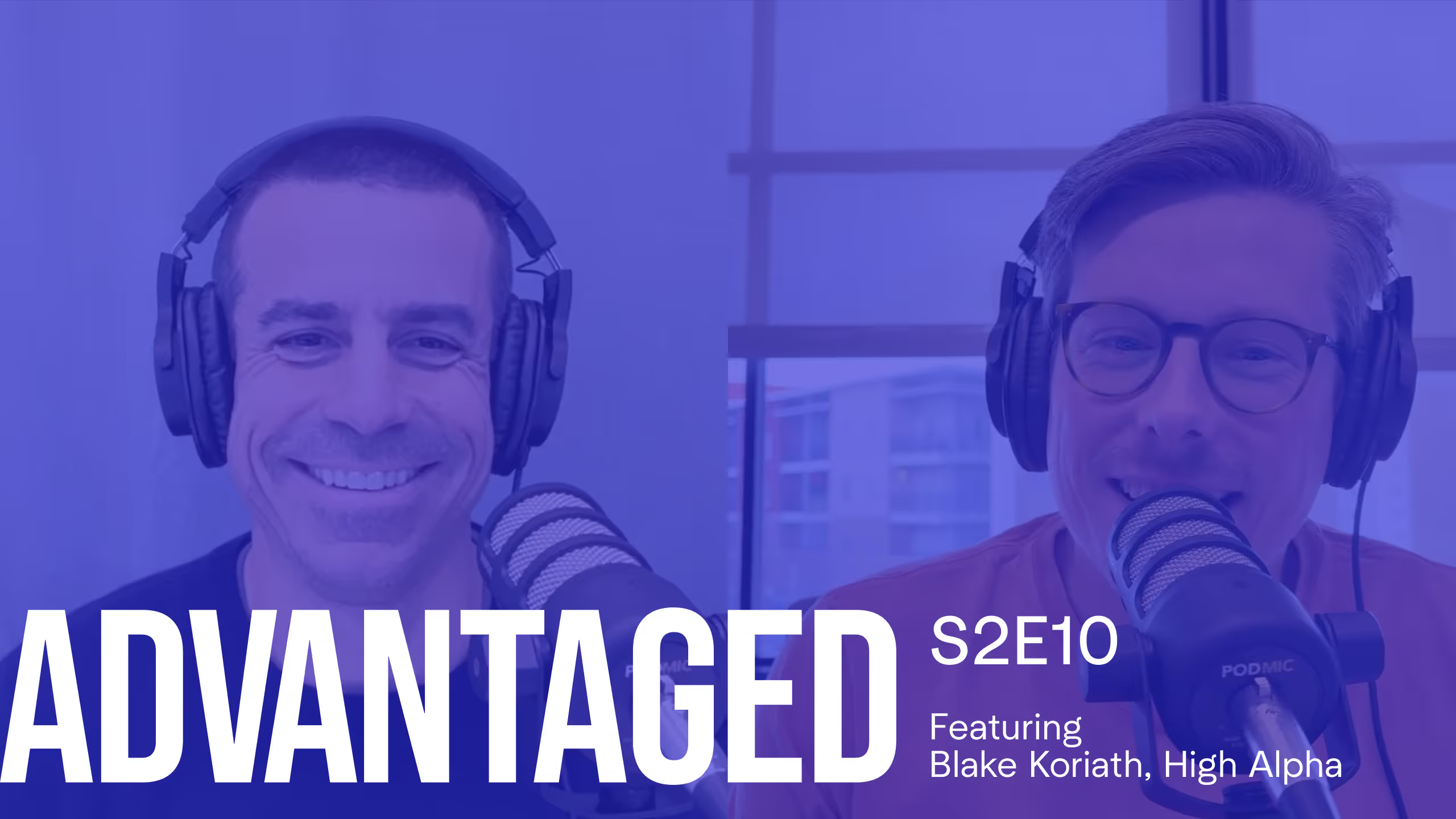
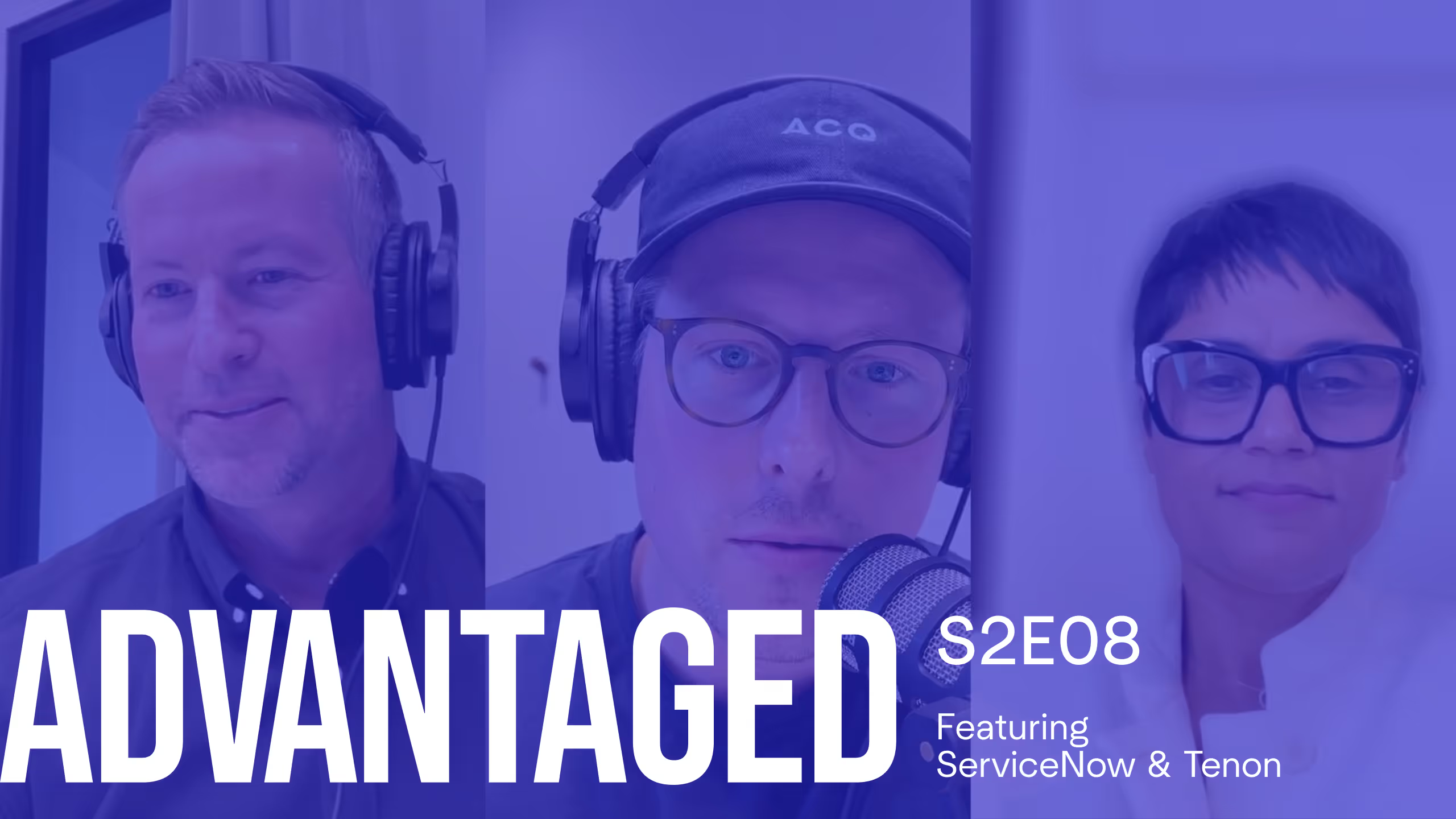
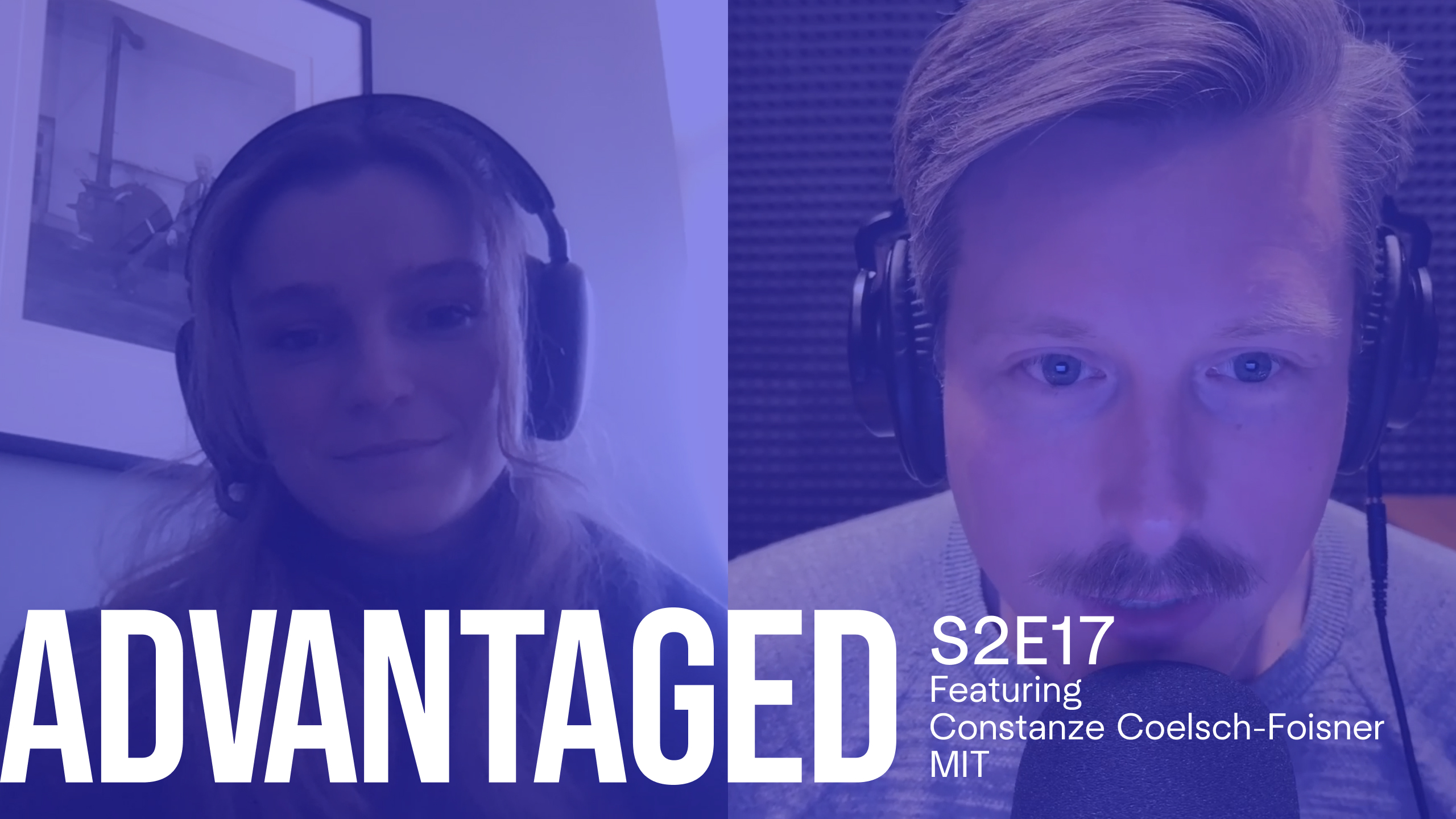
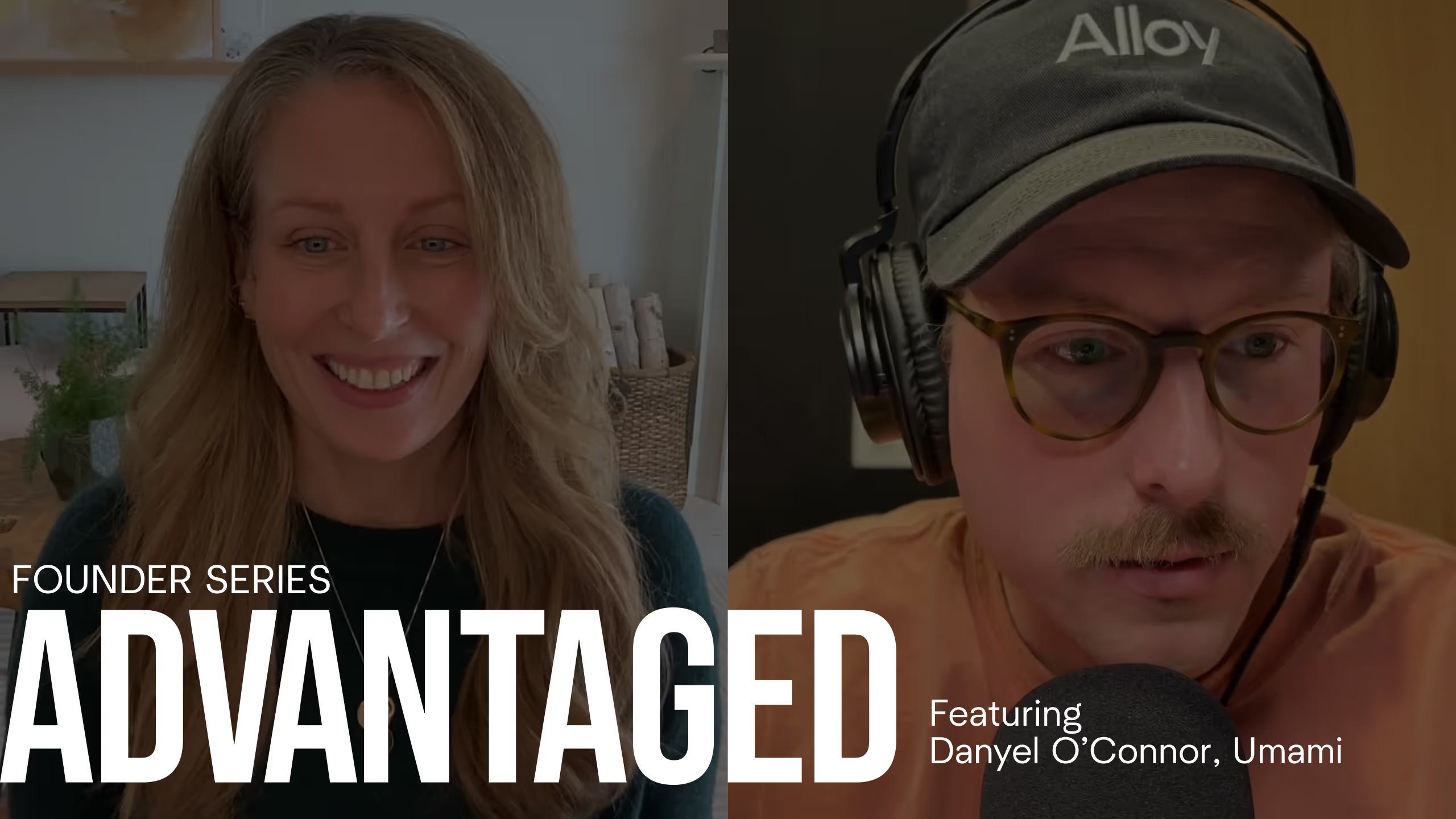
Drew Beechler: Welcome everyone to Advantaged, an Alloy Partners podcast. I'm Drew Beechler, our VP of Marketing here at High Alpha Innovation and your host of Advantaged today.
If you're unfamiliar, Alloy Partners is a venture builder. We partner with some of the world's leading organizations and amazing entrepreneurs to co-create advantaged startups together.
This episode is part of our "2025 Innovation Trends" miniseries. We've taken the last few weeks to interview a number of our team members on trends on their mind and where they think things are heading in the new year.
So today with me, we have our Director of Portfolio Success, Nate Schmidt. Thank you, Nate, for hanging out with us. We're both here in Indianapolis. I'm based in Indianapolis. Nate came up from Birmingham last night, which is great.
Nate is a multi-time founder who founded the first accelerator in Alabama, is former MD at Techstars for a number of years, is an avid mentor and advisor for countless startups and CEOs and founders and entrepreneurs, and I think he has one of the coolest roles on our team here at Alloy Partners.
Nate works every single day, working hand in hand with our founders to help make them successful. I like to think of him as our 'CEO whisperer,' the guy that someone calls at — hopefully not at midnight in the middle of the night — the guy that they call when their hair's on fire or something's blowing up, or the good things, hopefully, too.
But Nate's just an expert in many, many things related to startups, entrepreneurship, but one thing in particular, Nate, that we were talking about, and something just top of mind for every entrepreneur and for founders, especially heading into this new year and something that you spend, an incredible amount of time on with our founders is fundraising.
So I thought, what better way to kick off some of our conversations around this and what better person to have on the podcast to talk about some of the startup fundraising climate, and how you're advising our founders and other founders. I just thought it'd make for a really great conversation.
Just to set a little bit of context to most of the episodes we've done to date: I've centered a little more on corporate innovation, and innovation strategy, and startup engagement from the perspective of a large corporation. But, in this episode, we're really going to focus more on the startups and the founder perspective, particularly through the lens of fundraising.
So there's a lot here we're going to unpack. It's going to be a ton of fun. And a lot of this opining is probably on things that, you know — it's the wild, wild west, and none of us can really, truly know what's going to happen in the future.
But maybe just to ground us a little bit, Nate, why is fundraising important for a startup in general? Why is it important for the ecosystem? Why are founders raising capital? Why are we having this discussion? Maybe start there.
Nate Schmidt: Yeah, sure. It's an honor to be here. I appreciate you inviting me onto the pod.
I find it interesting that you think my job here is such a great job. The grass is always greener, somewhere else. So, I think your job's pretty cool, but no, you're right — I get to work with founders every day. A CEO whisperer — I'll take it. They really do call in the middle of the night sometimes, and working with founders at the earliest of stages is a blast.
And fundraising is a piece of the puzzle. No doubt about it. And it's awful. Like, fundraising is not fun. I would go so far as to say fundraising sucks. When any of us decide to go do a new company, and I'm a five-time founder myself, you don't think on day number one, 'Hey, I'm going to go raise some money.'
You want to go operate the business. You want to work on the business.
And so finding out that you have to spend a lot of your time fundraising is sometimes a real surprise to first time founders. And I don't know, there's a few reasons that you raise money, and they're all valid. One is you can not start the company without it.
So, if you have a great idea, and you can't take the risk of no salary and whatever else that comes with starting that company, you can go out to investors. You can go out to the market before you've done anything. And you can say, 'Hey, I've got this idea, and if you'll fund it,' et cetera.
And things like accelerators really fill a gap like that one. There are many times where the initial $100,000 or so that you get from a top-tier accelerator allows you to start a company, which I've been a part of, both as a participant in Techstars and then as a managing director of Techstars.
The second layer is what Paul Graham would call 'default dead': You're going to die.
If you don't raise more money, the company is probably running — maybe it has customers, maybe it has revenue — It's definitely burning money. But you're not going to get to profitability before you run out of money. So, most startups are in this category, and it's a perfectly reasonable place to be.
And the final category is, and this is the best one to be in, you don't really need the money, but you have such great progress happening that the market's throwing money at you. This is fantastic. If your company gets here, it means you're probably headed toward a big exit. And this is a spot where founders might even take some chips off the table.
So understanding where you're at is vital. Are you raising from a position of strength? Are you rising from a position of weakness? Where you're at on that continuum, I think, is really important, but either way, fundraising isn't very fun, and the more prepared you are for it, the better chance you're going to have success.
And I'm sure we'll talk about some of that preparedness today.
Drew Beechler: It's a great segue. Let's take a step back even and just talk about fundraising 101 for a second. So, I've heard you say this before. I love the line specifically, but many startups, many founders think they're fundraising and you would say, they're really not.
And I think you have a pretty strong perspective and point of view on the right and the wrong way to fundraise. And so maybe just let's start the broader conversation there with just what's quick fundraising 101 from your point of view on the right way to fundraise and how founders should be thinking about it from first principles almost.
Nate Schmidt: Yeah, I've held a lot of startups, fundraised. And, maybe half a billion dollars in fundraising have come from founders that I've directly worked with and coached. So, a good bit of money, not nothing.
And I'm opinionated about the best way to do it. I give a presentation that's like 45 minutes long on fundraising 101, so I'll try to play a few of the hits for you right here and see if anything lands.
Cut me off at any time if you want to go deeper into something, but I know, one of the foundations for me is you need to start preparing to raise before you're raising. You need to be thinking about the very earliest days.
Who do you know that has money? Who are potential investors? And, not only do you need to know who they are, fire up a spreadsheet, write it down, at very early moments of the company, but you should make yourself known to them.
'Thank you.' I don't think it's inappropriate. If there's an investor you're going to want to work with a year, 18 months, two years down the line, or maybe even a series, hey, I don't think it's inappropriate to email that investor and be like, 'Hey. This is what I'm working on. You don't know me, but I know you. I want you to invest in me one day, and you're going to be hearing from me,' and that's it.
And just slowly, make the market aware of what it is that you're doing. When you're raising the right way, it is a well-defined process. It has a start date and end date.
You're running a funnel, and you need to be prepared as a CEO to take three to six months, 50-75% of your full-time effort and have a lot of conversations. I think a healthy investor funnel usually has about a hundred investors in it. And that means you're talking to all of them multiple times. And that's just a lot of meetings.
Drew Beechler: When you think about especially first-time founders, they probably don't know just how much effort it is. And when we talk about fundraising just sucks, is this a lot of that of where you're coming from, from that perspective, is the time, you know what I mean?
You want to be running your business. You're going to be solving problems for customers. You want to be out building a great team or whatever. And you feel like you're stuck in the, in the muck, raising money.
Nate Schmidt: It's worse than that. I mean, it's a Catch-22.
Because investors are going to say, 'Hey, how's the business going?' And you're like, 'It'd be going a lot better if I wasn't in all these investment meetings.' So you have to find a way to keep the company moving forward, to show progress when you are the CEO, and maybe one of only two or three or five people in the company are all of a sudden taken away from it. That is really hard.
But investors are going to ask you tough questions, and this is going to seem like a joke. It is not a joke. Get ready for it here. The tough questions investors are going to ask you. Number one: What does your company do? That seems like a joke. You should be able to answer that question.
I can tell you, I have talked to thousands of startups over the last decade. It is very difficult to describe with specificity what you do to a lay person.
A question that I will often ask a new startup founder the first time I meet them is like, 'Pretend I don't know anything about your industry or your startup. Pretend that I'm a fifth-grader. Explain what your company does to me.' And it's really hard to do well.
Things like accelerators talk about pitching, talk about telling your story, talk about storytelling. It's such an important part of the business and it's easy to be like, 'Oh, and more pitch practice.'
But how you talk about your company matters. An investor asked you if you're raising. If you want to trip a founder up that's never done it before, be like, 'Hey, you're raising because here's what happens.' That you're an investor. You're asking them about whether or not they're raising. The founder looks at you and thinks, 'Oh, this investor wants to know if I'm raising. I should say yes.'
If you want to see a lot of unintended consequences happen, if you're not raising money, tell an investor that you are raising money, because they're going to start asking you more questions like, 'Oh, how much are you raising?' And you're going to say something like, 'Oh, I don't know — $1 million? Maybe $2 million?'
Well, which is it? Is it $1 million or $2 million? You'll start to get ahead of your skis.
With this investor, if you're not prepared to answer these questions, then the list goes on. 'Hey, what's your valuation?' And then you think, as a startup founder, like, 'Am I supposed to say? Am I not supposed to say? How am I supposed to talk about valuation? What should I do? What are you going to do with the money?'
I can tell you, having been in many fundraising meetings, answers never feel good enough. 'What are you going to do with the money?' 'Hire some people. Run some ads. Spend some money on dev.' Coming up with unique answers that make you feel good about what you're going to do if the money is really hard.
'How big is this company going to be?' If you're a startup founder, especially a first-time founder, saying big numbers out loud is hard. You find yourself in front of this investment professional, you look them in the eye and you say, 'I think it's going to be a billion-dollar company. And you have to say the word 'billion' out loud. And not only that, but they have to believe you.
That question can really trip founders up.
So when I'm working with founders, what I'm trying to do on all of these questions from, 'What does your company do?,' to, 'Are you raising?,' to, 'What's your valuation?' I like to get them to the 'I'm so glad you asked for' stage.
Because there's nothing more empowering than to be asked a difficult question and be like, 'Oh yeah, I'm so glad you asked. Here's what our valuation is.' Or you can answer that question with confidence.
So preparing founders to answer questions with confidence is a big part of what I do.
I know we're going to talk about fundraising climate in a minute. But, the fundraising climate does not matter if you are not prepared to raise money effectively. So one thing that we see with founders all the time is they say, 'Oh, this climate's bad. I can't fundraise.'
And the problem is not the climate. It's that they're not running the process effectively. And so that's why talking about fundraising 101, talking about all of the things investors are going to say is so important.
Drew Beechler: It's a really, really important piece, because I'm guilty of it myself too. I think oftentimes the fundraising climate is really easy on both sides of the table, as an investor and as a founder. But it's an easy copout, almost as a reason why the fundraising didn't go as expected or we couldn't raise money and things.
The truth is, no matter what the climate is, the best companies will still get funded and there's still the best way to run a process. And that's really what it is: thinking about it as a process. For different founders, your skill sets are going to vary wildly, but it's a sales process at the end of the day.
To your point, you have a funnel, you have stages. You have stage gates of, 'Are we at the term-sheet level, or are we at the partner-pitch meeting?,' or whatever. And there's very particular stage gates and conversations.
I think it's helpful just like when you're in a pipeline review meeting when your VP of sales is like, 'Well, have you actually talked about price or not? It's not a real deal unless we've talked about price.' And do they have the budget in the same way with, I think fundraising would be like, 'Have you had the conversation with X or have the conversation around valuation?'
You're not really in their funnel until you have that conversation. I think just understanding that being pretty rigid around it is, it's really, really important.
Nate Schmidt: Well, Alloy Partners is unique. If the two of us, Drew, if you and I quit our jobs right now and start a company, there isn't any funding there and we're just presumably we own the whole thing. We're off to the races.
Any company that launches out of Alloy Partners has some initial funding intact. And so any of the founders that start a company through us are managing a non-trivial amount of money at the beginning.
But what that means is, they've already done some fundraising, by virtue of launching a company with us, and everyone thinks, 'If I raise this much money, I need to go raise twice that the next time or three times that the next time.'
So our company's getting to product-market fit, to getting to revenue, to getting to first revenue, to signing pilot customers up, to demonstrating their worth in the market is essential. And so what do we tell our companies? Get to revenue as fast as possible. If you don't have to fundraise again, great.
Now, that being said, I think all but one — we have 24 portfolio companies and we probably had 10 and market raising in the second half of last year, and I believe all of them raised, maybe one of them is still working on it — but we had a lot of success raising money last year. And that comes on the heels of us telling companies to be profitable.
You don't need to raise money. So maybe if you focus on the right thing, then the fundraising just comes, but yeah, never wrong to go talk to customers.
Drew Beechler: Best fundraising is coming from customer contracts, right?
Nate Schmidt: Amen.
Nate Schmidt: This was fun. Can't wait to do it again. Thanks.











































.avif)